Skip to content
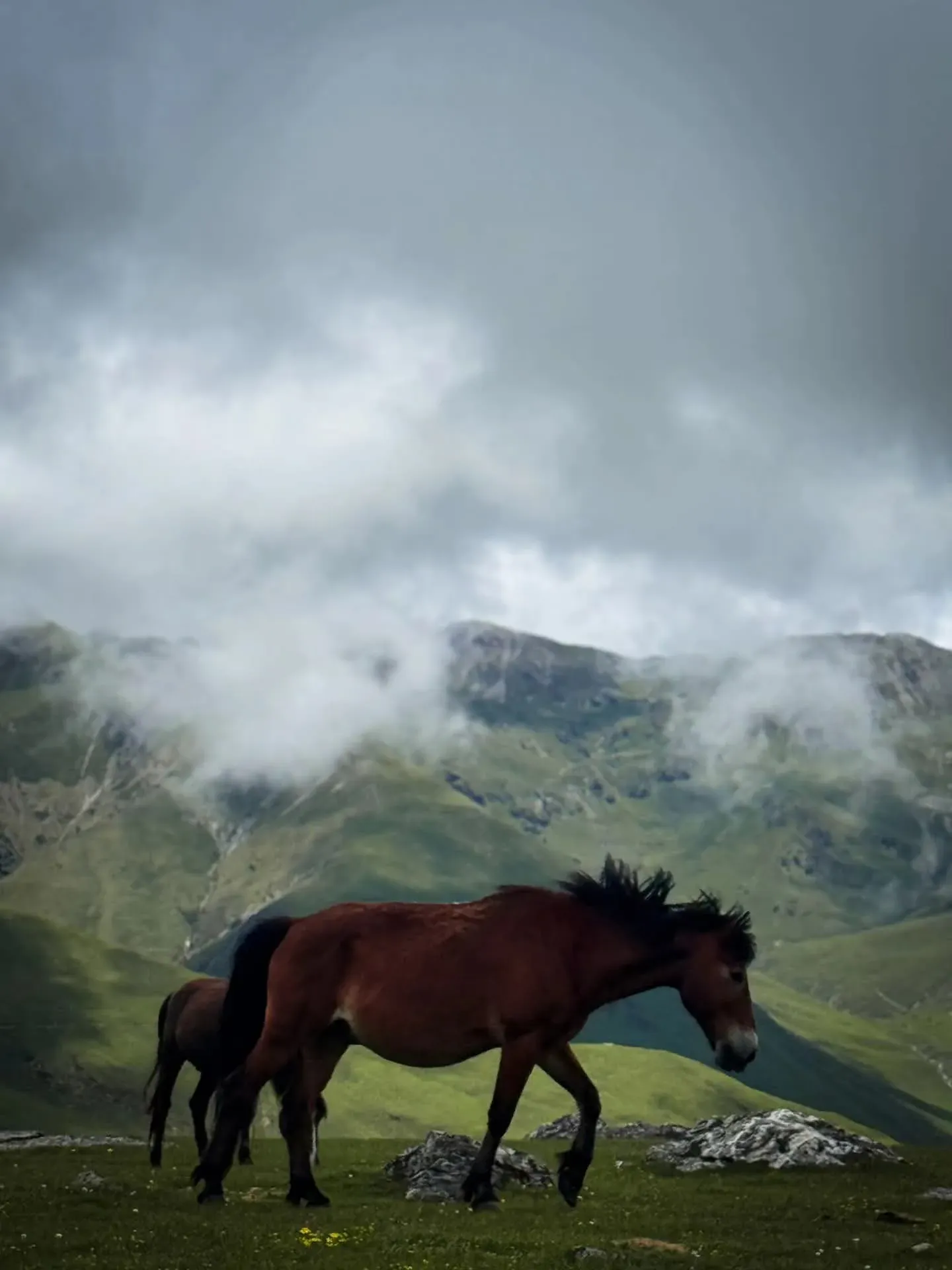
Two horses crossing a yellow-flowered meadow at Bukipatan above Dhorpatan
Guided trek in Nepal

Dhorpatan Trek

A short trek into Nepal's only hunting reserve: the Dhorpatan valley, a Tibetan settlement, and the Bukipatan meadows below the Dhaulagiri range.

Duration7-11 days
Max Altitude4,500m
DifficultyModerate
Group SizeMax 8
Best SeasonSpring & Autumn
01 / Route overview

A quiet valley, a Tibetan settlement, and high meadows below the Dhaulagiri range

A short trek in Nepal's only hunting reserve. Nights in the Dhorpatan valley, then up a new trail toward the Bukipatan meadows. Choose 7, 9 or 11 days; the longer you take, the higher you sleep.
Updated 23 September 2026Route reviewed with Indra Bahadur Baram, Love Himalaya Journey guide.
Highest pointAbout 4000 m to 4500 m, by tier
Nights above the valleyNone, two or three, in our own tents
Getting there7 to 11 hours by road from Pokhara

Trip highlights

  • At least three nights in the Dhorpatan valley, at about 2800 to 3000 m
  • One of Nepal's first Tibetan refugee settlements, home to the first Bon monastery built in exile
  • Garpachheda, the gateway to the Bukipatan meadows, at about 4000 m
  • Tikadhara, the high point above the meadows, on The Journey and The Transformation
  • Wide views north to the Dhaulagiri range from the high pastures
  • The new 2025 trail from Pakhathar, with wooden bridges over forest streams
  • Walking inside Nepal's only hunting reserve, home to blue sheep and Himalayan tahr
  • Our own tented camp above the valley, with a cook, once the herders have left
What to know before you book
01
What is hard

The day above the valley. On The Trail it is a day hike to Garpachheda at about 4000 m and back, around eight hours. On The Journey and The Transformation you climb from camp to Garpachheda and on to Tikadhara, about 4200 to 4500 m. No ropes or climbing, but long days at real altitude.

02
The road, described plainly

Pokhara to Dhorpatan is 7 to 11 hours through Baglung and Burtibang. The last 32 km are a rough gravel and earth track for 4WD only, muddy after rain. There is no working airstrip, so the same road takes you out. Every tier keeps a buffer day in Pokhara so a slow road does not cost you a flight.

03
Where you sleep

In the valley, simple lodges and community homestays; expect shared bathrooms and cold nights. Above the valley, our own tents. The herders' stone shelters at Garpachheda only open in the summer grazing months, and by October they are empty. We bring tents, a kitchen tent and a cook, and it is basic for every tier.

04
A hunting reserve, honestly

Licensed trophy hunts for blue sheep and Himalayan tahr run in designated blocks of the reserve in October and November. Your guide keeps you on trekking routes. Reserve rules also mean no walking between sunset and sunrise, and nothing picked or disturbed.

05
Bringing a camera or drone

Photos for personal use are fine. Filming for a documentary or commercial project, and any drone use, needs a separate permit from the Department of National Parks and Wildlife Conservation. The last published fee was 1500 USD for foreign nationals, plus 25 percent with a drone, and drones also need aviation clearance. Tell us before you travel and we will check the current rules.
02 / Day by day

Your journey

Follow the trail from start to finish. Every day reveals a new part of the route.

Safety is identical across all tiers. The Trail sleeps in the valley and day-hikes to Garpachheda, with public transport. The Journey adds a private 4WD, two tent nights and Tikadhara. The Transformation adds flights, a second valley day and a third tent night at Garpachheda for an early start to Tikadhara.

Day 01
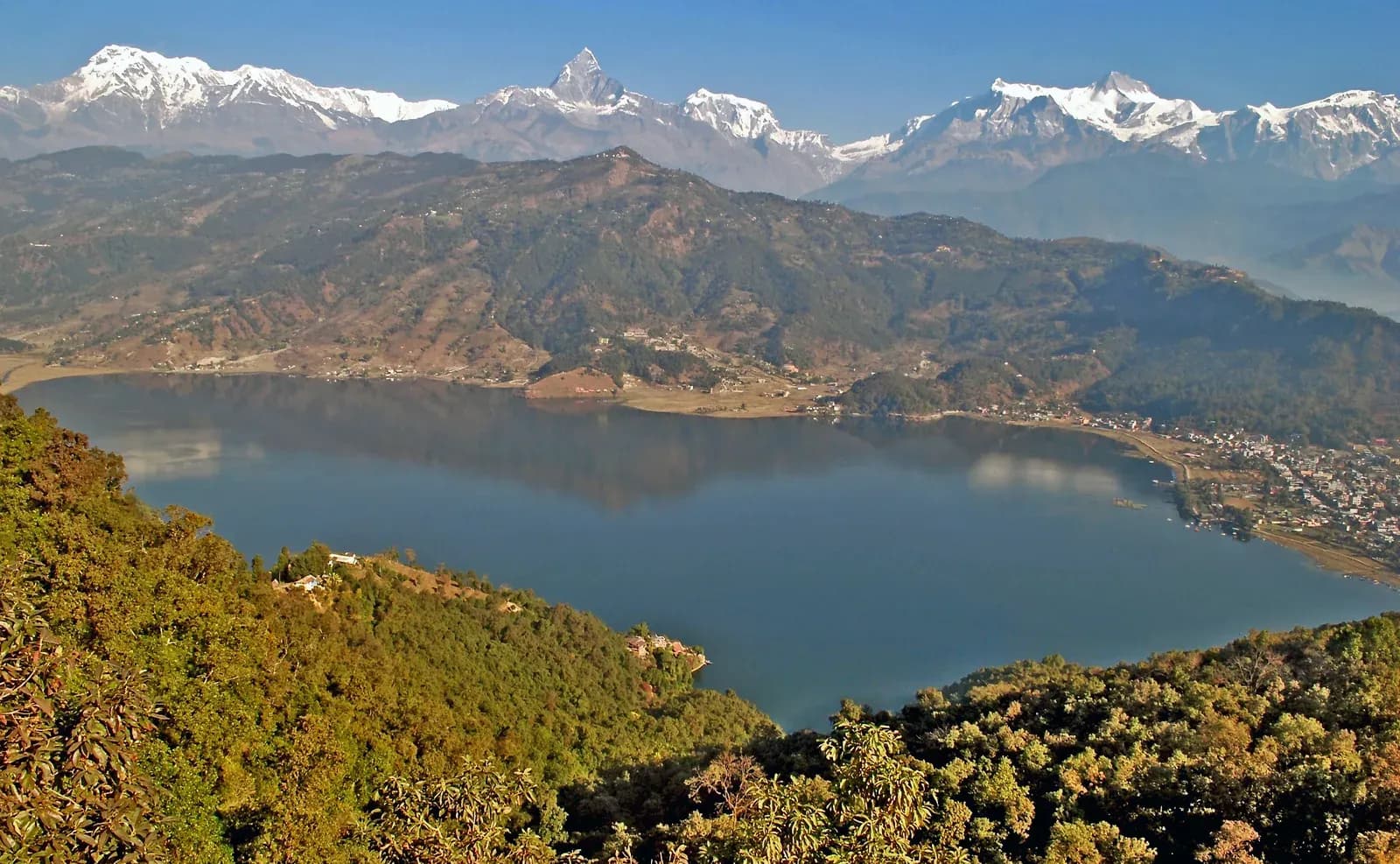
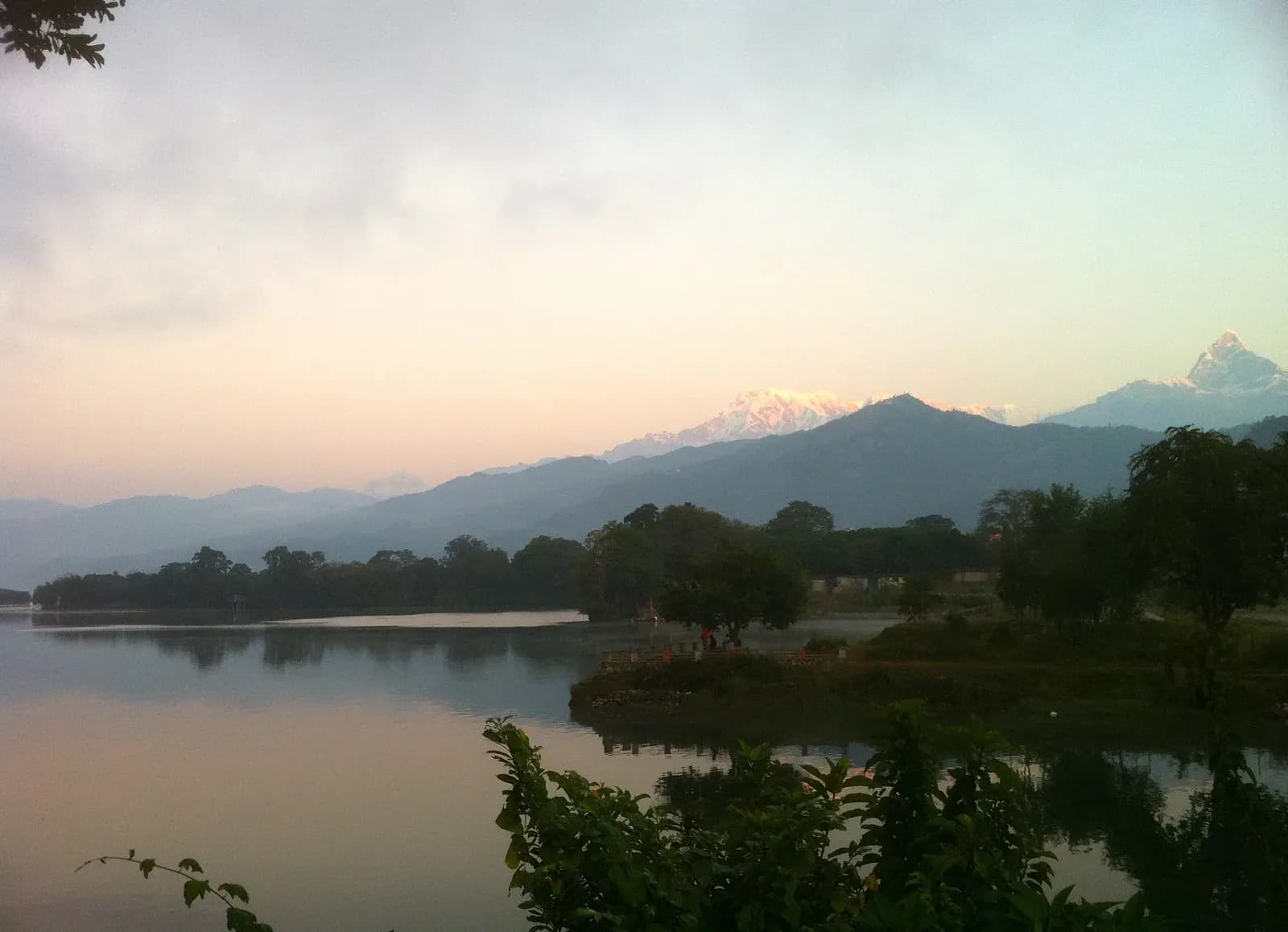
Phewa Lake and the Annapurna skyline in Pokhara, where the Dhorpatan trek begins
Pokhara, the start and end of the road west.
easyKathmandu hotel

Kathmandu to Pokhara

Distance
200 km
Sleep
820 m
High
1,400 m

Trek briefing with your guide in Pokhara

An easy start. Six to eight hours west by tourist bus from Kathmandu to Pokhara, through terraced hills and river valleys, arriving in the afternoon or early evening. Your guide meets you in Pokhara for the trek briefing: the road ahead, the reserve rules, the camp nights on the longer tiers and what to pack for cold valley nights. It is the last easy evening for a while.

RoadGear check before the road west
RouteA quiet lakeside evening
Day 02
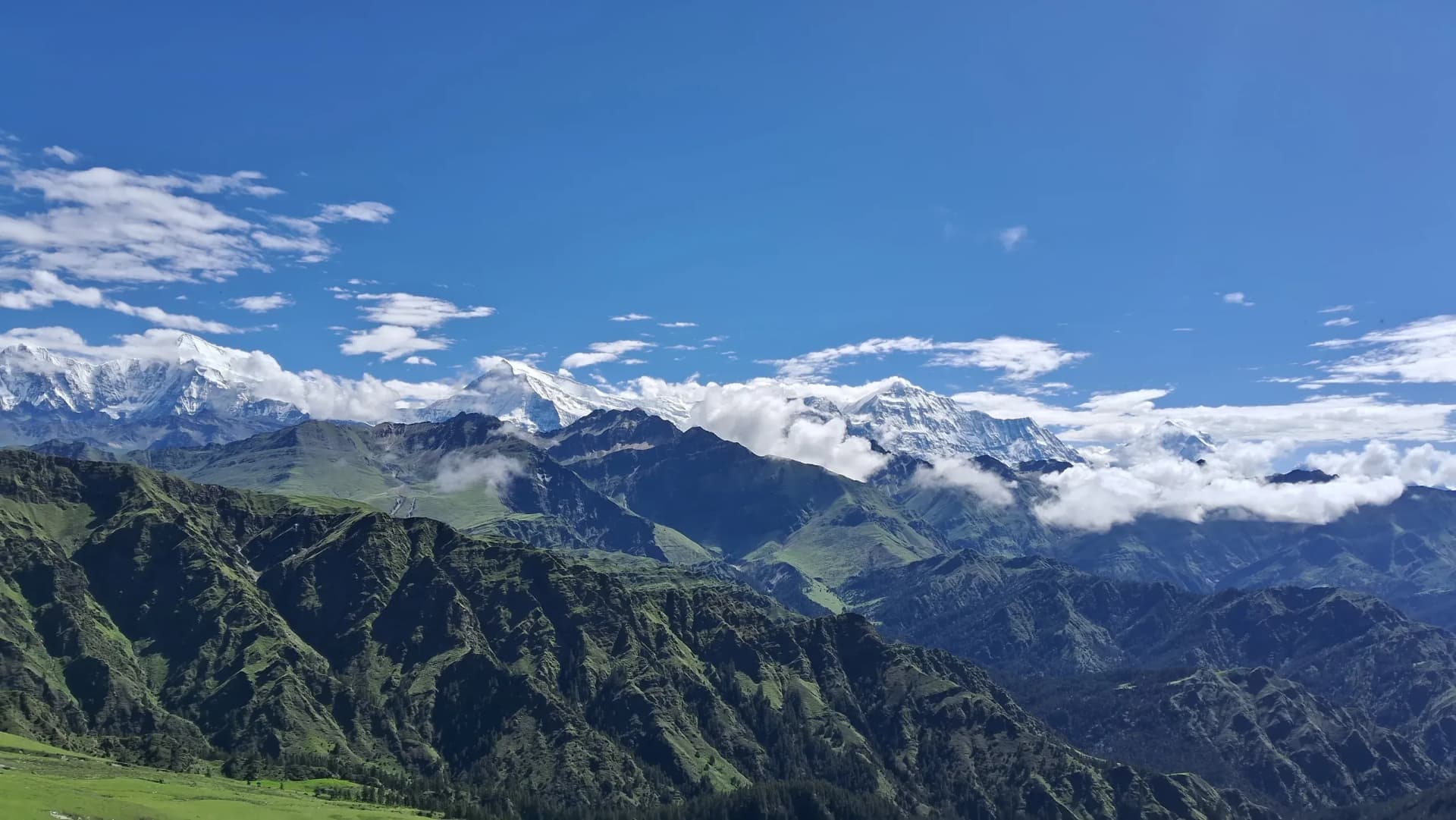
Public bus and shared jeepGreen ridges of the Dhorpatan Hunting Reserve below the snow-capped Dhaulagiri range
The reserve's ridges below the Dhaulagiri range.
easyStandard teahouseBreakfastLunchDinner

Pokhara to the Dhorpatan valley

On The Trail you travel as the valley does, by public bus to Burtibang and shared jeep for the last stretch. It is slower and less comfortable than a private vehicle, and it gets you to the same place.
Distance
194 km
Sleep
2,850 m

The road west through Baglung and Burtibang

The long day, and we will not dress it up. From Pokhara the road runs to Baglung and on to Burtibang, then climbs the last 32 kilometres to Dhorpatan on a rough gravel and earth track that only a 4WD handles well. Plan on 7 to 11 hours depending on the road, the weather and how often you want to stop. You come over the last rise into a wide, open valley at about 2800 to 3000 metres, fields and forest on its edges and the air noticeably cooler. The first night is quiet, simple and early.

AltitudeThe last 32 km of 4WD track into the reserve
RouteFirst sight of the open Dhorpatan valley
Day 03
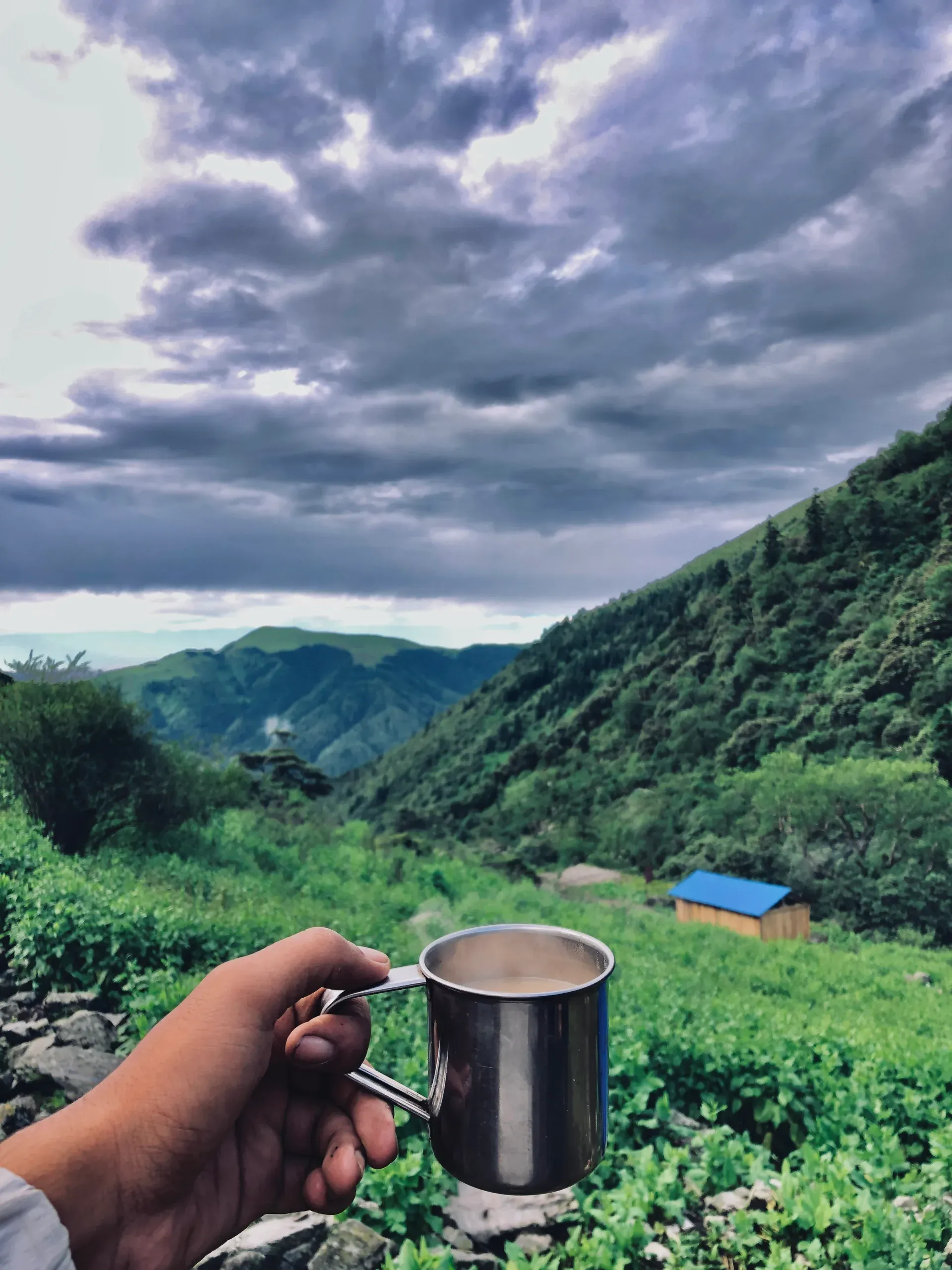
Steel mug of milk tea in front of a blue-roofed hut near Dhorpatan
Milk tea is how most conversations start here.
easyStandard teahouseBreakfastLunchDinner

A day in the Dhorpatan valley

Walking
3 hrs
Sleep
2,850 m
High
3,100 m

The Tibetan settlement and its Bon monastery

A day to settle in before going higher. Your guide walks you through the valley to the Tibetan settlement that has been here since the early 1960s and its Bon monastery, the first built in exile, founded in 1960. The reserve office is here too. In the afternoon a short climb above the valley floor helps your body get used to the height, and you come back down to sleep. This is the day to ask questions. Magar, Chhantyal, Bishwokarma, Thakali, Gurung and Tibetan families live here, and a conversation over tea goes a long way. Ask before photographing people or the inside of the monastery.

SafetyAn acclimatisation walk above the valley floor
ContextTea with the families who live here
Day 04
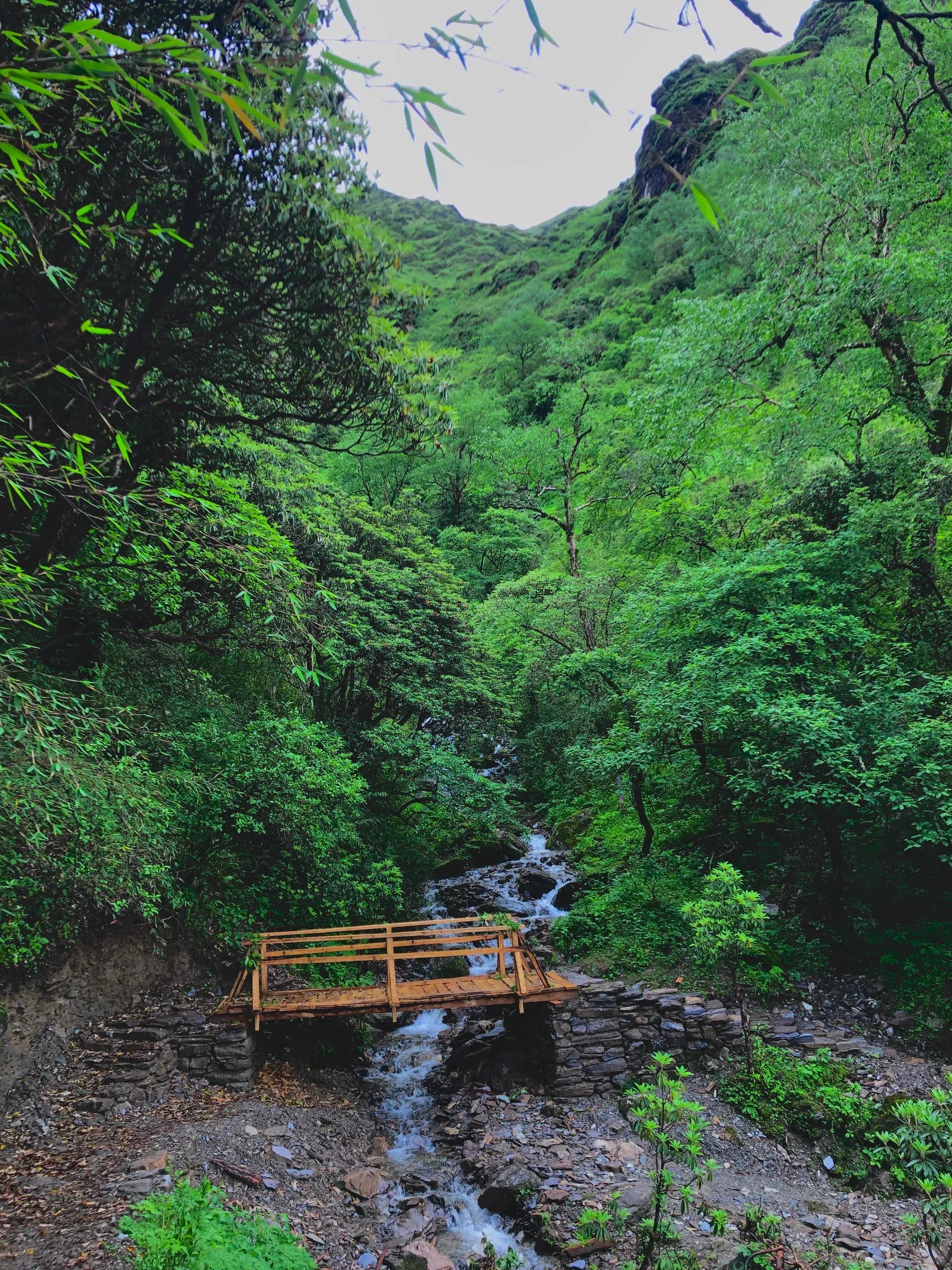
Day hike to Garpachheda, back to the valleyWooden footbridge over a forest stream on the Pakhathar to Garpachheda trail
One of the wooden bridges built on the trail in 2025.
moderateStandard teahouseBreakfastLunchDinner

Up the new trail to camp

On The Trail you do not camp. You walk the same trail all the way to Garpachheda, the gateway to Bukipatan at about 4000 m, take in the view, and walk back down to sleep in the valley. It is a long day of about eight hours, but you sleep low.
Walking
3 hrs
Sleep
3,500 m

The 2025 trail and its wooden footbridges

You leave the valley through Pakhathar and join the trail the provincial government built in 2025, with wooden bridges over the forest streams and rest stops along the way. It climbs through rhododendron and oak forest toward the open herders' ground below Garpachheda. After about three hours you reach camp, at around 3500 metres, where the crew has the tents up. Stopping below Garpachheda is deliberate. Garpachheda sits at about 4000 metres, and going straight there from the valley would add a thousand metres of sleeping height in one day. This way your body gets a night in between. The evening is cold and early, with a hot meal from the kitchen tent.

SafetyAbove 3,500 m: follow the altitude protocol.
RouteForest giving way to open herders' pasture
ContextThe first night in our tented camp
Day 05
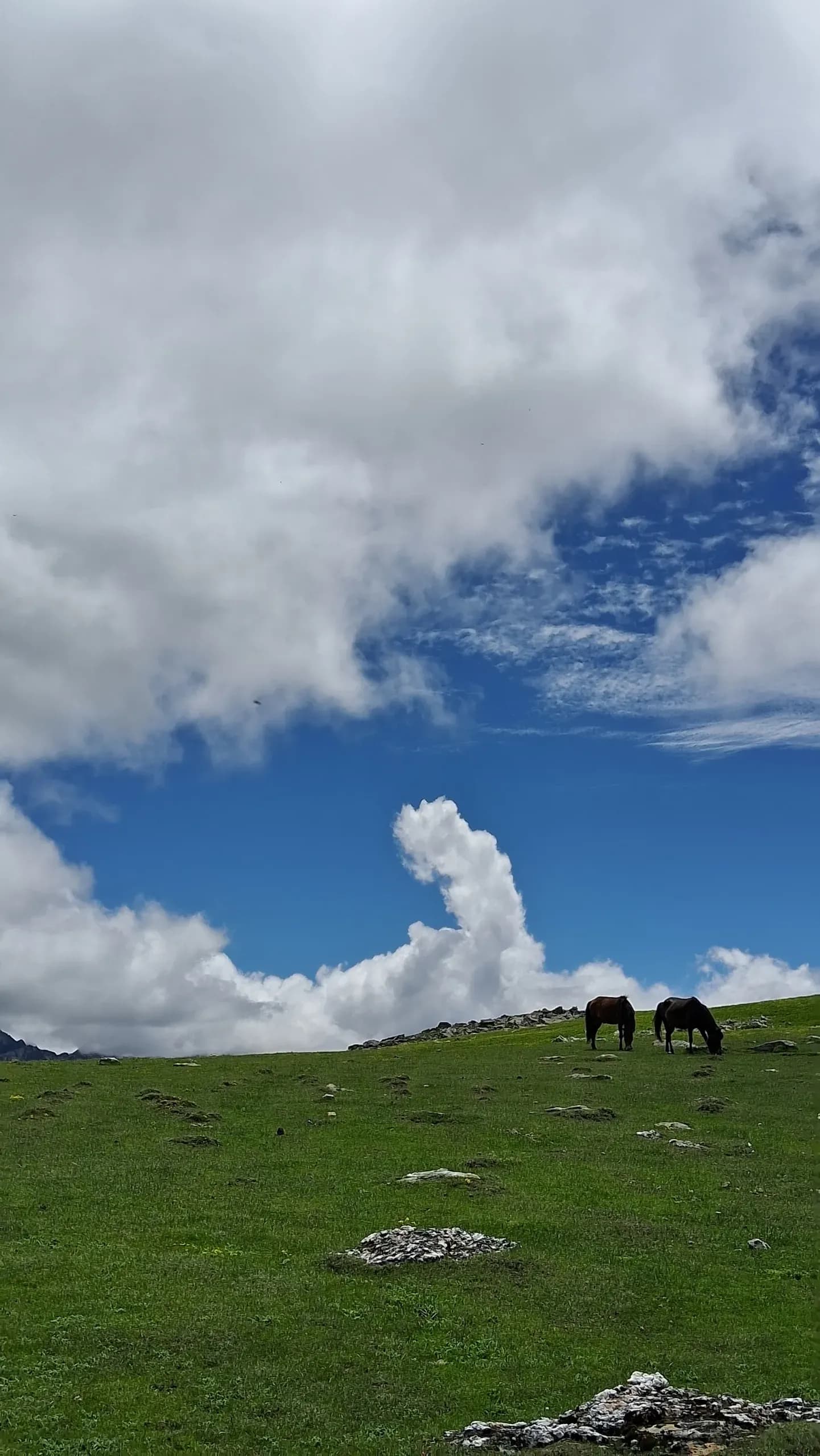
The Trail turns at Garpachheda on Day 4Two horses grazing on the open Bukipatan meadows above Dhorpatan
The Bukipatan meadows in summer, when the herders are up.
challengingStandard teahouseBreakfastLunchDinner

Garpachheda and Tikadhara

Walking
7 hrs
Sleep
3,500 m
High
4,500 m

Garpachheda, the gateway to Bukipatan

The big day. From camp you climb to Garpachheda at about 4000 metres and out onto the patans, the open meadows that cover much of the reserve above the treeline, then on to Tikadhara, the high point, at about 4200 to 4500 metres. In clear weather the Dhaulagiri range fills the northern skyline. In autumn the herders have gone and the meadows are silent. How far you go is your guide's call on the day, made on how everyone feels and what the weather is doing. Then you walk back down to the same camp to sleep. Around seven hours in all. Altitude affects everyone regardless of fitness, so tell your guide early if you feel a headache or unusual tiredness.

SafetyAbove 3,500 m: follow the altitude protocol.
ContextTikadhara and the widest view of the Dhaulagiri range
SleepClimbing high and sleeping low, done properly
Day 06
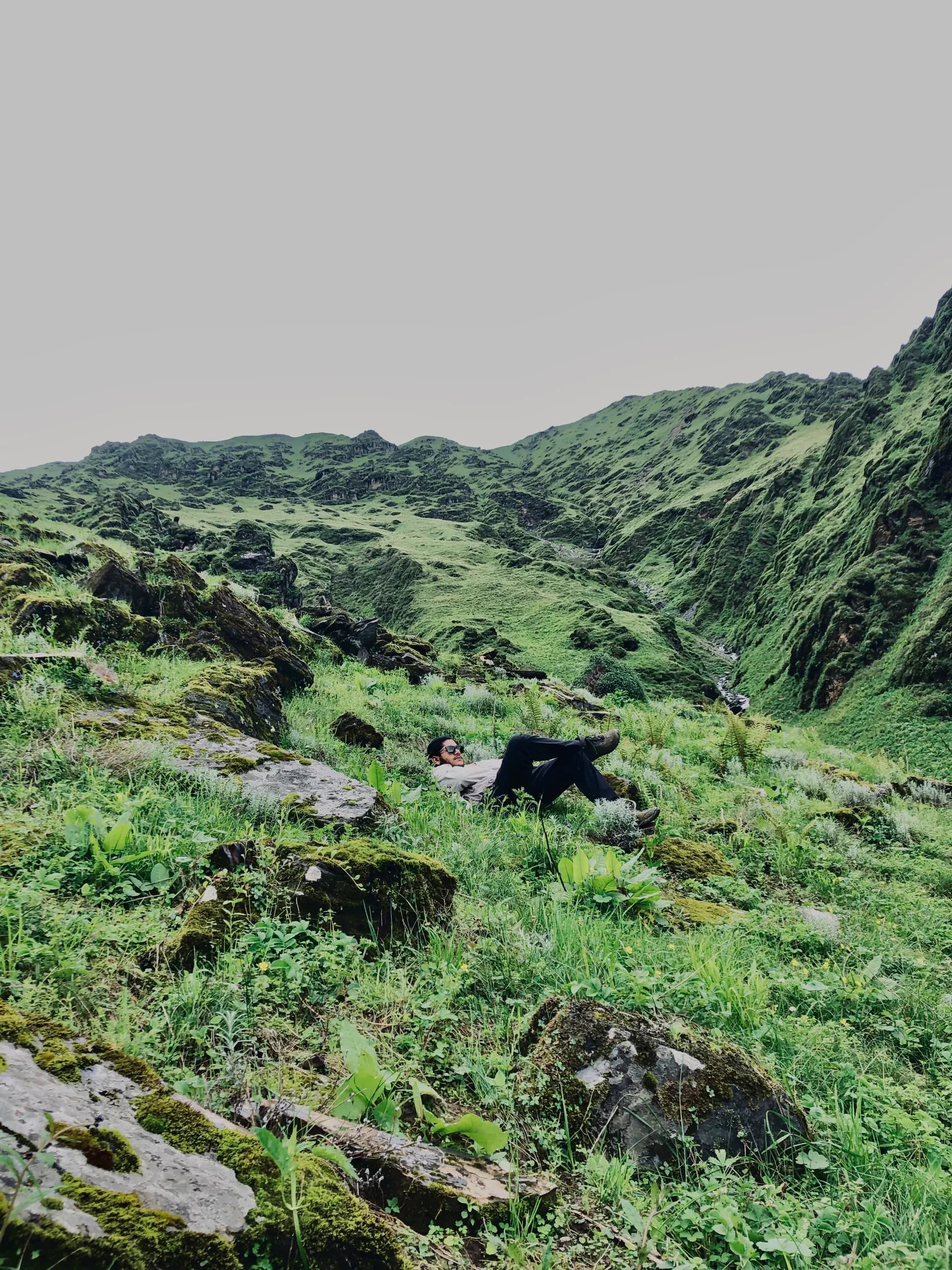
The Trail sleeps in the valley throughoutTrekker resting among mossy boulders on the trail below Garpachheda
No hurry on the way down.
easyStandard teahouseBreakfastLunchDinner

Camp back down to the valley

Walking
2.5 hrs
Sleep
2,850 m
High
3,500 m

A gentle descent through forest to the valley

An easy morning after the big day. The crew strikes camp and you walk back down the way you came, through the forest and over the wooden bridges to Pakhathar and the valley floor, two to three hours at an unhurried pace. The afternoon is yours: a rest, a last walk through the valley, or tea with the family you are staying with. After two nights in a tent, a bed in the valley feels warm.

SafetyAbove 3,500 m: follow the altitude protocol.
ContextPakhathar and its community homestays
ContextA slow last afternoon in Dhorpatan
Day 07
Shared jeep and public busBay horse walking across the Bukipatan pastures as cloud drifts over the ridge
A last look at the high pastures before the road out.
easyKathmandu hotelBreakfastLunch

Dhorpatan to Pokhara

On The Trail you return by shared jeep and public bus. If the connections do not line up you may reach Pokhara late in the evening, which is what the next day is for.
Distance
194 km
Sleep
820 m
High
2,850 m

A last look back over the valley

The road out, the same way you came: the 4WD track down to Burtibang, then Baglung and Pokhara. Another 7 to 11 hours, usually a little easier than the way in because you know what to expect. You reach Pokhara in the evening. Hot water, a proper bed and a lakeside dinner will feel earned.

SafetyThe long descent to Burtibang and Baglung
ContextEvening arrival in Pokhara
Day 08
The Annapurna range reflected in Phewa Lake, Pokhara
A slow day by Phewa Lake.
easyKathmandu hotelBreakfast

Pokhara, rest and buffer day

Sleep
820 m

Rest by Phewa Lake

A day with nothing planned, on purpose. After two long road days and nights at altitude your body will thank you for it. Walk by Phewa Lake, take a boat, or sleep late. It is also the day that protects your flight home. If the road from Dhorpatan was slow, blocked or rained out, this is where the time comes back.

ContextTime to let the trek settle
SleepBuilt-in room if the road was slow
Day 09
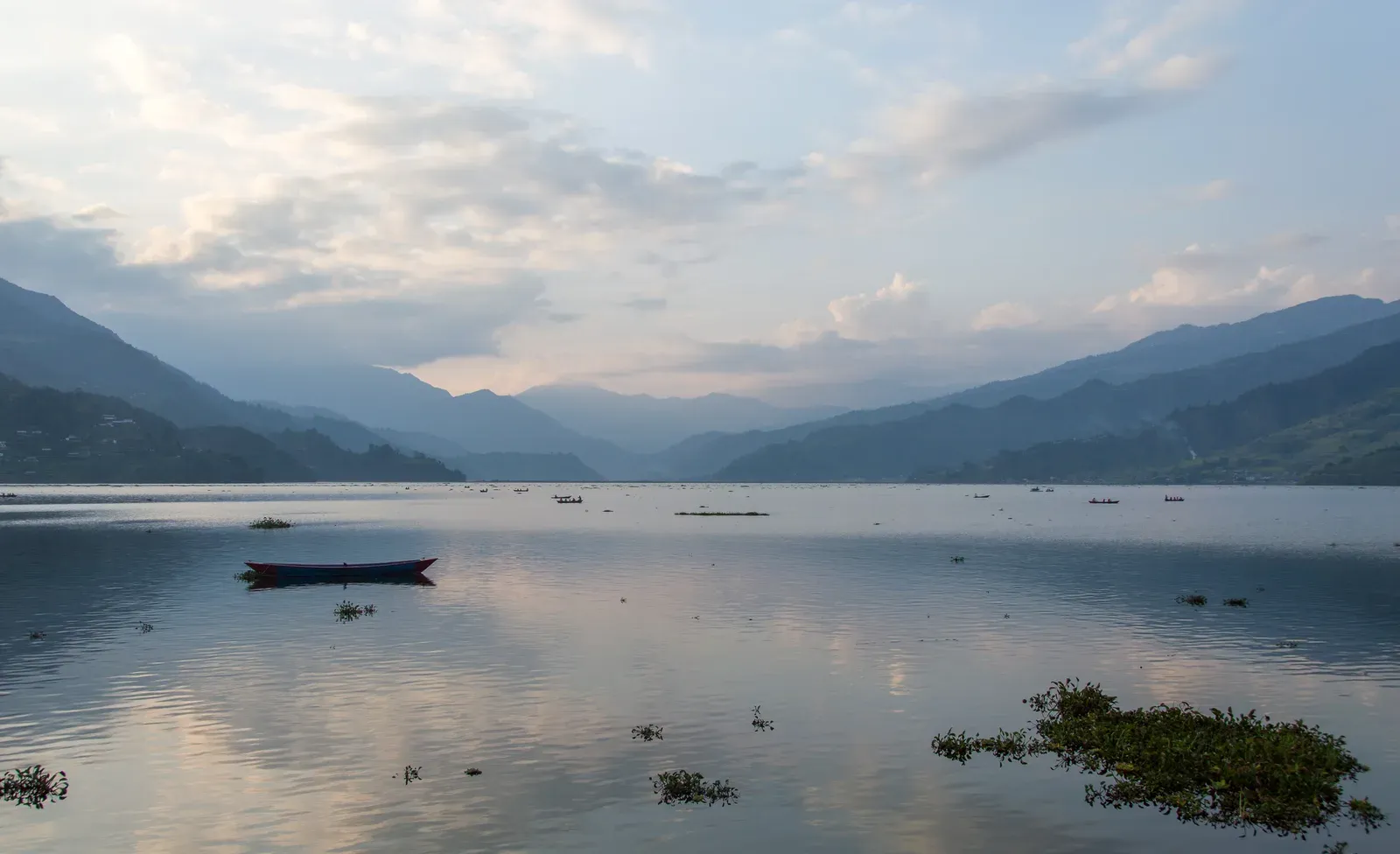
Evening on Phewa Lake in Pokhara before the return to Kathmandu
Last evening in Pokhara.
easyBreakfast

Pokhara to Kathmandu

Distance
200 km
Sleep
1,400 m

The ride back to Kathmandu

Back to Kathmandu by tourist bus, six to eight hours by road, arriving in the afternoon or evening. The trip ends on arrival in Kathmandu. An extra night there is the safer plan before an international flight.

ContextTime to rest before onward travel
ContextTrip ends on arrival in Kathmandu
03 / Trip essentials

What's included and excluded

Know exactly what your trek price covers before you commit.

Price Includes

  • Dhorpatan Hunting Reserve entry permit
  • Licensed trekking guide
  • Porters and camp crew (The Journey and The Transformation)
  • Full board on the trek
  • Valley lodges, tented camp, Pokhara hotel
  • Transport per tier
  • Altitude monitoring and emergency plan

Price Excludes

  • International flights and Nepal visa
  • Travel insurance with helicopter evacuation cover
  • Sleeping bag
  • Filming and drone permit
  • Kathmandu hotel nights
  • Tips for guide, porters and camp crew
  • Drinks, snacks, hot showers and charging
  • Monsoon departures
04 / Price & discounts

Build your trek

Pick a tier, set your group size, and choose a preferred departure. The number you see here is the number we receive.

Same safety floor across all three. What changes is lodging, pace, privacy, and how much planning we absorb for you.

The more who trek, the less each person pays

Choose a group band to update your live quote below.

Swipe to compare group rates

Per-person prices for The Trail
Group sizePrice per personYou save per personSelect group size
$1,190Standard rate
$895$295 (25% off)
$795$395 (33% off)
$795$395 (33% off)

Prices are in USD, per person. Your total updates automatically for 2 trekkers.

What's in The Trail

4 included · 3 not included

  • Day hike to GarpachhedaThe gateway to Bukipatan at about 4000 m, returning to sleep in the valley
  • Valley lodges or homestaysThree nights in the Dhorpatan valley; no nights in tents
  • Full board on the trekBreakfast, lunch and dinner from arrival in the valley until you leave it
  • Licensed guideWith you from Pokhara to Pokhara; the same safety protocol as every tier
  • PorterFrom The Journey upward
  • Tikadhara and a night in the meadowsFrom The Journey upward
  • Private 4WDFrom The Journey upward
05 / Before you go

Frequently Asked Questions

It is a moderate trek with one hard day, and how hard that day is depends on your tier. On The Trail it is a day hike from the valley to Garpachheda at about 4000 metres and back, around eight hours. On The Journey and The Transformation you start from a camp at about 3500 metres and climb to Tikadhara, about 4200 to 4500 metres, and back, around seven hours. The other walking days are two to three hours. The road is demanding too. Getting to Dhorpatan takes 7 to 11 hours from Pokhara, the last part on a rough 4WD track, and the same again on the way out. If long, bumpy days in a vehicle are hard for you, tell us and we will plan around it.

It is lower than the big Himalayan treks but still real altitude. Every tier spends at least two nights in the valley at about 2800 to 3000 metres first. The Trail then day-hikes to about 4000 metres and sleeps in the valley. The Journey sleeps no higher than about 3500 metres. The Transformation sleeps one night at about 4000 metres, only after a night at 3500. Nobody goes straight from the valley to sleep at 4000 metres. Your guide checks how you are doing every day. Mild headache and breathlessness are common and usually pass. If symptoms get worse, we turn around and go down; there are no exceptions to that on any tier. Altitude sickness has no reliable link to fitness or age, so tell your guide early.

You need the Dhorpatan Hunting Reserve entry permit: NPR 3000 for foreign nationals and NPR 1500 for SAARC nationals, per entry, with children under 10 free. It is non-refundable and single-entry, and we arrange it for you in Kathmandu on every tier. Dhorpatan is not a restricted area and does not need a special permit. It is not on the Nepal Tourism Board's list of routes that require an agency TIMS card. Filming for a documentary or commercial project, or flying a drone, needs a separate permit from the Department of National Parks and Wildlife Conservation. The last published fee was 1500 USD for foreign nationals, plus 25 percent with a drone, and drones also need aviation clearance. Tell us before you travel and we will confirm the current fee.

Legally, Dhorpatan is not one of the routes where Nepal requires a licensed guide. In practice the reserve's own visitor rules say never to trek alone, and we agree. Trails above the valley are not always signed, the weather changes fast, there is no working airstrip, and outside summer there is nobody living up there. Every tier includes a licensed guide from Pokhara to Pokhara. Your guide also knows the reserve rules, such as no walking between sunset and sunrise, and keeps you on trekking routes during the autumn hunting season.

By road from Pokhara through Baglung and Burtibang. The last 32 kilometres from Burtibang to the valley are a rough gravel and earth track that needs a 4WD, and it turns muddy after rain. Plan on 7 to 11 hours each way. There is an airstrip at Dhorpatan, but Nepal's aviation authority lists it as not in operation, so there are no flights to the valley. On The Trail you travel from Pokhara by public bus and shared jeep; on The Journey and The Transformation by private 4WD. The Transformation also flies between Kathmandu and Pokhara.

In the valley, in simple lodges or community homestays; there are dozens now. Expect clean, basic rooms, shared bathrooms and cold nights. Hot showers and charging are not a given. Above the valley, in our own tents. The Trail has no tent nights. The Journey has two, at about 3500 metres. The Transformation has three, the last at Garpachheda, about 4000 metres. In Pokhara you stay in a hotel that matches your tier.

There are, in summer. Local families run stays in the herders' stone shelters at Garpachheda during the grazing season, from about June. By mid-September the herders take their animals down, and from early October the meadows are empty and the water freezes at night. In spring and autumn, when we run this trek, the shelters are either not open yet or already closed. So we bring our own: sleeping tents, a kitchen tent and a cook, carried up by the camp crew. It is basic for everyone, on every camping tier. What we can promise up there is warm food, hot drinks and a dry tent, not comfort. You will need a warm sleeping bag; ask us about hiring one.

April to May and October to November. Those months give the most settled weather and the best chance of clear views to the Dhaulagiri range. Snow can linger at lower levels until early April, the monsoon can last into early October, and nights above the valley are well below freezing by November. June to September is when the meadows are greenest and busiest, with herders, flowers and many Nepali trekkers. It is also cloudy, wet, slippery and hard on the road. We run monsoon departures only on request, with a clear briefing first. December to February is cold and windy, and we do not recommend it.

Yes, with the reserve's rules. Dhorpatan is Nepal's only hunting reserve. Licensed trophy hunts for blue sheep and Himalayan tahr take place in designated blocks, mainly in October and November, under small annual quotas. Hunters come with their own permits and staff. Your guide knows where the hunting blocks are and keeps you on trekking routes. The reserve also protects bears, leopards and other wildlife, which is one reason its rules forbid walking between sunset and sunrise. We follow that strictly on every tier. We do not organise or take part in hunting, and we cannot promise wildlife sightings: blue sheep are wary here.

Safety is identical across all tiers: the same licensed guide standard, the same daily altitude checks, the same rule that we go down if symptoms are serious. What changes is how high you sleep, how you travel and how much support walks with you. The Trail is 7 days. You travel by public bus and shared jeep, sleep only in the valley, and day-hike to Garpachheda at about 4000 metres. The Journey is 9 days. You get a private 4WD, two tent nights at about 3500 metres and the full day to Tikadhara. The Transformation is 11 days. It adds flights to Pokhara, a second valley day, a third tent night at Garpachheda for an early start to Tikadhara, and a porter for each person.

Quote$1,7902 trekkers