Loading...
Loading...

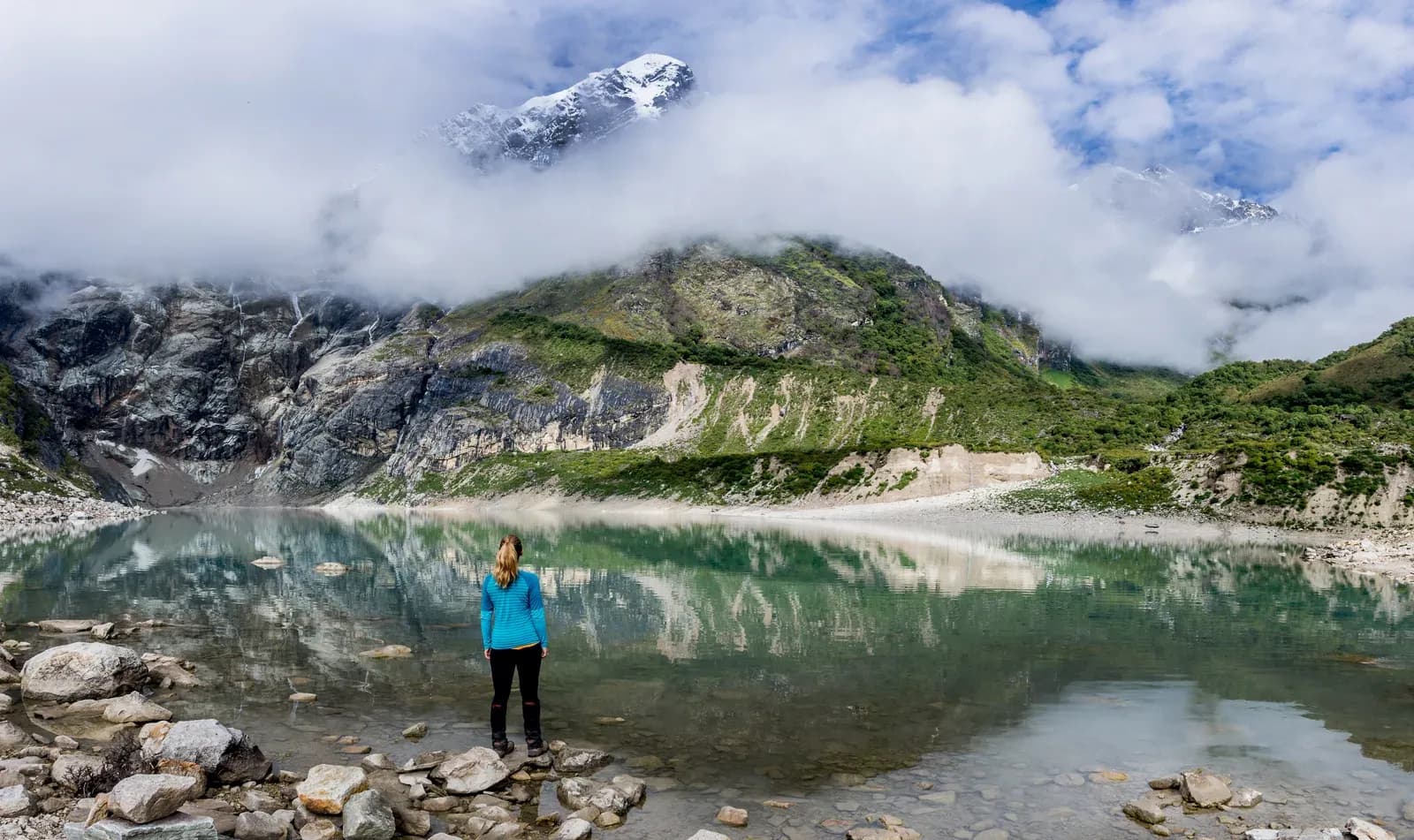
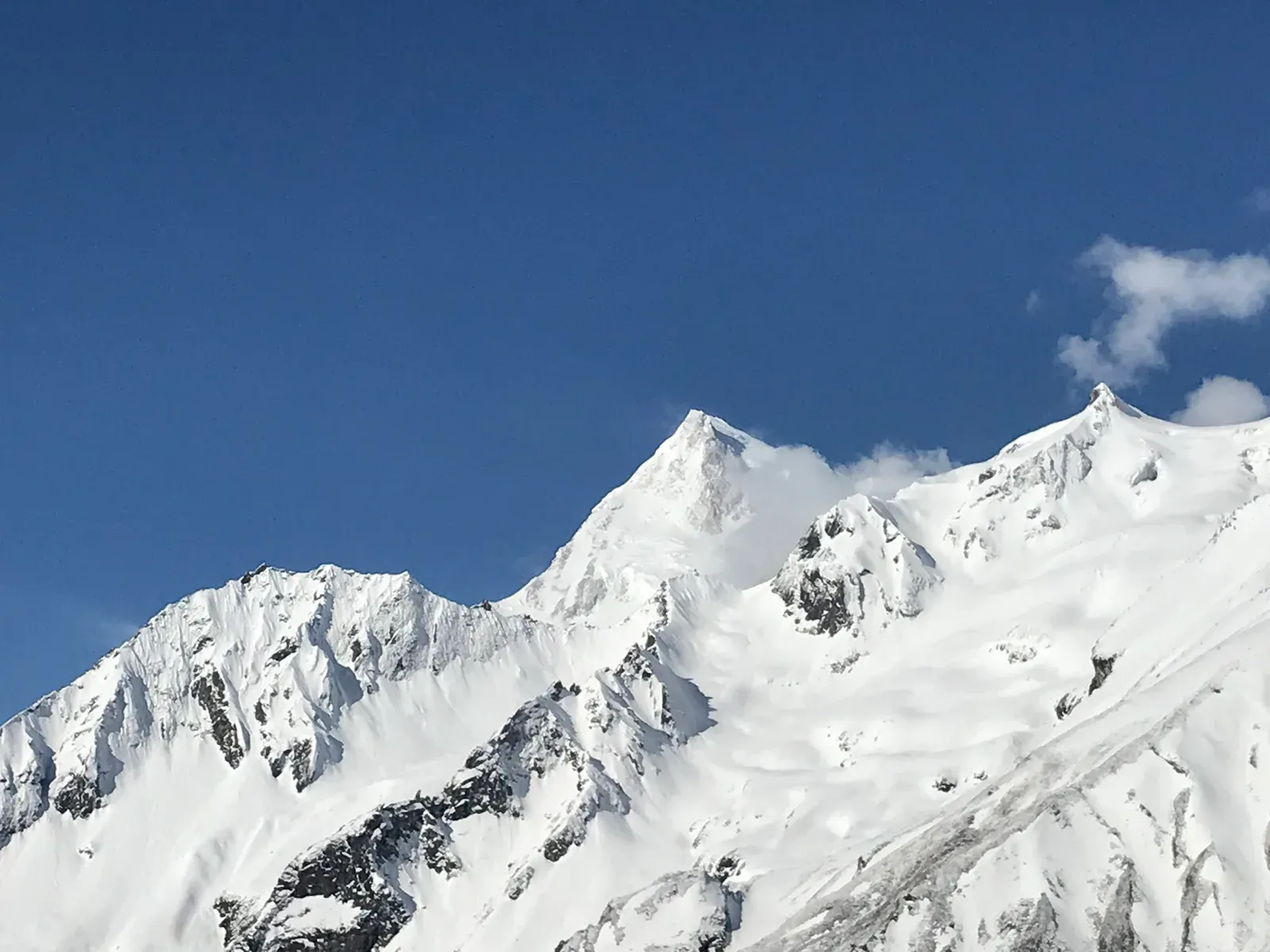
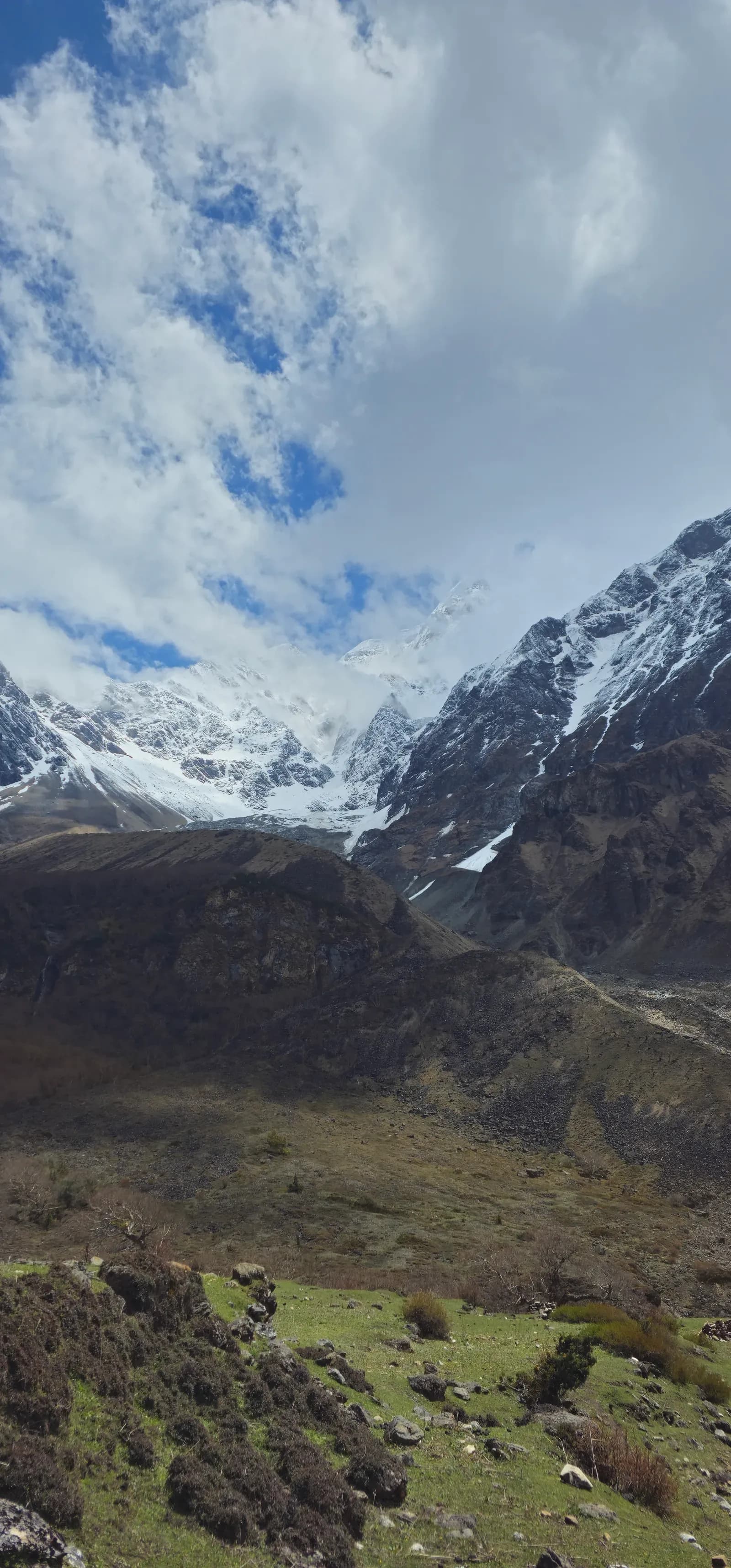
A 14, 16, or 18-day circuit of the world's eighth highest mountain. Larkya La pass at 5,106 m. Restricted-area Nubri valley. Max group eight.
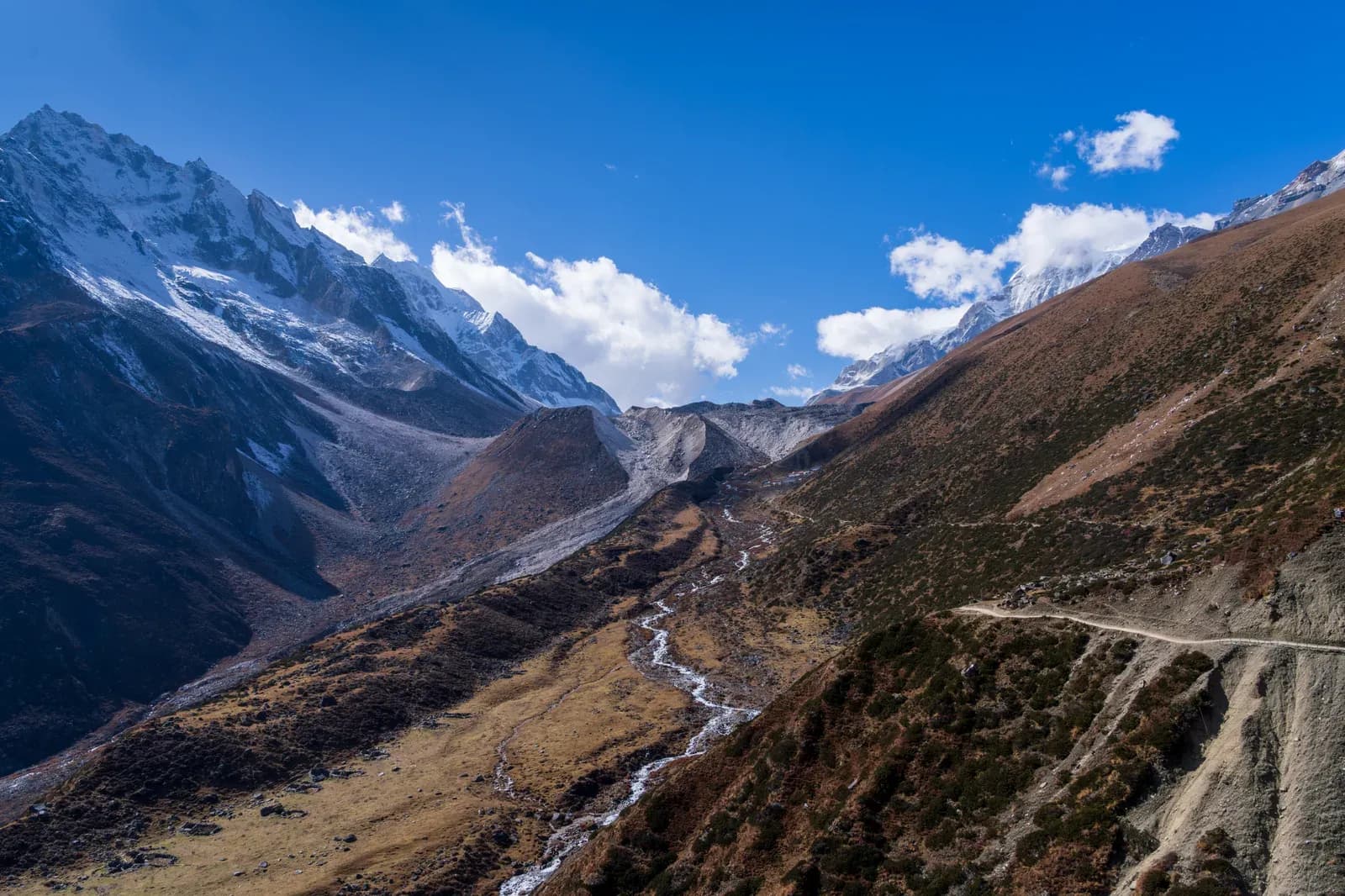
Gorge road in. Nubri villages above. Larkya La at 5,106 m. The comfort changes by tier; the safety floor does not.
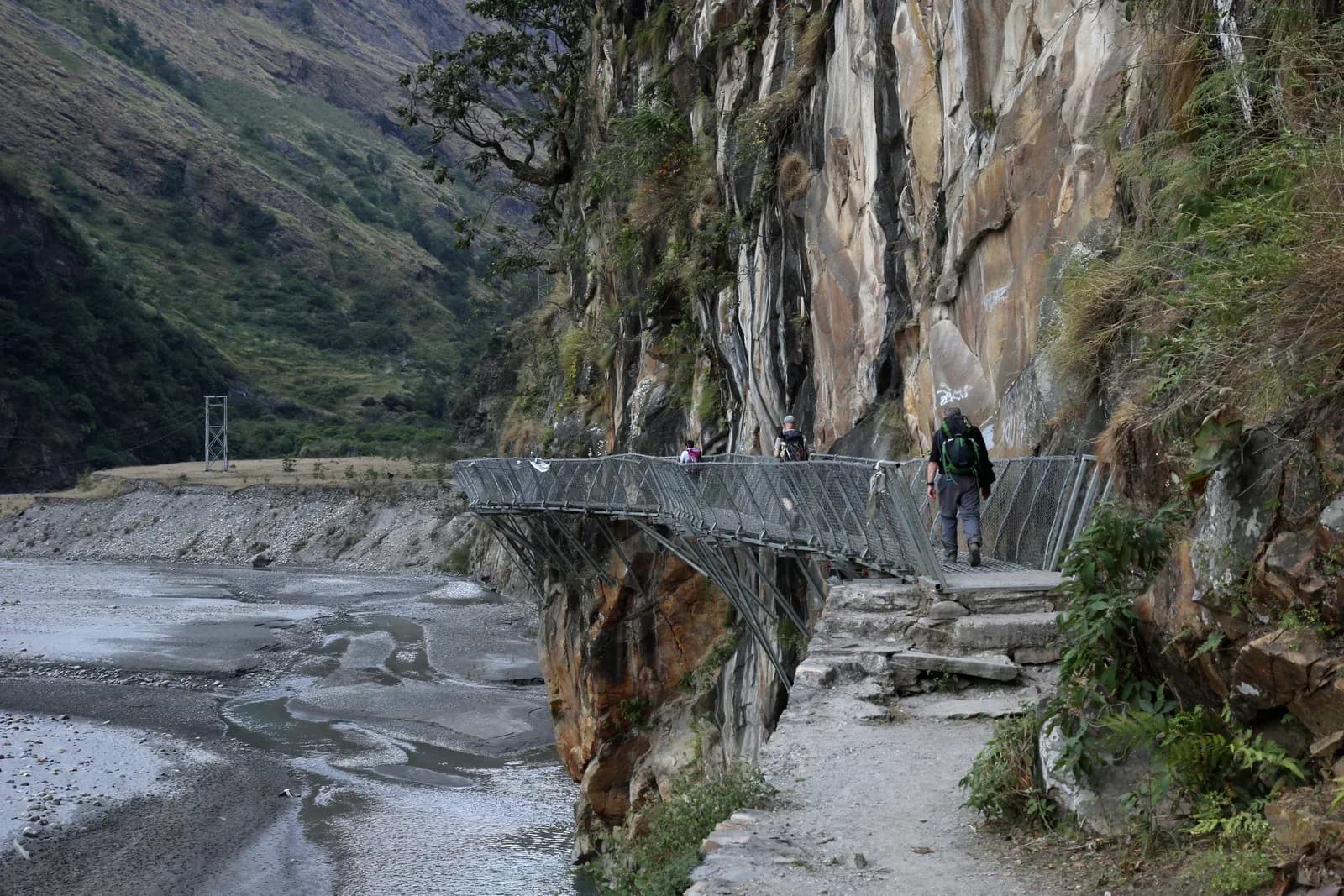
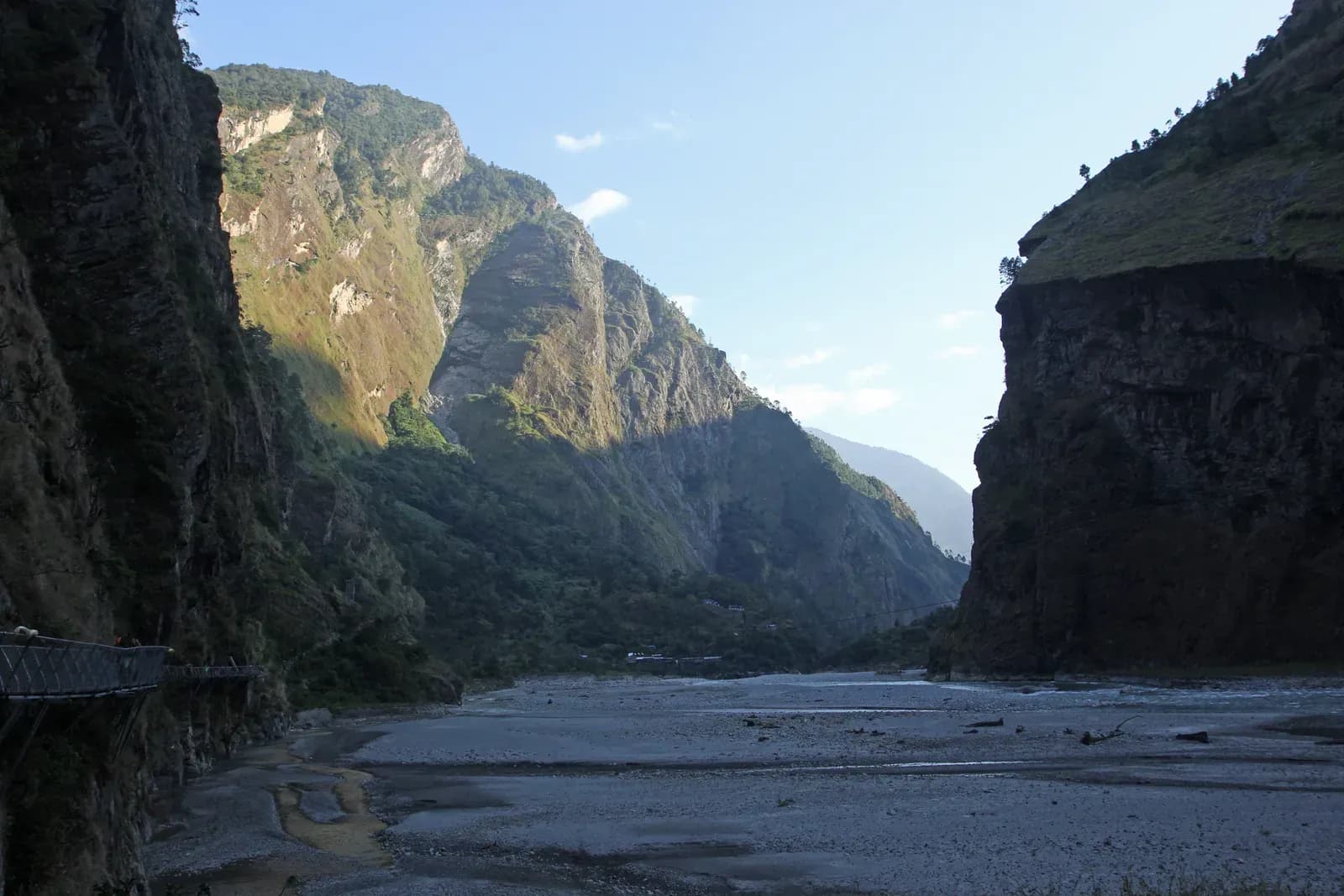
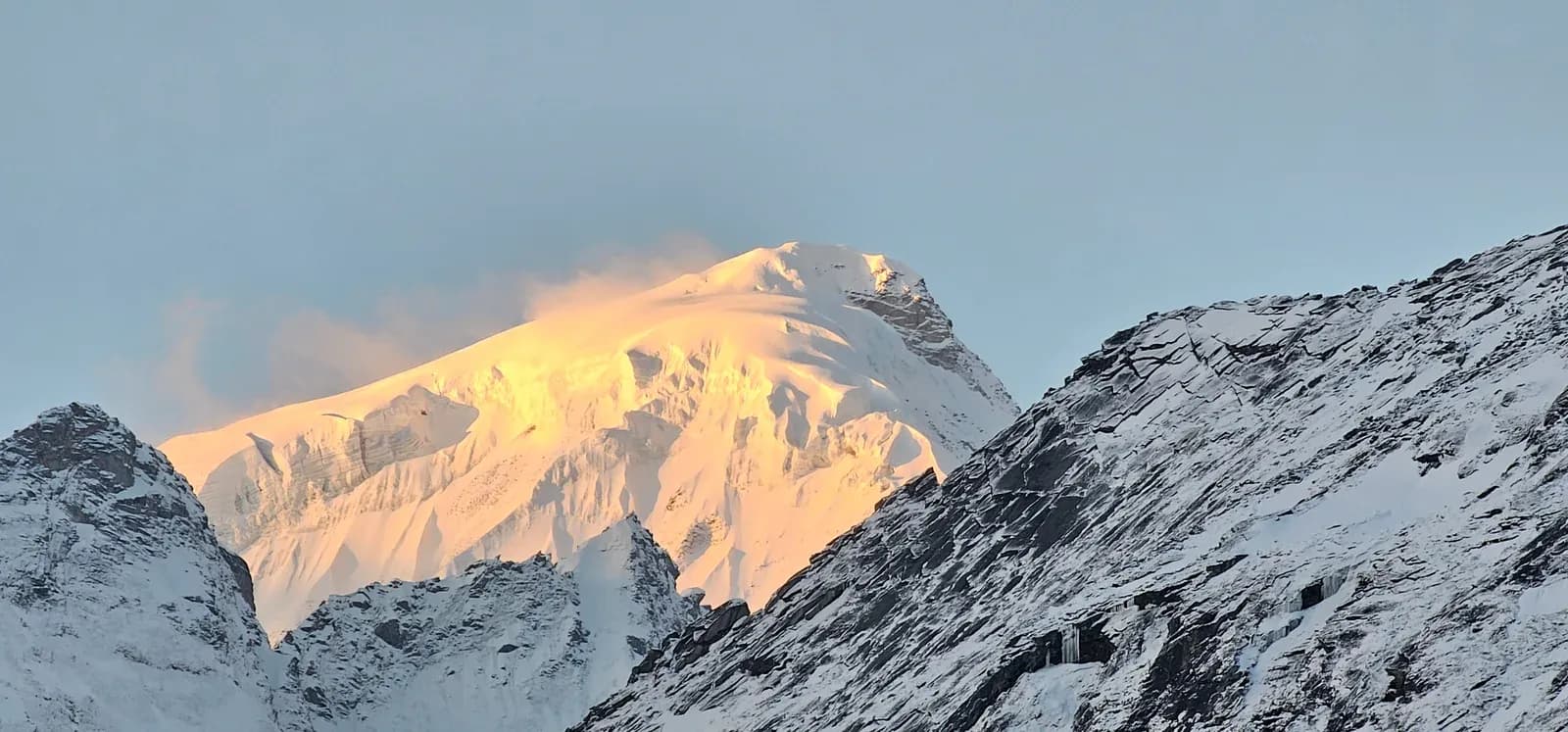
Manaslu is not a shortcut to an Everest-style trek with fewer people. It is a restricted circuit through gorge roads, Nubri villages, and a serious high pass. The reward is remoteness, but the route asks for patience with road access, changing lodge standards, and long walking days.
The route works because the acclimatisation is protected. We build the rhythm around Samagaun and Samdo before Larkya La, rather than rushing toward the pass and hoping the body keeps up.
The altitude gain is steep and the descent from Larkya La is brutal: sixteen hundred metres in a single day, on loose moraine. We build in two acclimatisation days for this reason, one at Samagaun and one at Samdo. Most operators include only one. Our two-day protocol is non-negotiable across every tier.
The lodges along the route are not luxury lodges. They are family-owned teahouses, and the comfort they can offer varies sharply by altitude and infrastructure — what we call Contextual Comfort. Three of the eleven trekking nights are basic for everyone who walks this trail, and as a matter of Radical Transparency we tell you which three before you book.
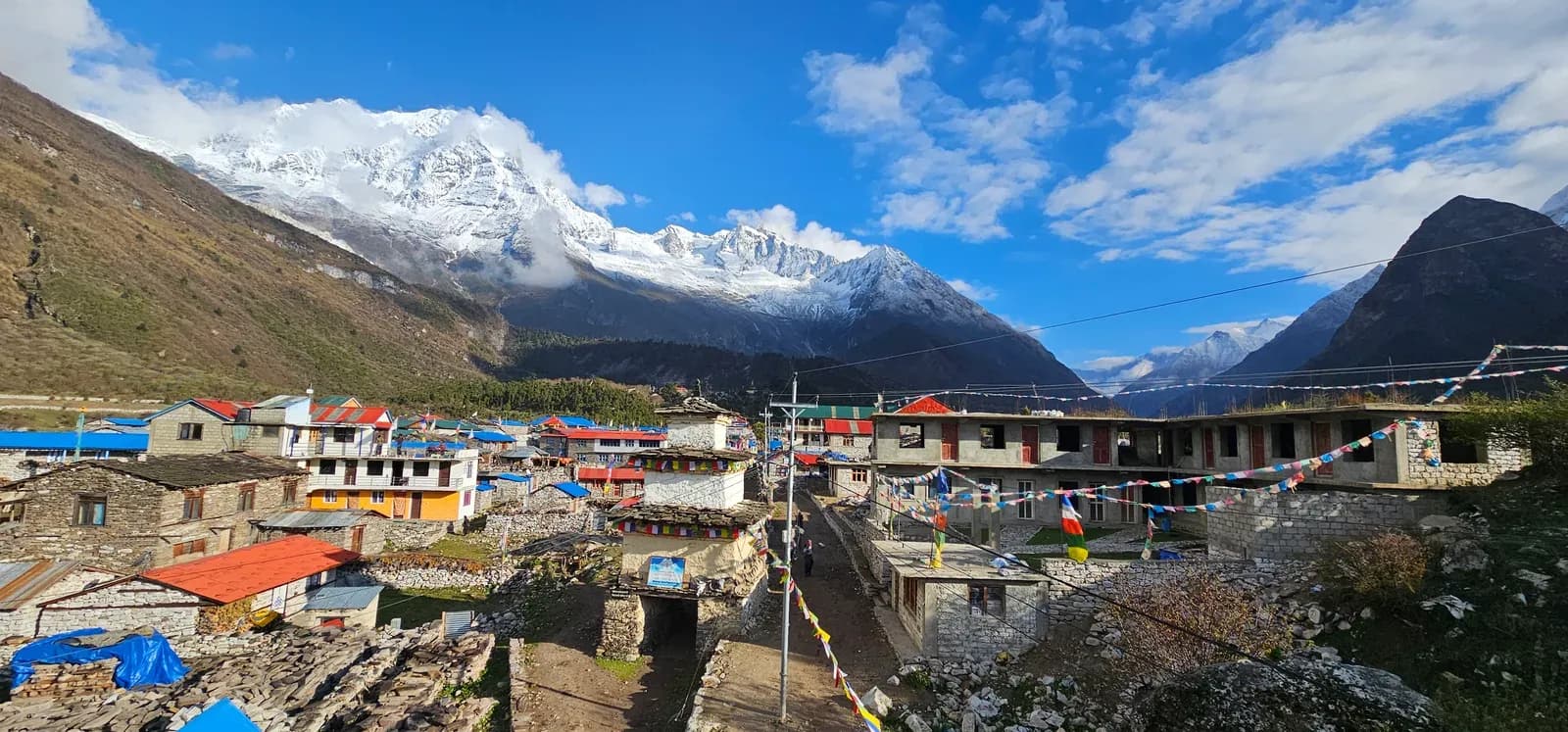
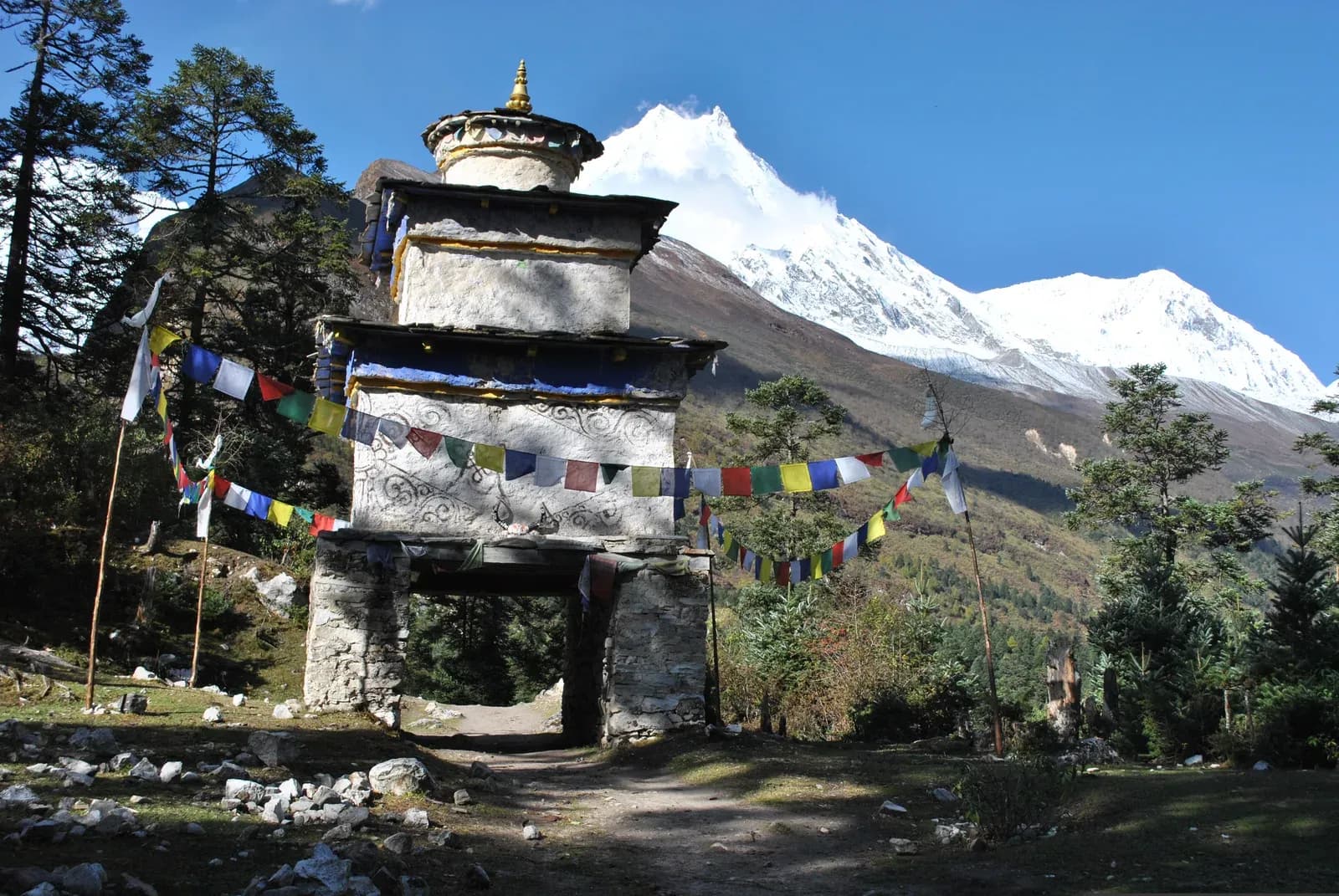
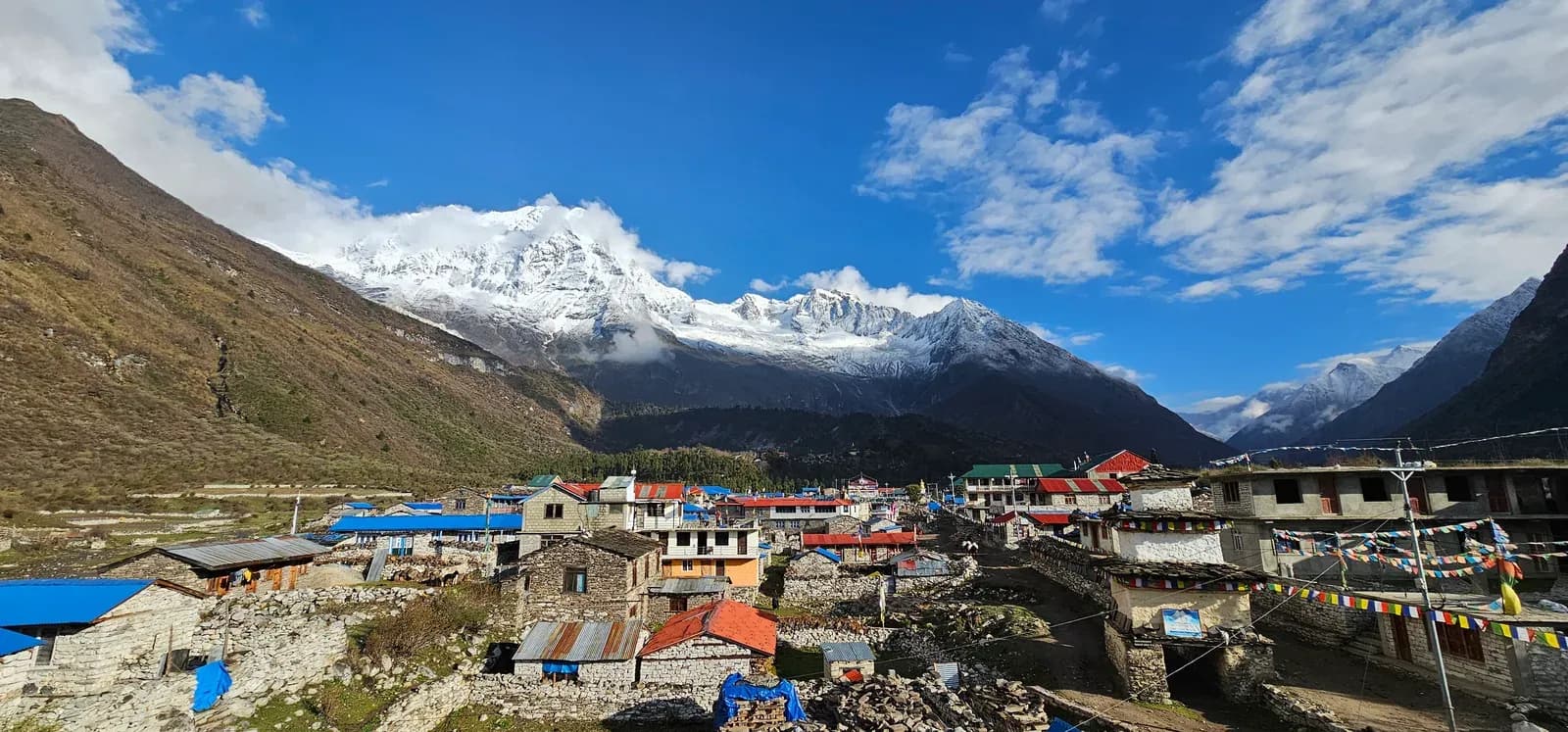
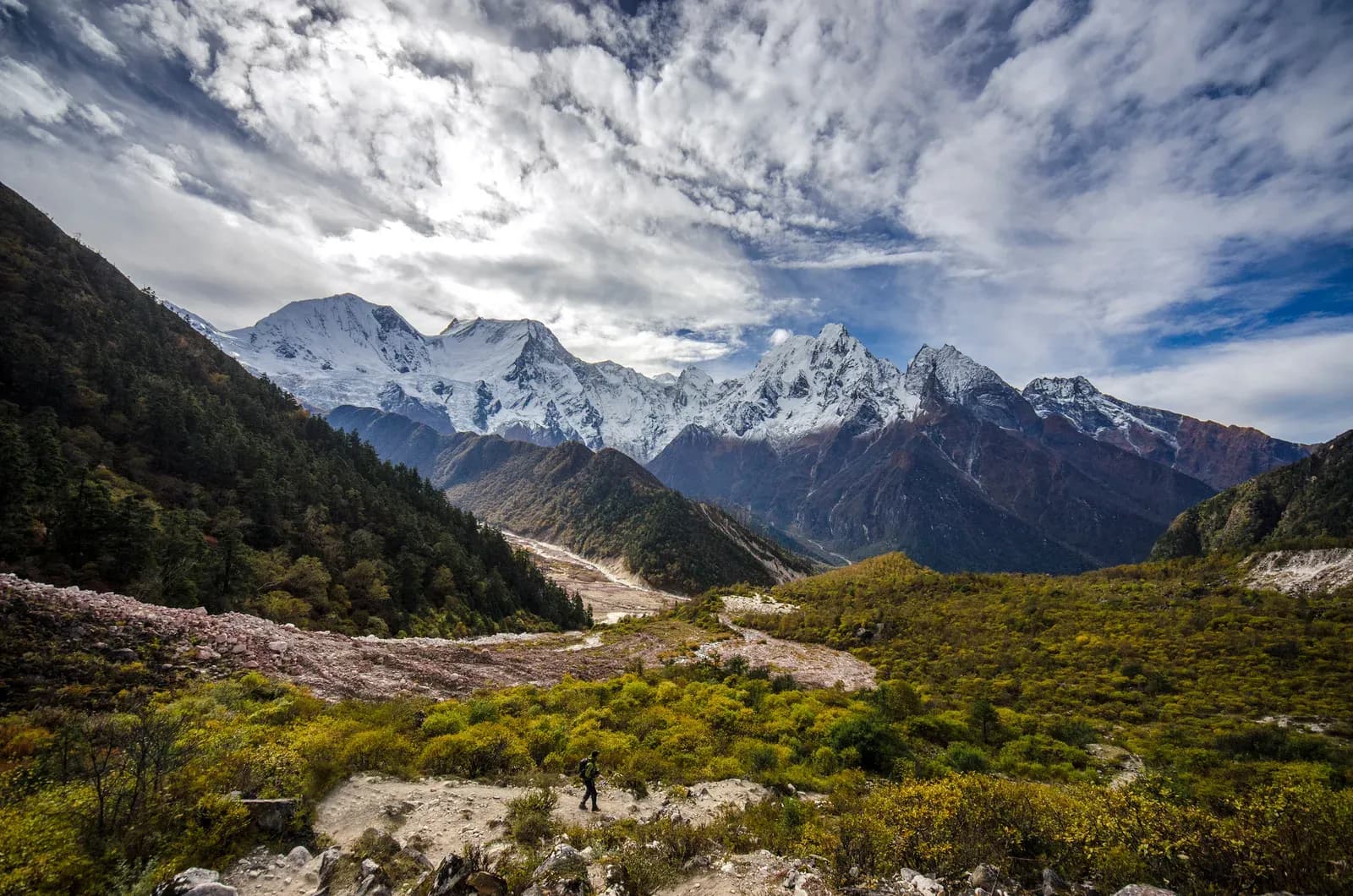
The cultural fabric of the upper valleys is Tibetan Buddhist, not Hindu. Nubri and Tsumba communities live along the route your grandparents might have crossed, and the best days are often the village days, not only the pass day.
Safety equipment, the two-day acclimatisation protocol, and the Small Group Promise of eight trekkers maximum are identical across all three tiers — the same Clinical-Grade Risk Management floor on The Trail as on The Transformation. Your safety does not have a price tier.
The trek is hard. It is also, by trekking-industry consensus, the most rewarding circuit walk in Nepal: more remote than Annapurna, less commercial than Everest, with a pass crossing that earns its name. We will not describe the views from Larkya La in this paragraph. You will see them yourself.
Pick a tier, set your group size, and choose a preferred departure. The number you see here is the number we receive.
11 included
Yes. The Manaslu Circuit is consistently rated harder than the Annapurna Circuit and roughly comparable to Everest Base Camp in physical demand, with three meaningful differences. First, the daily distances on the lower Manaslu trek are longer than Annapurna and the terrain is more aggressive — "Nepali flat" sections of repeated 200-metre ascents and descents. Second, the Larkya La pass at 5,106 metres has a brutal 1,600-metre descent on a single day, on loose moraine — harder on knees than Thorong La. Third, the route is more remote: fewer lodges, fewer evacuation points, no road access between Jagat and Dharapani. The pass altitude itself is slightly lower than Thorong La (5,416 m) but the overall physical and logistical demand is higher. Trekkers who have completed Annapurna comfortably will find Manaslu a step up. Trekkers considering this as a first high-altitude trek should be honest with themselves about cardiovascular fitness and joint condition before booking.
Yes, as of 22 March 2026. The Nepal Department of Immigration removed the two-trekker minimum that previously applied to all restricted-area treks including Manaslu. A solo foreign trekker can now apply for the Restricted Area Permit through a licensed agency and trek the route with a single guide. Two requirements remain in place: a government-certified guide (we use guides with Advanced-tier altitude certification, valid to 5,500 m) is still mandatory, and the permit must be processed through a registered trekking agency in Kathmandu. Independent trekking without a guide is still prohibited. For solo trekkers, our Transformation tier is the most natural fit — the one-to-one guide ratio is the same whether you are one trekker or six. Solo Trail and Journey bookings are also accepted; you simply join an existing fixed-date group of up to seven other trekkers.
All three tiers cover the same trek and the same safety protocol. The Two-Acclimatisation-Day Protocol, the safety equipment carried (pulse oximeter, supplemental oxygen, satellite phone, GPS tracking), the SpO₂ thresholds, the maximum group size of eight — these are identical across every tier. What changes is comfort, pacing, and support ratio. The Trail is fourteen days, fixed-date departures, with a shared porter (1:4 ratio), standard teahouse accommodation throughout, and basic three-star Kathmandu hotel — designed for fit trekkers who want the experience without spending more than necessary. The Journey is sixteen days, with extra cultural pacing, a dedicated porter (1:2 ratio), upgraded teahouses where infrastructure permits, a good four-star Kathmandu hotel, and a post-trek Traditional Nepali Recovery Massage — designed for the majority of our clients. The Transformation is eighteen days, fully private departures, with a one-to-one guide and porter, best available lodge at every overnight where infrastructure permits, premium Kathmandu hotel, and an optional helicopter return from Bimthang. Your safety does not have a price tier. Your comfort does.
Four permits are required for the Manaslu Circuit and all four are included in every LHJ tier. The Manaslu Restricted Area Permit (RAP) is the most expensive — USD $100 for the first seven days plus $15 per additional day in peak season (September to November), and USD $75 for the first seven days plus $10 per additional day in off-season. The Manaslu Conservation Area Permit (MCAP) is a flat USD $30 environmental fee. The Annapurna Conservation Area Permit (ACAP) is also USD $30 — required because the trek exits via Dharapani, which lies within the Annapurna region. There is also a small Chumnubri Rural Municipality fee of NPR 1,000 to 2,000 paid in cash at the Jagat checkpoint. Total permit cost for a fourteen-to-sixteen-day trek in peak season is approximately USD $175 to $215 per person. TIMS card is not required for Manaslu — the RAP supersedes it. All permits are processed by your LHJ agency in Kathmandu before the trek; you do not handle the paperwork yourself.
Two windows. Post-monsoon autumn (late September to late November) is the prime season — clearest atmospheric conditions, longest views of the Manaslu massif, stable weather across the pass. October is peak; November shoulder. Pre-monsoon spring (March to early May) is the secondary window — rhododendron forests in bloom at lower altitudes, longer daylight, generally clear mornings but increasing afternoon cloud build-up. April is the strongest spring month. Winter (December to February) is possible for experienced mountaineers but the Larkya La pass is frequently closed by snow; LHJ does not operate this trek between mid-December and mid-February. Summer monsoon (June to early September) is strongly discouraged — torrential rain, landslide-prone trails in the lower Budhi Gandaki gorge, and leech infestations. We do not offer the trek in monsoon. Book your dates four to six months in advance for October departures; lodge availability in the upper valley is genuinely limited in peak season.
This trek demands a robust baseline of cardiovascular fitness and joint condition. You will walk five to nine hours a day across uneven, often steep terrain — totalling 125 kilometres on foot over eleven trekking days, with a cumulative elevation gain of approximately 4,500 metres and the same back down. The pass day alone is sixteen kilometres with 650 metres of ascent and 1,600 metres of descent. Realistic preparation is three to four months of structured training: long aerobic sessions (running, cycling, swimming) two to three times per week, hill-walking or stair-climbing with a 5–8 kg pack once or twice per week, and bodyweight strength work for knees and core. If you can comfortably complete a six-hour day hike with 800 metres of elevation gain at lower altitudes, you are physically ready for the Manaslu Circuit. If you have not done a multi-day trek before, we recommend doing one at lower altitude (Ghorepani–Poon Hill, for example) before this one. Pre-existing knee, back, or cardiac conditions warrant a serious conversation with your doctor and with us before booking.
Altitude sickness is the primary risk on this trek and our protocol exists to detect it before it becomes serious. Your Guardian checks your SpO₂ (blood oxygen saturation) twice daily above 3,500 metres — morning and evening. The threshold numbers are explicit: if your SpO₂ drops below 85% at rest, we discuss and may modify the day's plan; if it drops below 80% at rest, descent is mandatory and not negotiable. We carry supplemental oxygen on every trek and administer it immediately if symptoms appear. We carry pulse oximeters on every trek. Above 4,000 metres we carry a satellite phone with direct connection to our Kathmandu operations base, which can co-ordinate helicopter evacuation if required. The cost of a helicopter rescue from the upper Manaslu region is USD $4,000 to $6,000; this is why your travel insurance must explicitly cover trekking to 6,000 metres and emergency helicopter evacuation — non-negotiable for booking. What we do not promise is a hyperbaric chamber on the trail, twenty-four-hour medical monitoring, or a guaranteed evacuation in all weather conditions. The realistic outcome of altitude sickness on this trek, with our protocol, is descent under your own power before a rescue is required. That is what the two acclimatisation days exist to make possible.
Honestly, it depends on the night. Below 2,500 metres (Machha Khola, Jagat) — yes, all three, reliably, paid per use at standard teahouses. At Namrung, Lho, and Samagaun (2,600 to 3,500 metres) — yes, where infrastructure permits, included in The Journey and Transformation tiers at upgraded lodges; pay per use on The Trail at standard teahouses. At Samdo (3,860 metres) — Wi-Fi often works, hot showers usually do not exist, charging is limited to the kitchen's solar setup with a small fee. At Dharamsala high camp (4,460 metres) — none of the above. Every grain of rice and every litre of fuel at Dharamsala is hauled in by mule train, and the infrastructure is built for survival, not comfort. We tell you this on the booking page rather than in the fine print because clients who arrive at Dharamsala expecting hot showers feel cheated, and clients who arrive expecting a stone shelter sleep better. The same logic applies to Wi-Fi: assume nothing above 3,800 metres, be pleasantly surprised if something works.
A fair question and one we will answer directly. LHJ launched in 2026, and our review base is genuinely thin compared to operators with twenty years of public history. What we do have: two decades of ground-level trekking industry experience among the founding team — lodge relationships, guide networks, and operational knowledge built before the company existed. Every guide working on an LHJ trek holds Nepal's Advanced-tier altitude certification (valid to 5,500 metres) and has logged at least five years on the routes they lead. Our pricing is published transparently with the cost breakdown shown — what you pay, where it goes, what our margin is. Our safety protocol is published in detail rather than implied. We do not fabricate reviews and we will not display testimonials until real clients write them after real treks. If trust matters more to you than what we can document right now, we recommend booking your first trek with us as part of a small group rather than a solo Transformation booking — observe how we operate, ask the harder questions, and decide whether to come back. The Trail tier is built partly for exactly this purpose. We would rather earn your second trek than oversell the first.
All four permits, all on-trek lodging (tier-specific quality), full board on the trek, breakfast in Kathmandu, private jeep transport in both directions, a licensed Guardian Profile, porter support (Trail 1:4, Journey 1:2, Transformation 1:1), a clean professionally-laundered sleeping bag, a branded duffel bag, the Pre-Trek Altitude Preparation Session in Kathmandu, and all safety equipment (pulse oximeter, supplemental oxygen, first-aid kit, satellite phone and GPS above 4,000 m). The Journey adds a down jacket loan, upgraded teahouses where available, post-trek Traditional Nepali Recovery Massage, and farewell dinner. The Transformation adds welcome and farewell dinners, premium hotel, and optional helicopter return. What we do not include: international flights, Nepal visa fee (paid in cash at Kathmandu airport, USD $30 to $125 depending on length), travel insurance (mandatory, must cover trekking to 6,000 m), Kathmandu lunches and dinners beyond the inclusive ones, bottled drinks and alcohol, tips for your guide and porter (customary suggestion: USD $10–15 per day per trekker, split between guide and porter), hot showers above 3,500 m if you are on The Trail, personal trekking gear you choose to bring or rent. A realistic budget for personal extras across the trek, beyond the tier price, is USD $250 to $450 per trekker — primarily insurance, visa, tips, and incidentals.
Follow the trail from start to finish — every day is a new adventure.
The Trail runs 14 days — the same route, without the Namrung cultural day and the Kathmandu recovery day. The Transformation runs 18 days — two Samagaun acclimatisation days, helicopter return from Bimthang, and a Kathmandu Valley cultural day.

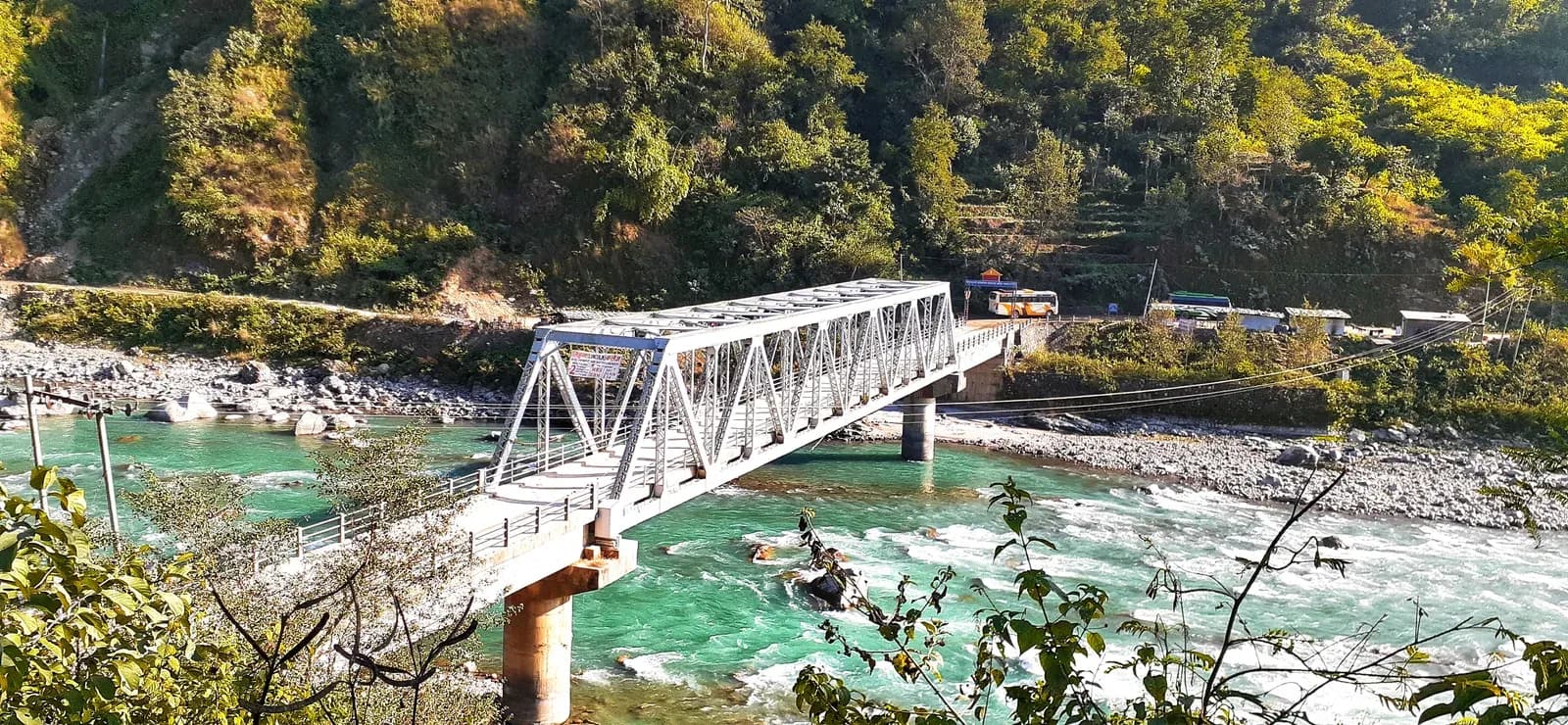
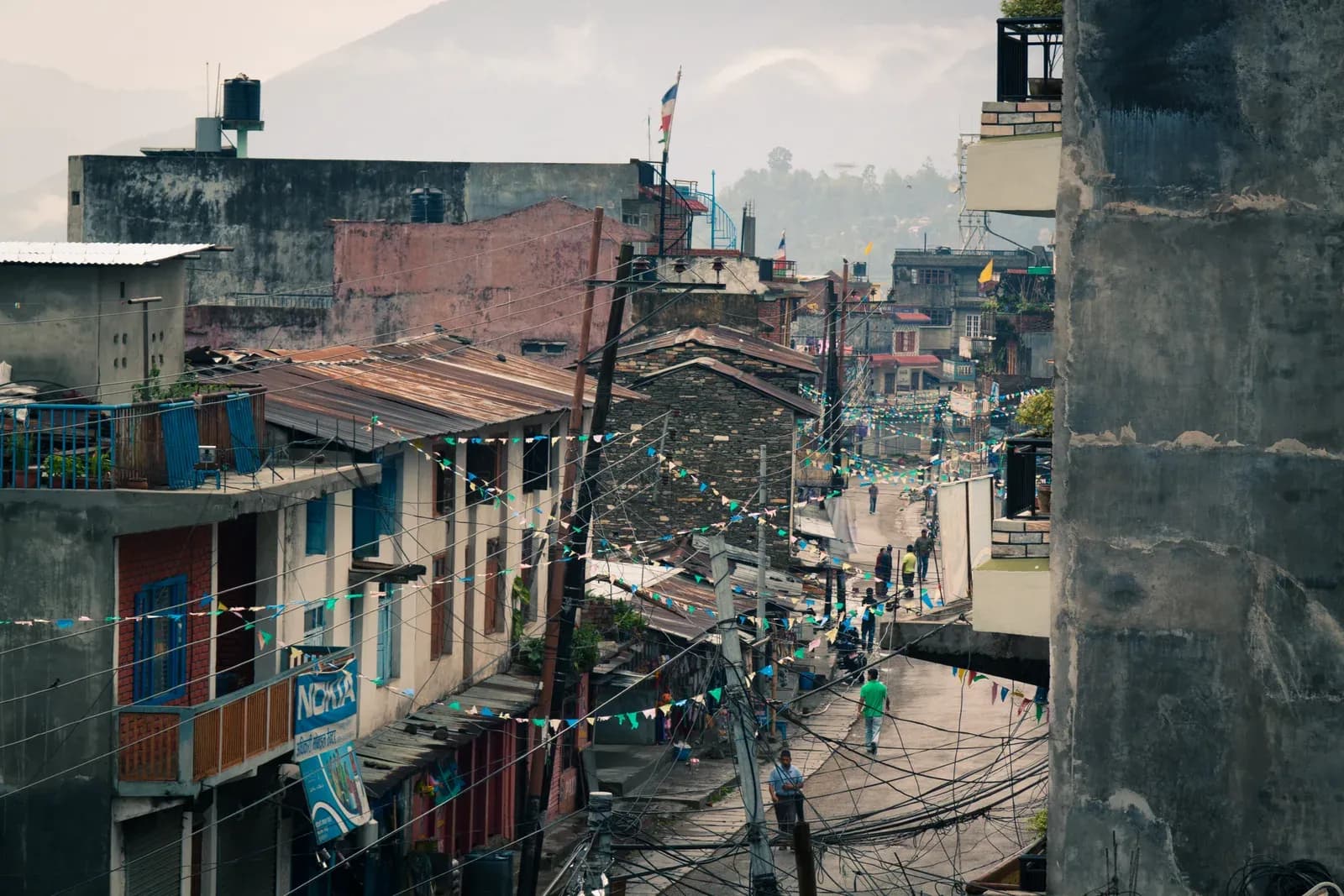
Rough jeep approach from Arughat into the Budhi Gandaki gorge.

First full walking day through river terraces and suspension bridges.

Trail alternates between stone villages, forest, and river crossings.

Climb into cooler pine and rhododendron forest above Deng.

Cultural rest day preserves acclimatisation without pushing higher.

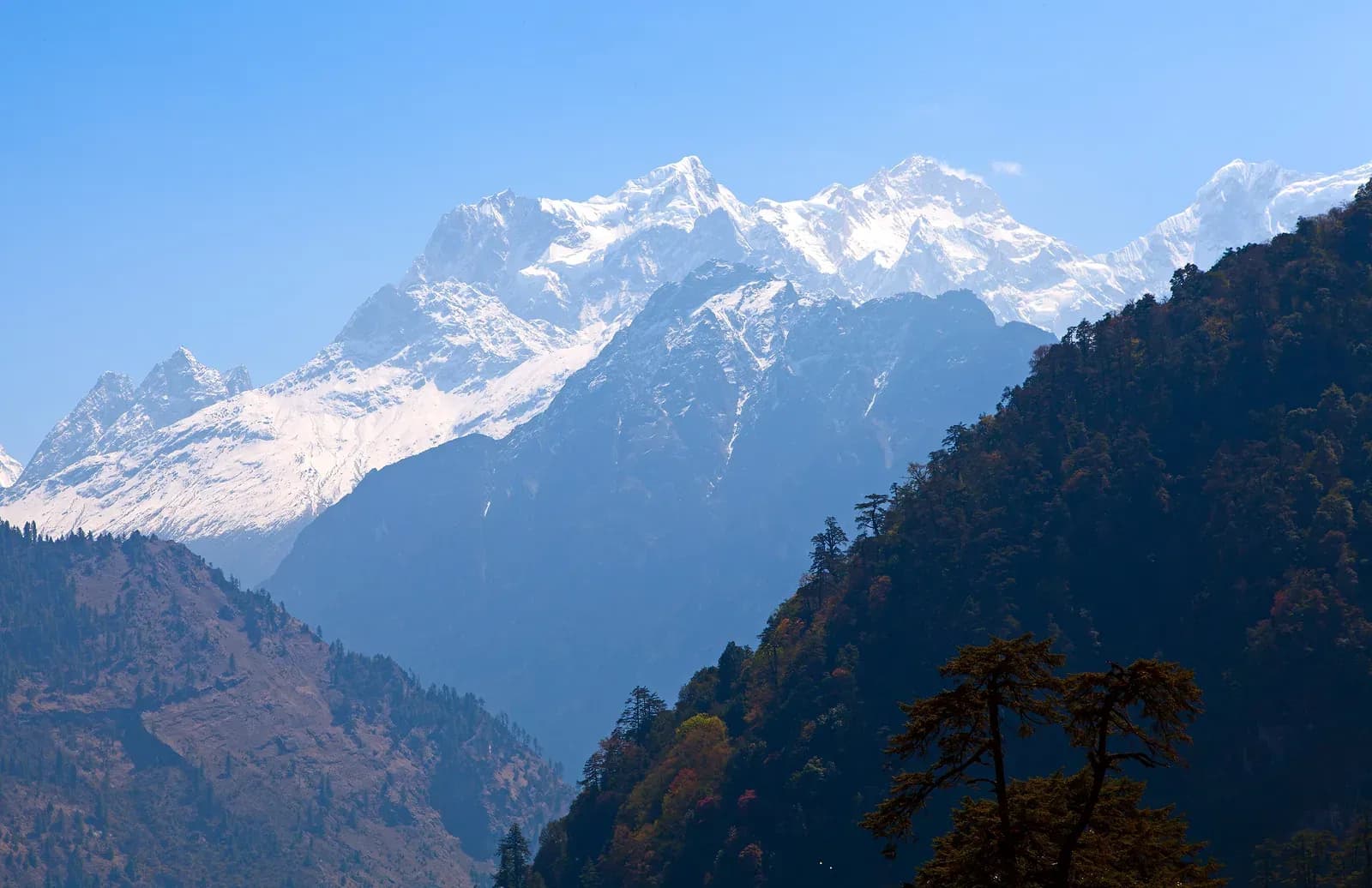
Shorter walking day from Namrung to Lho with big Manaslu views.

Trail passes Shyala and opens into the upper Nupri valley.

Acclimatisation day from Samagaun with Birendra Lake or higher options.

Short, steady walk across open yak pasture toward Samdo.

Second acclimatisation day protects the Larkya La schedule.

Short but serious move to Dharamsala / Larke Phedi.

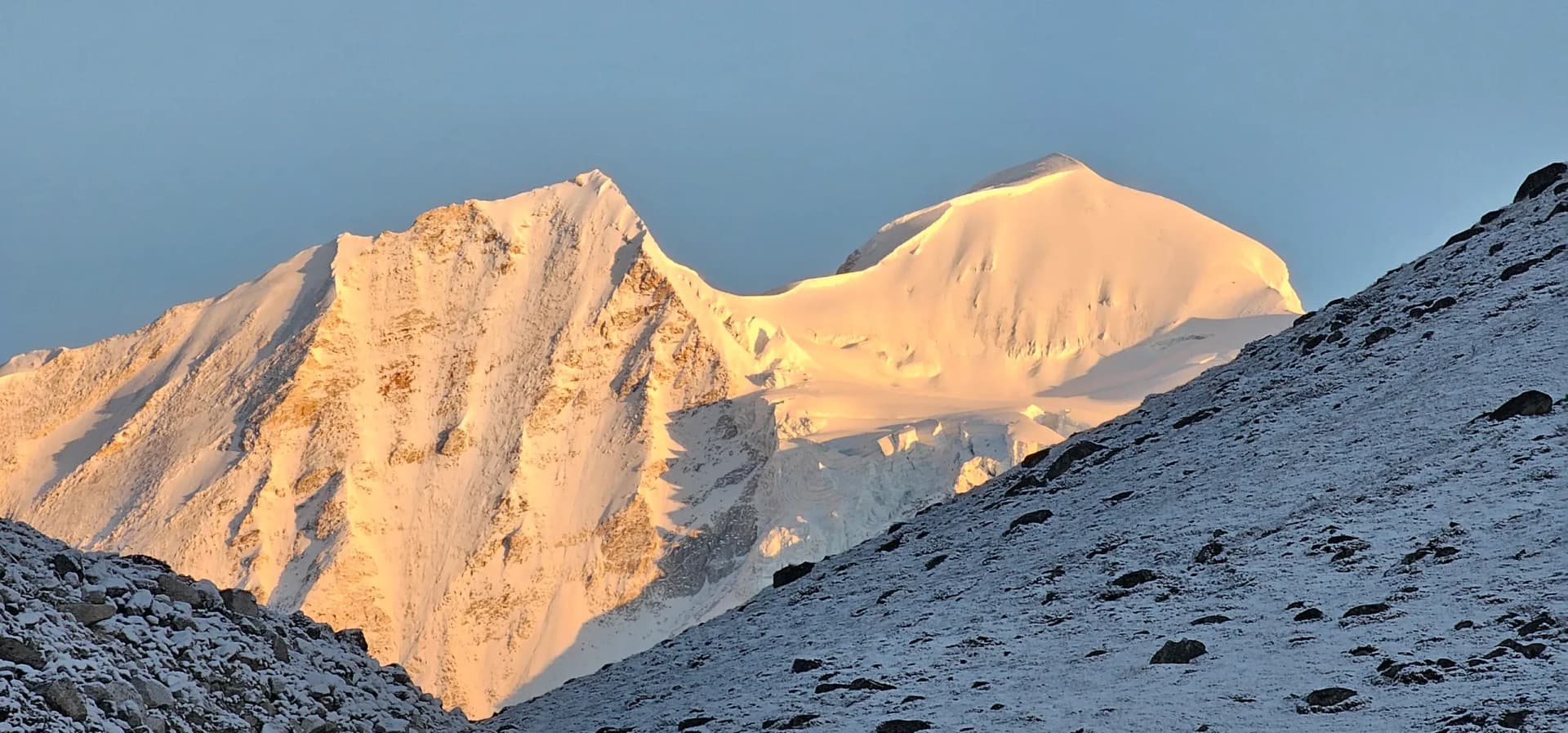
Cross Larkya La at 5,106 m, the highest point of the trek.

Descend from alpine terrain into forest and warmer valley air.

Final walking and jeep-link day through Tilije, Dharapani, and Besisahar.

Long road return from Besisahar to Kathmandu.

Kathmandu recovery day with massage and farewell dinner on The Journey.