Loading...
Loading...

Cross Thorong La (5416 m) on the Annapurna Circuit. Honest pacing, a real Manang rest day, meals included. Three tiers, same safety.
A high-pass circuit from the Marsyangdi valley to the Kali Gandaki, crossing Thorong La at 5416 m. We are direct about which sections are walked, which are driven, and why the Manang rest day is non-negotiable.
The pass day. A pre-dawn start, a climb to 5416 m, then a long descent of roughly 1600 m to Muktinath. Eight to nine hours, the single hardest day on the route.
Manang to the pass is about 1900 m of sleeping-altitude gain over two nights, faster than standard guidance. This is why the Manang rest day exists and why we will not sell the rushed jeep-only version as a safe shortcut.
Roads now reach Chame and Muktinath. Each tier states exactly which sections you walk and which you drive. The Trail drives in to Chame; the Journey starts walking at Chyamje; the Transformation walks the full line from Besisahar.
Rooms improve lower down on the upgraded tiers. Above the pass, accommodation is basic for everyone regardless of tier. We do not pretend otherwise.
Fit walkers comfortable with multiple long days and one very high pass. No technical climbing, but altitude affects everyone regardless of fitness.
Pick a tier, set your group size, and choose a preferred departure. The number you see here is the number we receive.
2 included · 3 not included
It is a challenging trek, mainly because of the Thorong La pass at 5416 m, not because of technical difficulty. There is no climbing or ropework. What makes it hard is a run of long walking days, big daily ascents and descents, and one very high pass crossed on a pre-dawn start. If you are fit enough to walk six to eight hours on consecutive days and you respect the acclimatisation pacing, it is achievable for a determined first-time high-altitude trekker on the right tier. The pass day is the hardest, around eight to nine hours with a climb to 5416 m and a long descent after.
The altitude is the main risk on this trek and it is taken seriously. The climb from Manang at 3540 m to Thorong La at 5416 m is close to 1900 m of sleeping-altitude gain over about two nights, which is faster than the general guidance of no more than 300 to 500 m of sleeping gain per night above 3000 m. That is exactly why a rest day in Manang is built into every tier and why we will not sell the rushed jeep-only itinerary as a safe shortcut. Altitude sickness has no reliable link to age or fitness, so the protections are the same for everyone: gradual pacing, the Manang rest day, daily monitoring at altitude, and a clear rule that if symptoms are serious the response is to descend. Your guide is trained to spot early signs.
Yes. Since April 2023 foreign trekkers have been required to trek in the Annapurna region with a licensed guide or registered agency rather than fully independently. As of a rule change in March 2026 the previous two-person minimum was removed, so a solo traveller can now trek with a guide. We treat the guide as a safety measure as much as a legal one, especially on a high-pass route, and a licensed guide is included on every tier. NEEDS VERIFICATION: confirm the current rule with operations before the season starts, as Nepal's trekking rules have changed more than once.
It depends on how much of the lower route you walk versus drive. Our Trail is a 13-day trip door to door with 11 active trekking days, driving in to Chame to save the lower road section. The Journey is 16 days door to door with 13 active trekking days, starting on foot lower at Chyamje. The Transformation is around 19 days door to door with 17 to 18 active trekking days, walking the full classic line from Besisahar, adding a second acclimatisation night and a Poon Hill finish. We list both the door-to-door length, so you can book flights, and the active trekking days, so you know what you are actually walking.
More than most operators admit. Roads now reach Chame on the Manang side and Muktinath on the far side, so the lower valleys can be driven. We tell you exactly which parts you walk and which you drive on each tier. The Trail drives in to Chame and exits by road from Jomsom. The Journey starts walking lower at Chyamje. The Transformation walks the full line from Besisahar. The high heart of the route, Manang over Thorong La to Muktinath, is walked on every tier; there is no road over the pass. The reason this matters is not only scenery: walking the lower sections also helps you acclimatise gradually, which the jeep-heavy short versions skip.
You need the Annapurna Conservation Area Permit, the ACAP, which is the required permit for the region. It costs 3000 Nepalese rupees for foreign trekkers, roughly 20 US dollars, and we arrange it for you as part of every tier. The TIMS card is not currently required or checked on the Annapurna trails, though Nepal's permit rules have changed before, so we confirm the current position at the start of each season. NEEDS VERIFICATION: reconfirm ACAP fee and any TIMS change with operations before publishing exact figures each season.
Spring, from March to May, and autumn, from September to November, are the two main seasons. Autumn gives the clearest, most stable mountain weather and is the most popular. Spring brings rhododendron blooms lower down and longer days. Winter is possible but the pass can be blocked by snow and the high nights are very cold. The summer monsoon, June to August, brings rain, cloud, landslide risk on the roads, and leeches lower down, so we do not recommend it for this route. The pass itself can hold snow in any shoulder season, which affects timing on the day.
Meals are included, and we say so clearly because some operators quote a low headline price and leave food out. The Trail includes breakfast and dinner, with lunch on your own for flexibility on driving and walking days. The Journey and The Transformation include full board, all three meals. Food on the trail is simple teahouse cooking: the Nepali staple dal bhat, lentils with rice and vegetables, plus noodles, soups, eggs, potatoes and pancakes. Prices on menus rise as you go higher because everything is carried or hauled up, but on our included tiers that is already covered.
It can, on the right tier and with honest preparation, but go in clear-eyed. The pass at 5416 m is genuinely high and altitude affects everyone, so a first-timer should choose a tier with more acclimatisation built in. The Journey, starting lower with a Manang rest day, or The Transformation with its second acclimatisation night, suit a careful first high-altitude trekker better than the faster Trail. You should be comfortable walking several consecutive long days beforehand. What matters most is not raw fitness but respecting the pacing, telling your guide how you feel, and being willing to slow down or descend if your body asks for it.
Yes, Tilicho Lake can be added as an extension, and we are also building it as a trek in its own right. Tilicho sits at about 4919 m and the detour adds roughly one to two days from the Manang valley. It is a serious high-altitude addition, not a casual extra, so it has to be planned carefully around your acclimatisation and is best suited to the longer tiers. Tell us at the planning stage if you want it and we will build the days and the pacing around it rather than bolting it on. Pricing for the add-on is given on request.
Follow the trail from start to finish — every day is a new adventure.
Safety is identical across all tiers. What changes is where you start walking (jeep to Chame on The Trail, Chyamje on The Journey, full walk from Besisahar on The Transformation), meals (breakfast and dinner on The Trail, full board above), whether a porter is included, room quality where the route allows, the second acclimatisation night and Poon Hill finish on The Transformation, and the support ratio. The licensed guide, acclimatisation pacing, Manang rest day, and descent protocol do not change with price.

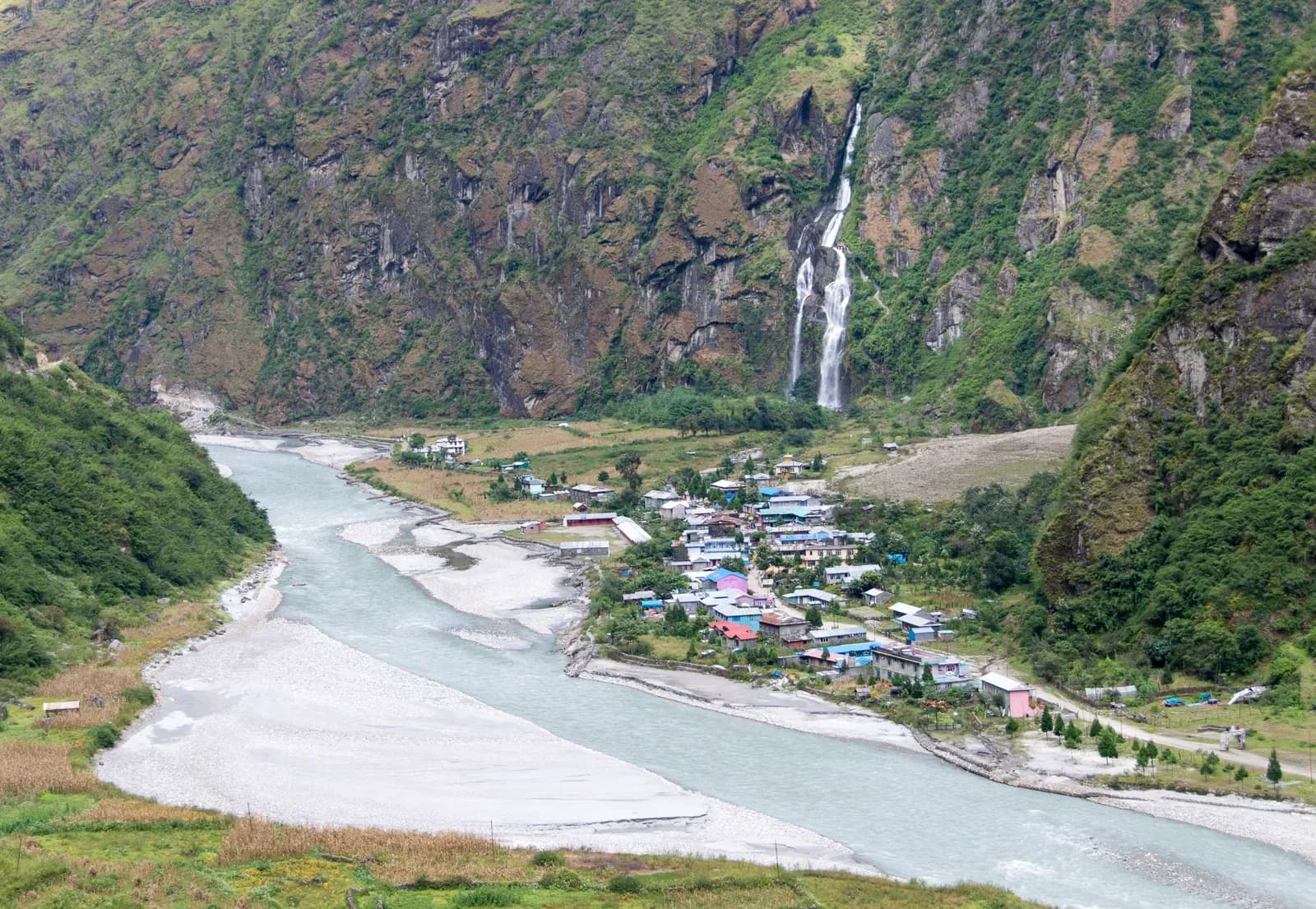
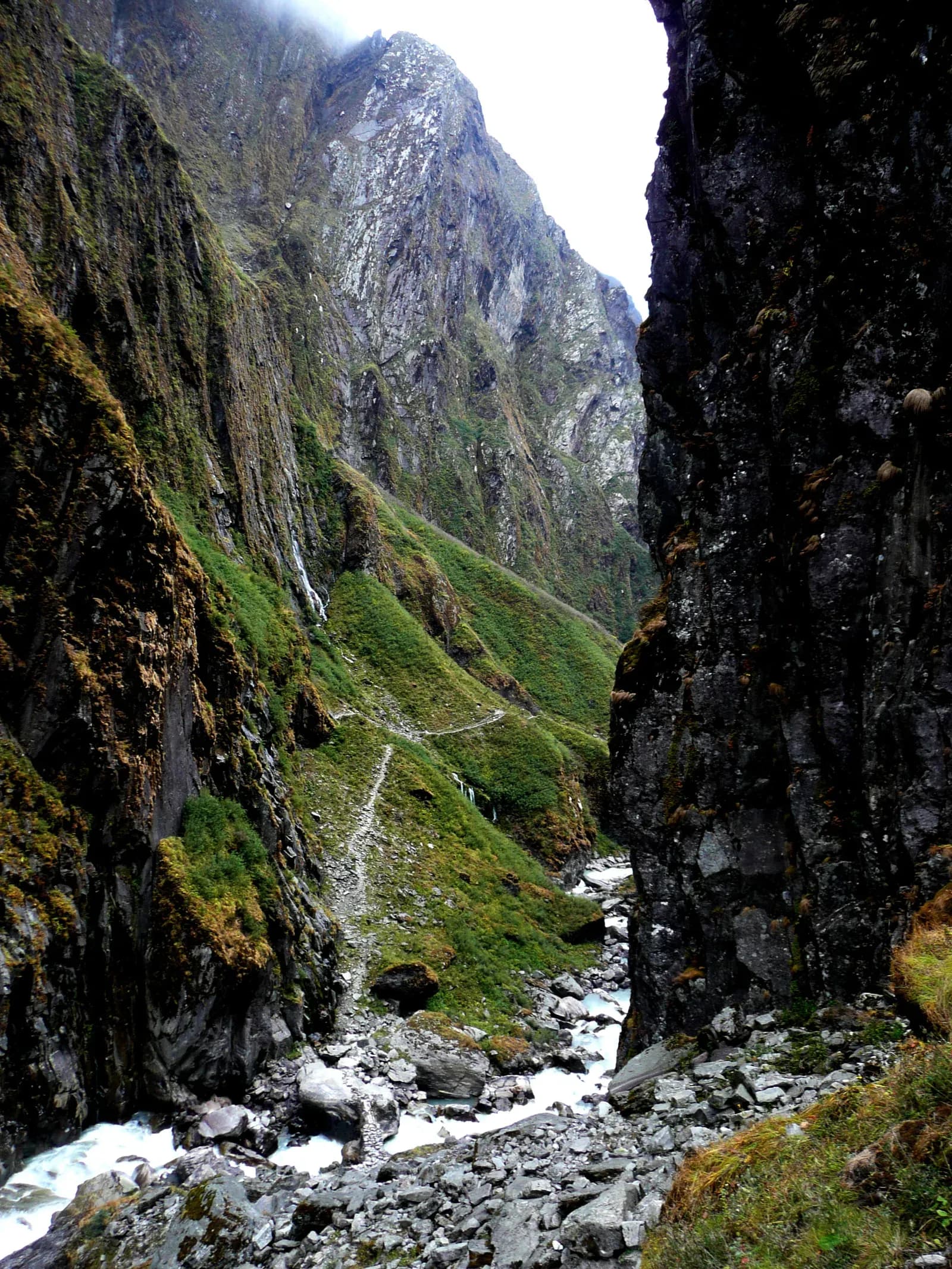
The Chyamje waterfall at the mouth of the gorge

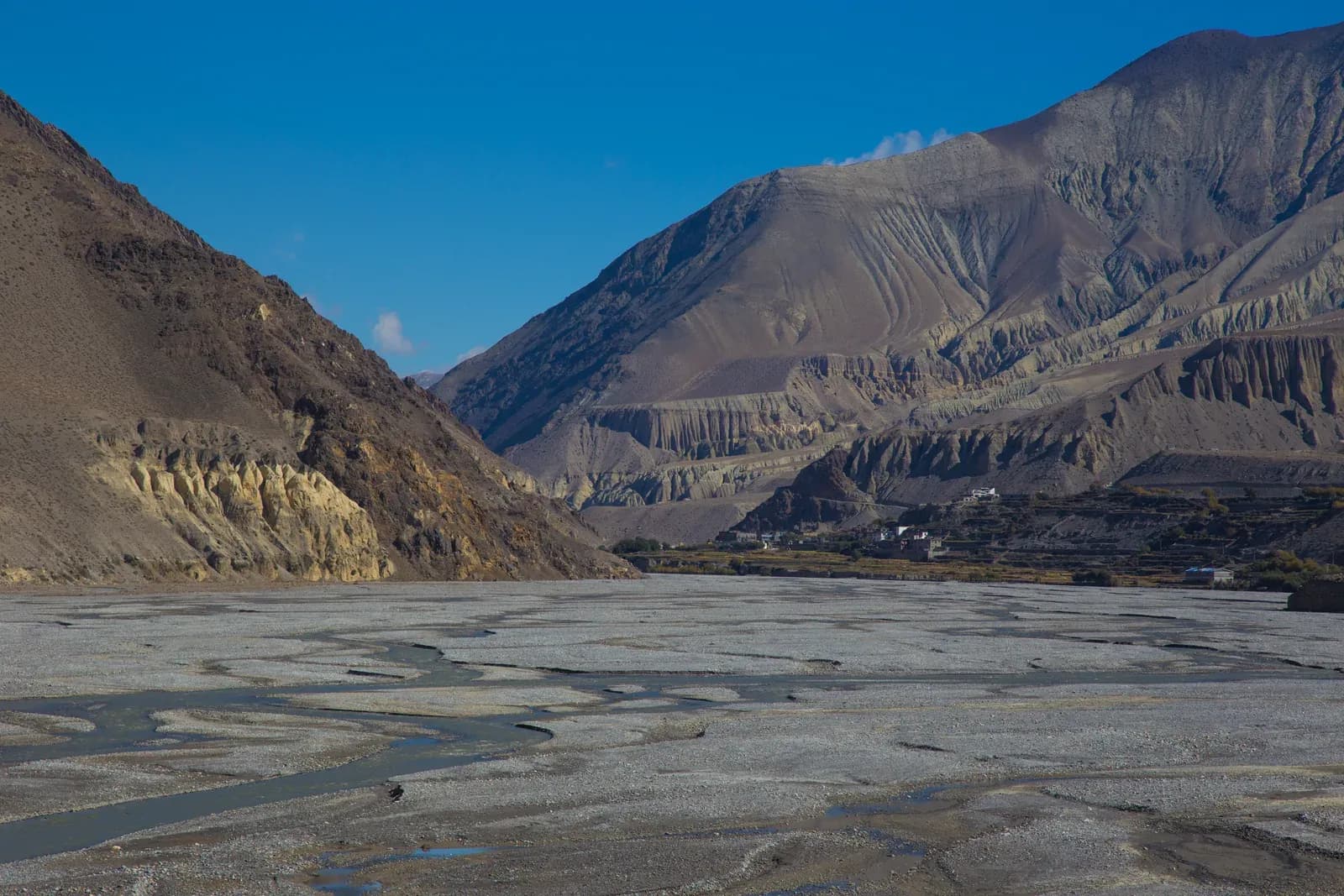
The sandy old lakebed at Tal

Pine and fir forest walking

The sweeping rock face of Paungda Danda

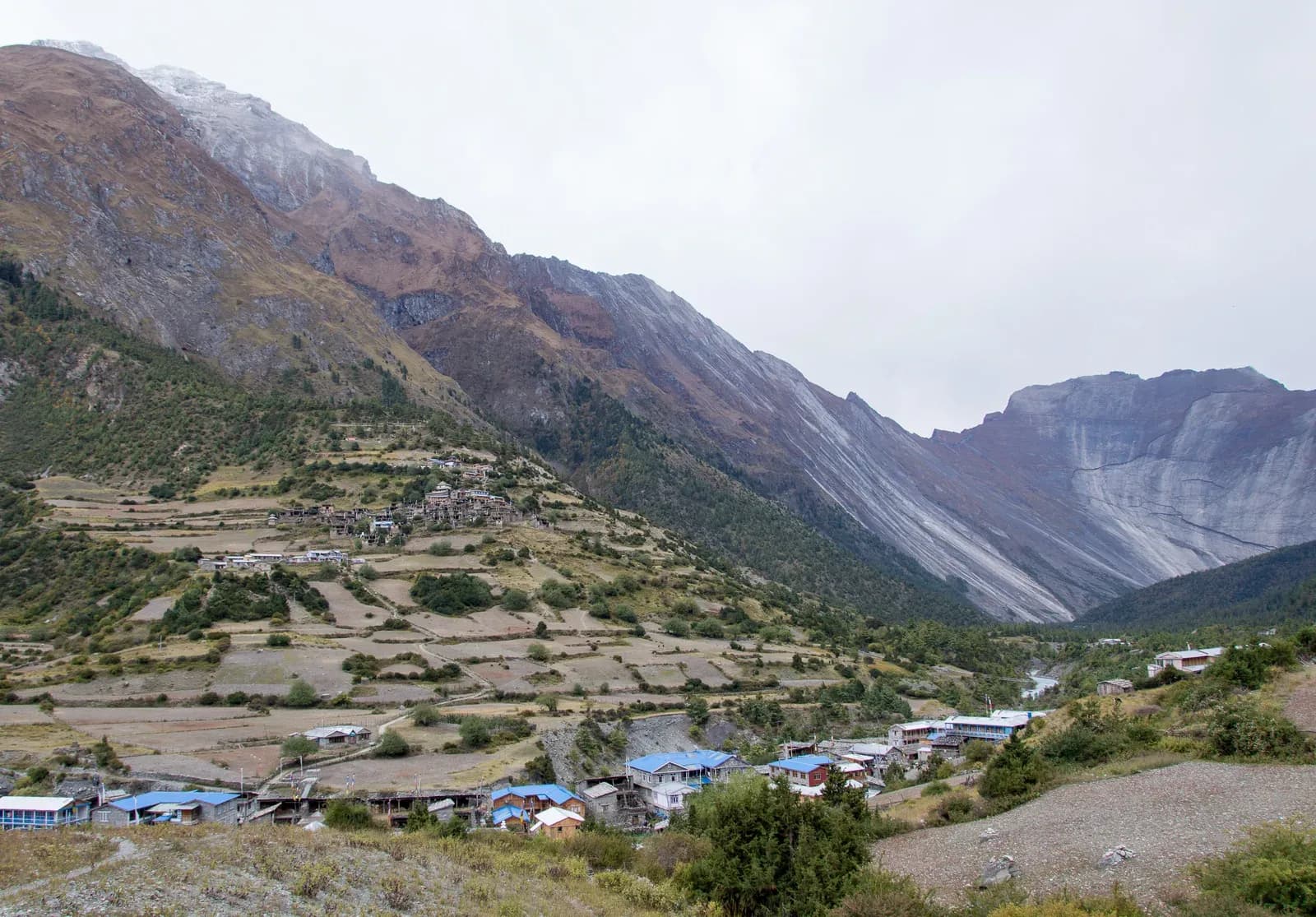
The high route through Ghyaru and Ngawal

An active acclimatisation hike to Gangapurna Lake or the Ice Lake viewpoint

Crossing above the tree line into high pasture

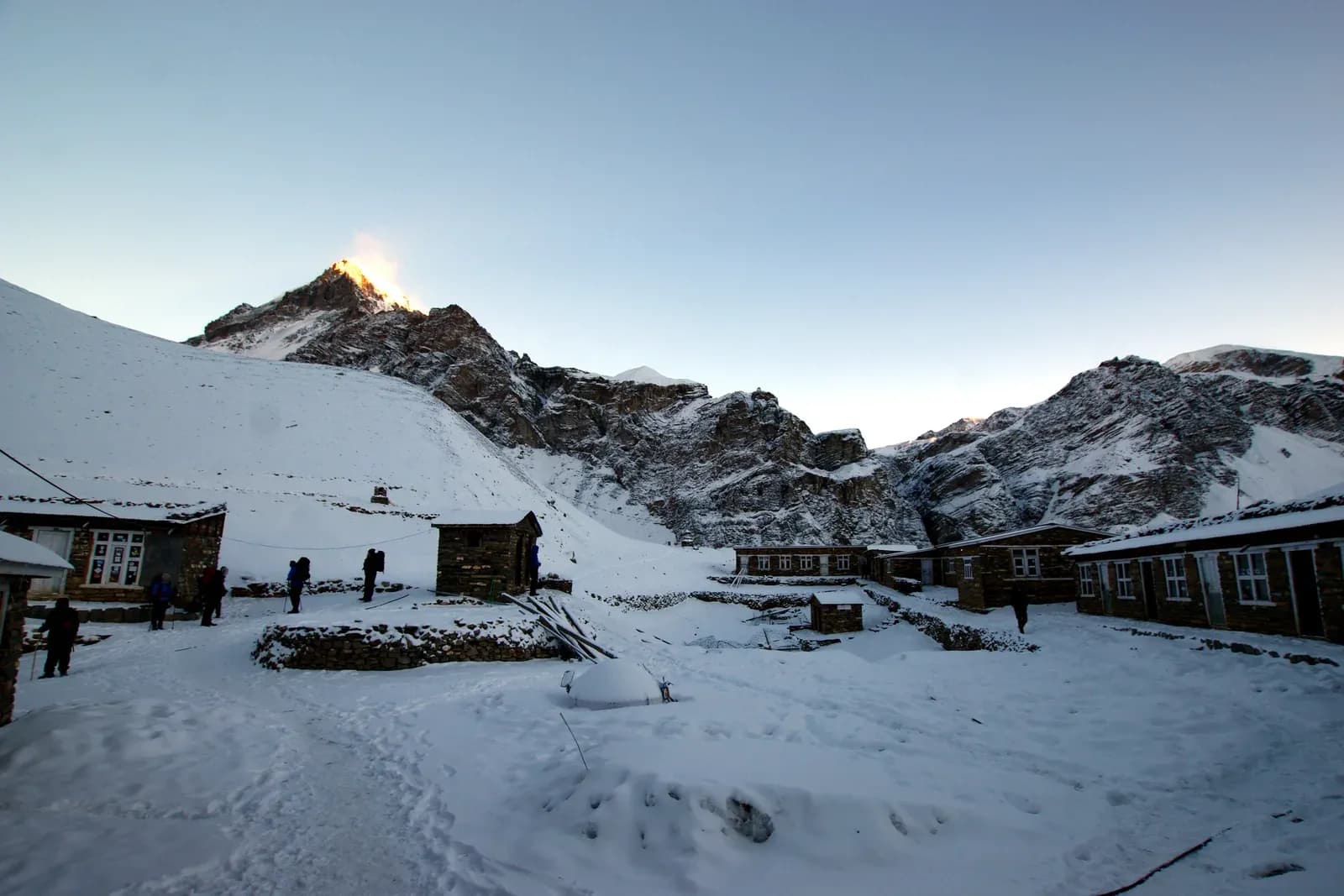
The climb to Thorong Phedi and High Camp

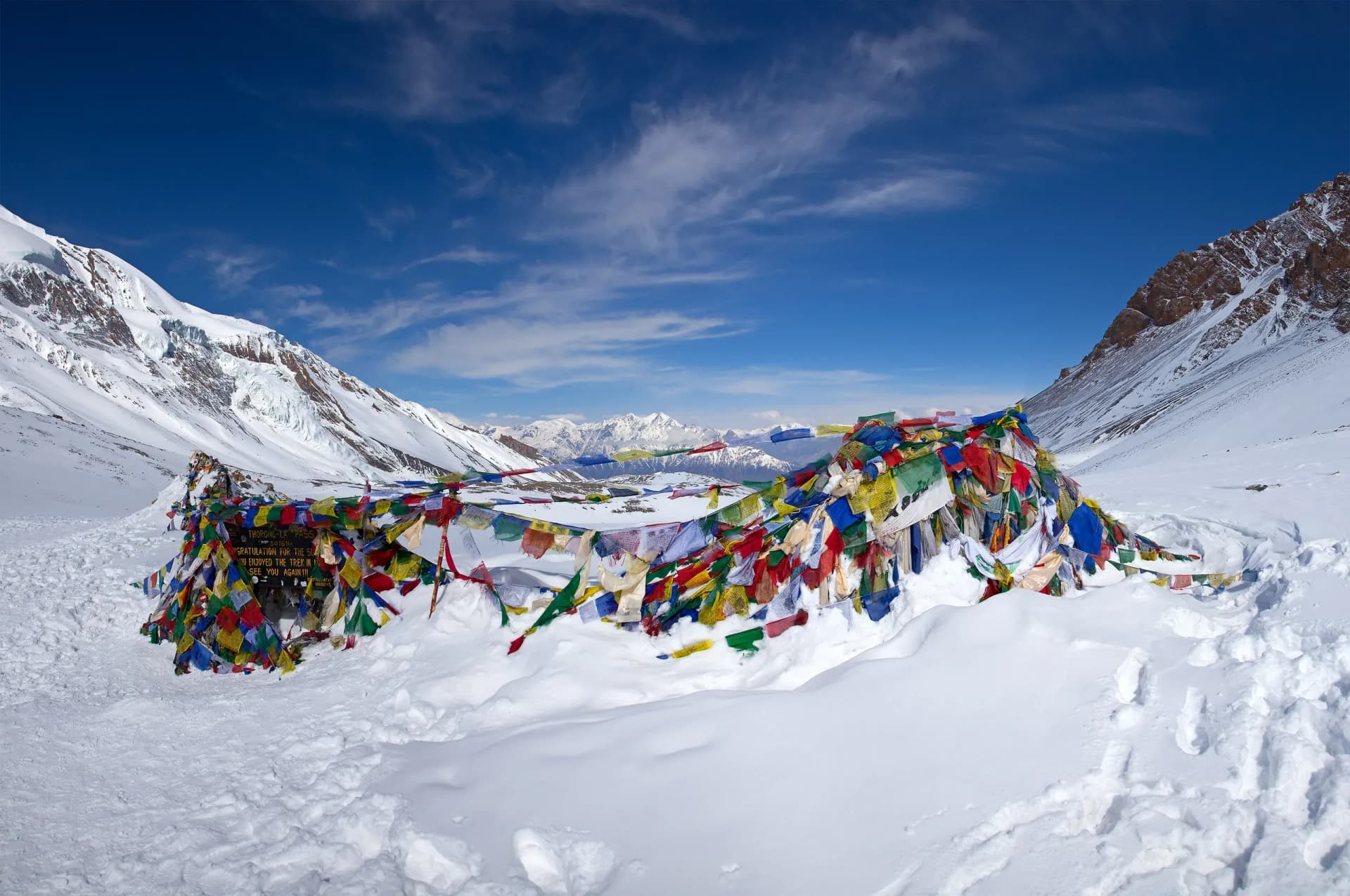
Thorong La at 5416 m, the high point of the Circuit

The descent into the Kali Gandaki gorge

The long descent through the lower Kali Gandaki

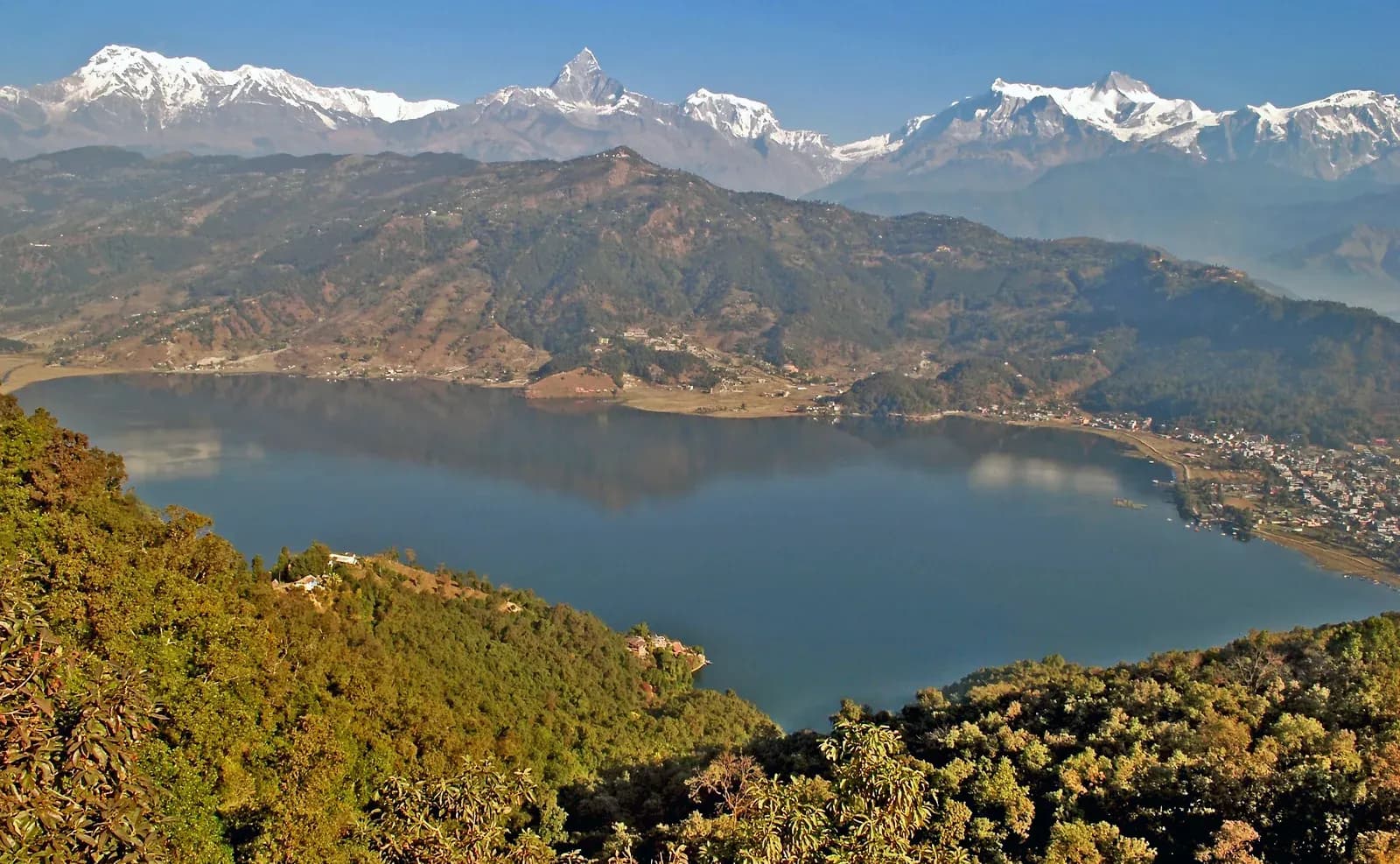
Recovery by Phewa Lake

The return to Kathmandu by road or air