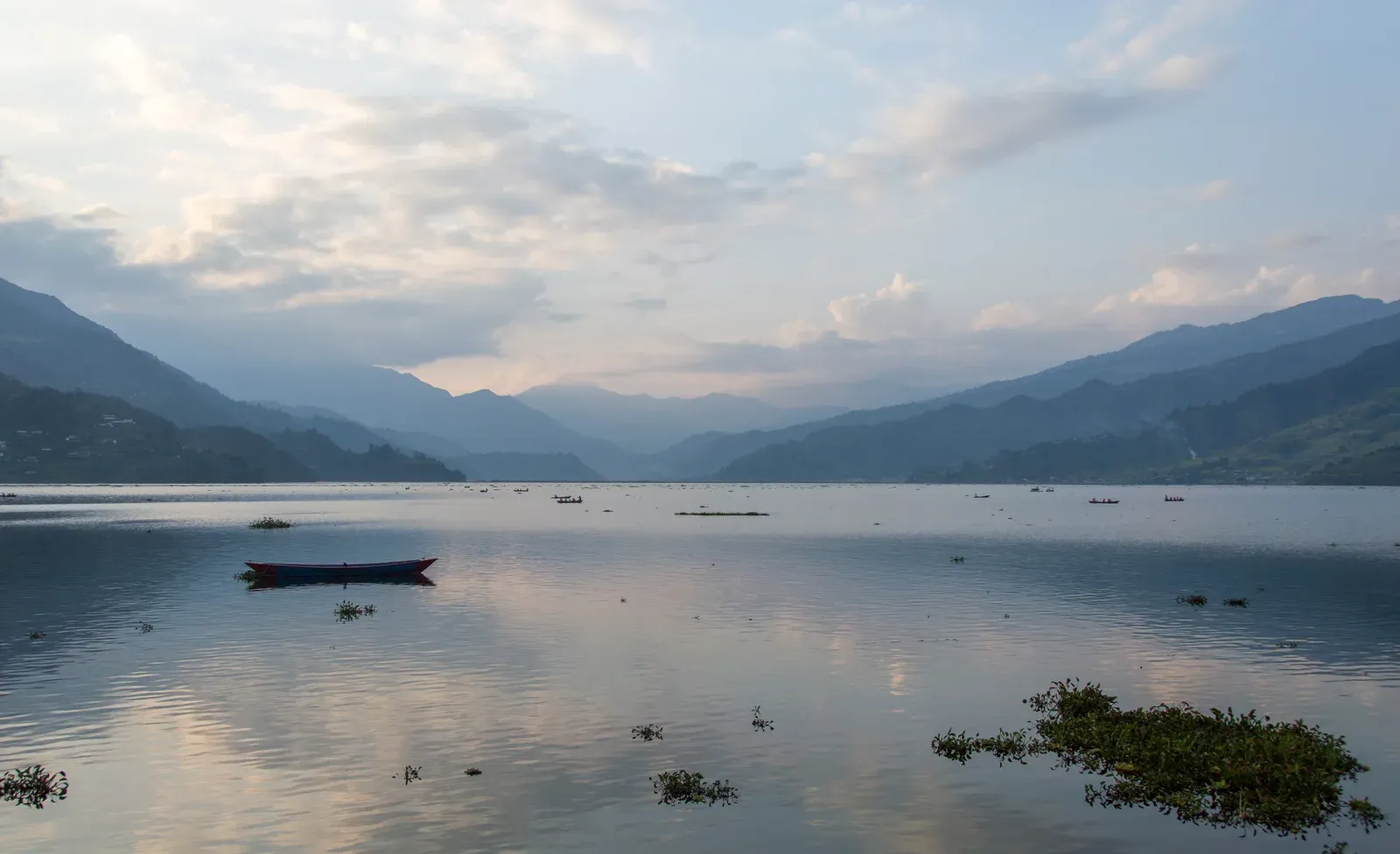
Mardi Himal Trek
A short, high trek to Mardi Himal Base Camp (4500 m) on a forested ridge under Machhapuchhre. Honest about the hard summit morning. Two tiers, same safety.
A short trek to 4500 m under Machhapuchhre, paced honestly
Mardi Himal is often sold as an easy short trek. It is short, but it reaches 4500 m, and the summit morning is hard. We are direct about what the day demands and why the extra acclimatisation night on The Journey matters.
Trip Highlights
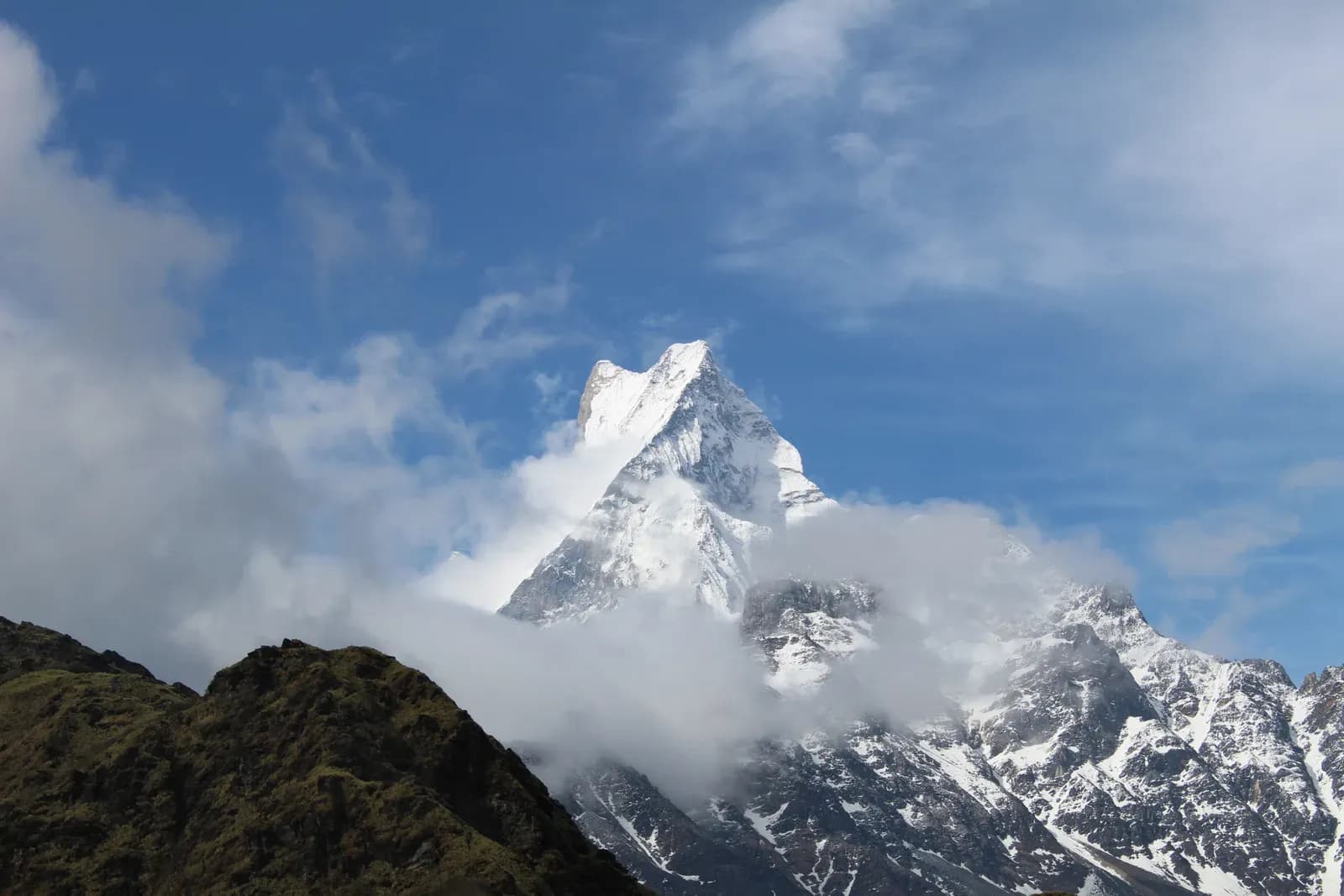
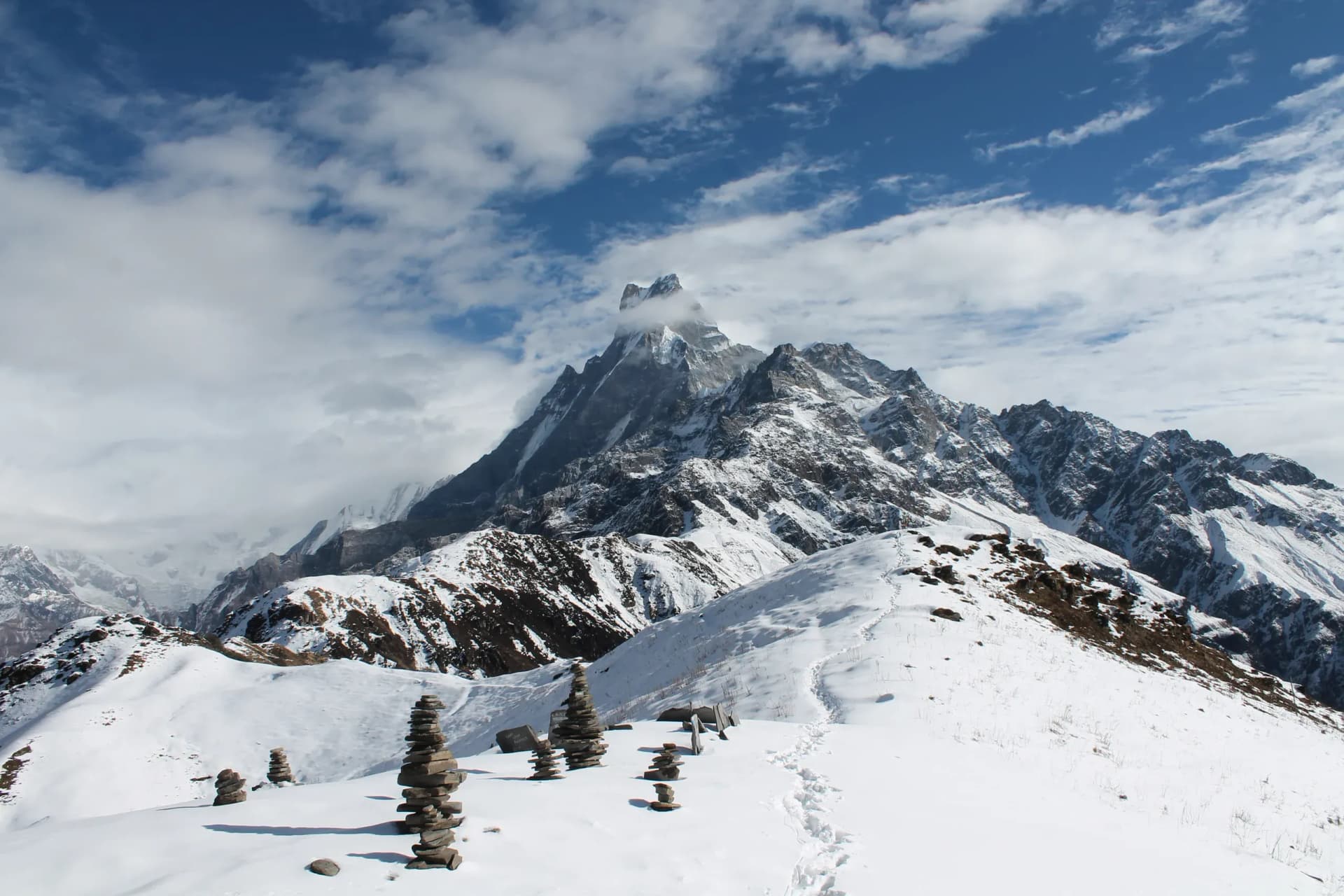
- Stand at Mardi Himal Base Camp at 4500 m beneath the south face of Machhapuchhre
- A forested ridge of rhododendron and oak that opens into high alpine meadow
- The wide panorama of Annapurna South, Hiunchuli and Machhapuchhre from the upper ridge
- A genuinely short trek that still reaches serious altitude, close to Pokhara
- Honest framing of the hard summit morning, not the usual easy-trek marketing
- An included second acclimatisation night on The Journey, the safest way to approach 4500 m
- Quiet trails compared with the main Annapurna Base Camp route
- The same safety standard on every tier, regardless of price
The summit morning from High Camp to Base Camp. A pre-dawn start, a sustained climb on an open ridge to 4500 m, then a long descent the same day. Around eight hours, the single hardest day on the trek.
The route gains height quickly for a short trek and tops out at 4500 m. Altitude sickness has no reliable link to age or fitness. The extra night at High Camp on The Journey gives your body time to adjust before the push, which is why we recommend it.
The walking is non-technical and the trek is short, which is why it gets called easy. The altitude and the length of the summit day make it moderate. We would rather set the expectation correctly than have you find out on the ridge.
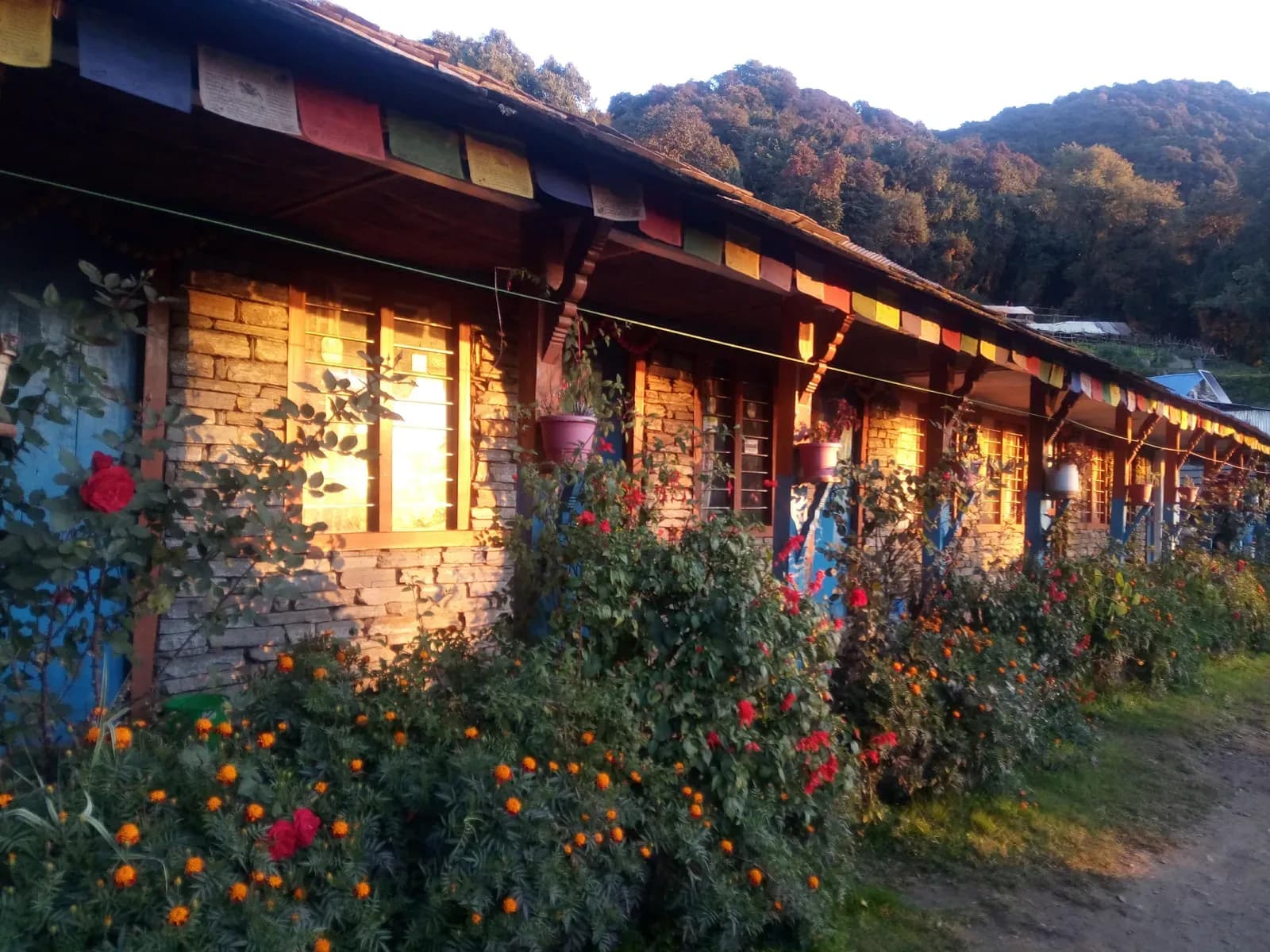
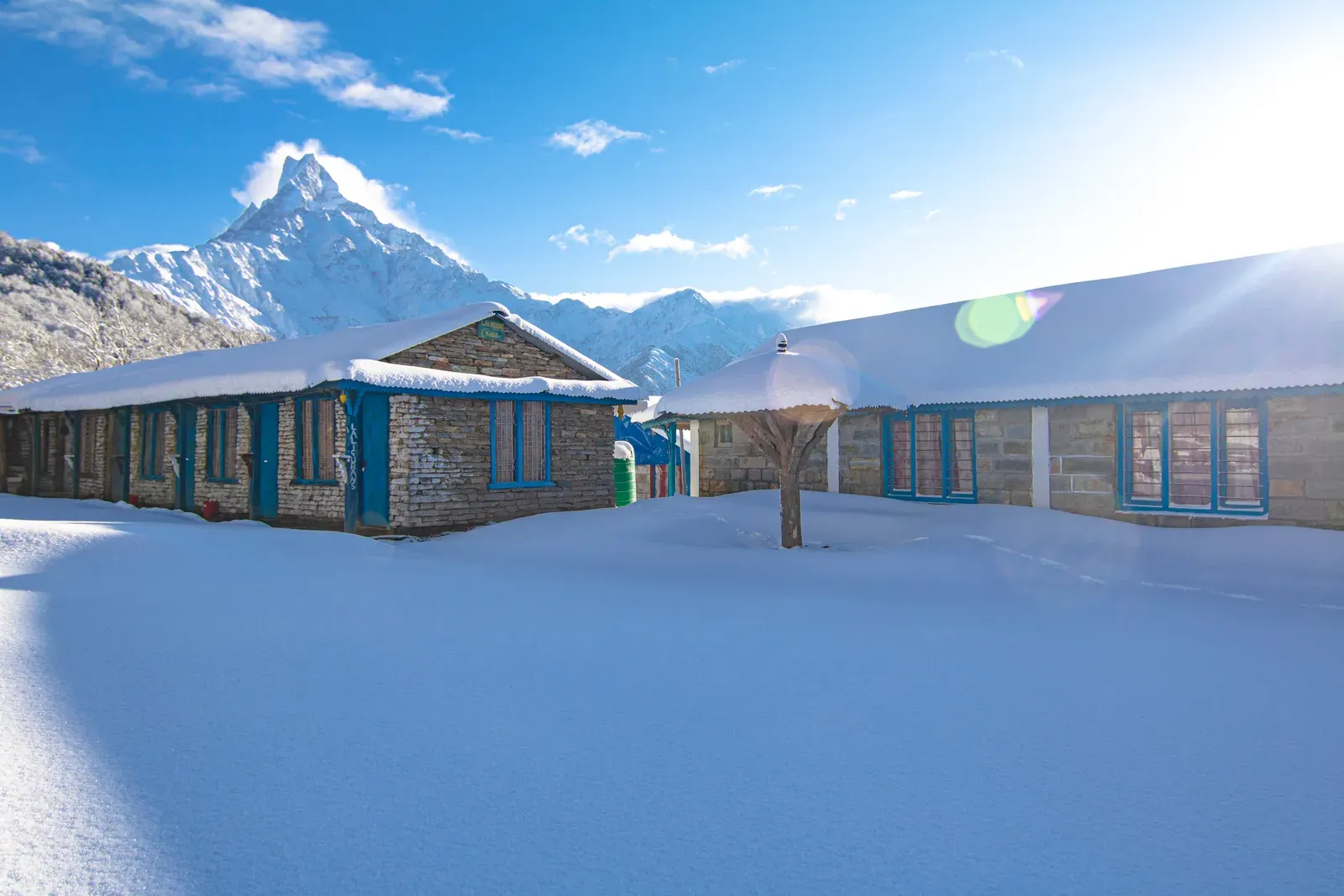
The teahouses above Forest Camp are basic for everyone, with plywood rooms, shared toilets and limited hot water. No operator can upgrade the lodging up there, and we will not imply otherwise.
Walkers comfortable with a few consecutive days on their feet and one long, high morning. A good first taste of real altitude if you take the acclimatisation seriously.
What's Included & Excluded
Price Includes
- Annapurna Conservation Area Permit (ACAP)
- Licensed trekking guide
- Teahouse accommodation
- Meals on the trek
- Ground transport per itinerary
- Included porter
- Fair porter and guide treatment
Price Excludes
- Travel to and from Pokhara
- International flights
- Nepal entry visa
- Travel insurance with high-altitude evacuation cover
- Lunch on The Trail
- Helicopter return to Pokhara
- Tips for guide and porter
- Drinks, hot showers, charging and wifi at altitude
Build your trek
Pick a tier, set your group size, and choose a preferred departure. The number you see here is the number we receive.
What's in The Trail
3 included · 2 not included
- Breakfast and dinner includedTwo meals a day on the trek; lunch on your own for flexibility on walking days
- Included porterOne porter shared between trekkers, fairly paid, insured, with a load cap
- Same safety as every tierLicensed guide, oxygen-saturation monitoring above 3500 m, and a clear descend-on-symptoms rule
- Second acclimatisation night at High CampAvailable on The Journey, the safest way to approach 4500 m
- Lunch on the trekAvailable on The Journey, where full board is included
Frequently Asked Questions
It is a moderate trek, not an easy one, even though it is short and has no technical climbing. What makes it moderate is the altitude and the summit morning. The trek reaches 4500 m at Base Camp, and the morning from High Camp to the top is a pre-dawn start, a sustained climb on an open ridge, and a long descent the same day, around eight hours in total. The rest of the walking is straightforward. If you are comfortable walking five to seven hours on consecutive days and you respect the acclimatisation, it is achievable for a fit first-time high-altitude trekker, especially on The Journey with its extra acclimatisation night.
It is often marketed as easy because it is short and the trail is well made, but that description leaves out the altitude. Reaching 4500 m is a serious height, and the summit morning is the hardest part of any short trek in the region. We call it moderate on purpose. The walking is not technical and most reasonably fit people can do it, but going in expecting an easy stroll is how people get caught out on the summit ridge. We would rather you arrive prepared for a real mountain morning.
The altitude is the main risk on this trek and it is taken seriously. For a short trek the height is gained quickly, and Base Camp at 4500 m is high enough that altitude sickness is a real possibility. Altitude sickness has no reliable link to age or fitness, so the protections are the same for everyone: a steady pace, oxygen-saturation monitoring above 3500 m, and a clear rule that if symptoms are serious the response is to descend. The biggest single safeguard is time to adjust, which is why The Journey includes a second night at High Camp before the push to Base Camp. Your guide is trained to spot the early signs.
With us it is five days on The Trail and six days on The Journey, both starting and ending in Pokhara. The walking core is the same: up the ridge to High Camp, the summit morning to Base Camp at 4500 m, and the long descent out to Siding. The Journey adds a second night at High Camp to acclimatise before the push, plus a buffer day in Pokhara at the end. You will see the trek sold elsewhere as anything from three to ten days, but the short versions usually skip the acclimatisation that makes 4500 m safe, and the long ones pad the count with Kathmandu transfer days.
Yes. Since 2023 foreign trekkers have been required to trek in Nepal's main regions, including the Annapurna Conservation Area where Mardi Himal sits, with a licensed guide or registered agency rather than fully independently. We treat the guide as a safety measure as much as a legal requirement, especially on a route that reaches 4500 m, and a licensed guide is included on both tiers. NEEDS VERIFICATION: confirm the current rule with operations before the season starts, as Nepal's trekking rules have changed more than once.
You need the Annapurna Conservation Area Permit, the ACAP, which is the required permit for the region. It costs 3000 Nepalese rupees for foreign trekkers, roughly 22 to 30 US dollars depending on the exchange rate, and we arrange it for you on both tiers. The TIMS card is arranged where applicable; in practice it is not currently checked on the Annapurna trails, though Nepal's permit rules have changed before, so we confirm the current position at the start of each season. NEEDS VERIFICATION: reconfirm the ACAP fee and any TIMS change with operations before publishing exact figures each season.
Spring, from March to May, and autumn, from September to November, are the best seasons, with the clearest mountain views and the most stable weather. Spring brings the rhododendron forest into bloom on the lower ridge. Autumn tends to have the crispest air after the monsoon. Winter is possible and very quiet but cold and sometimes snowbound high on the ridge, which can close the final approach to Base Camp. The monsoon months of June to August bring cloud, rain and leeches in the forest, and the views are unreliable, so we do not recommend them.
The trek starts and ends in Pokhara, and getting there from Kathmandu is arranged by you rather than included in the price, so you are not paying us a margin on a ticket you can buy directly. You have two options. The road takes around eight to nine hours by tourist bus or private vehicle, longer than it used to be because of ongoing construction, and it is the cheaper choice. The flight takes about twenty-five minutes and usually costs in the region of 130 US dollars one way, saving you most of a day. Once you are in Pokhara, the transfer to the Kande trailhead is included and you start walking the same morning. We are happy to advise on bookings.
The difference is time, and the safety is identical on both. The Trail walks the standard line and reaches Base Camp on the third morning, the day after first arriving at High Camp; it includes breakfast and dinner and an included porter. The Journey adds a second night at High Camp with a short acclimatisation walk, so your body has time to adjust before the push to 4500 m, which makes the summit morning safer and more likely to happen; it also includes full board. The licensed guide, the oxygen-saturation monitoring above 3500 m, and the descent protocol are the same on both. Above Forest Camp the teahouses are basic on either tier, because no operator can change the lodging up there. We recommend The Journey, but The Trail is the same trek done correctly on a tighter schedule.
Your Journey
Follow the trail from start to finish every day is a new adventure.
Safety is identical across both tiers: the licensed guide, pacing, oxygen-saturation monitoring above 3500 m, and descent protocol do not change. The Journey adds a second High Camp night with an acclimatisation walk, full board, and a porter before the 4500 m summit push. The Trail follows the same route on a tighter schedule. Teahouses above Forest Camp are basic on both tiers.

Pokhara to Kande, then walk to Forest Camp
- Distance
- 13 km
- Walking
- 6 hrs
- Sleep
- 2,550 m
- High
- 2,600 m
The short drive from Pokhara to the Kande trailhead

Forest Camp to Low Camp to High Camp
- Distance
- 9 km
- Walking
- 6 hrs
- Sleep
- 3,580 m
Leaving the treeline for open alpine ridge

Acclimatisation day at High Camp
- Distance
- 4 km
- Walking
- 3 hrs
- Sleep
- 3,580 m
- High
- 3,700 m
A short climb-high-sleep-low acclimatisation walk toward Badal Danda

High Camp to Mardi Himal Base Camp, then descend to Low Camp
- Distance
- 15 km
- Walking
- 8 hrs
- Sleep
- 2,970 m
- High
- 4,500 m
Mardi Himal Base Camp at 4500 m beneath the Machhapuchhre south face

Low Camp to Siding, then drive to Pokhara
- Distance
- 12 km
- Walking
- 6 hrs
- Sleep
- 820 m
- High
- 2,970 m
The long forest-and-farmland descent to Siding

Pokhara, buffer and departure
- Sleep
- 820 m
A weather buffer that protects the single summit window