Gokyo Lakes Trek
Trek to the Gokyo lakes and climb Gokyo Ri (5357 m) for the Everest view. Quieter than Base Camp, paced honestly. Three tiers, same safety.
To the Gokyo lakes and Gokyo Ri, paced for the altitude
The quieter side of the Everest region — six glacial lakes and a 5357 m viewpoint facing Everest. We are direct about the one thing the "easier than Base Camp" pitch leaves out: the acclimatisation is thinner, so the pacing matters more.
Trip Highlights
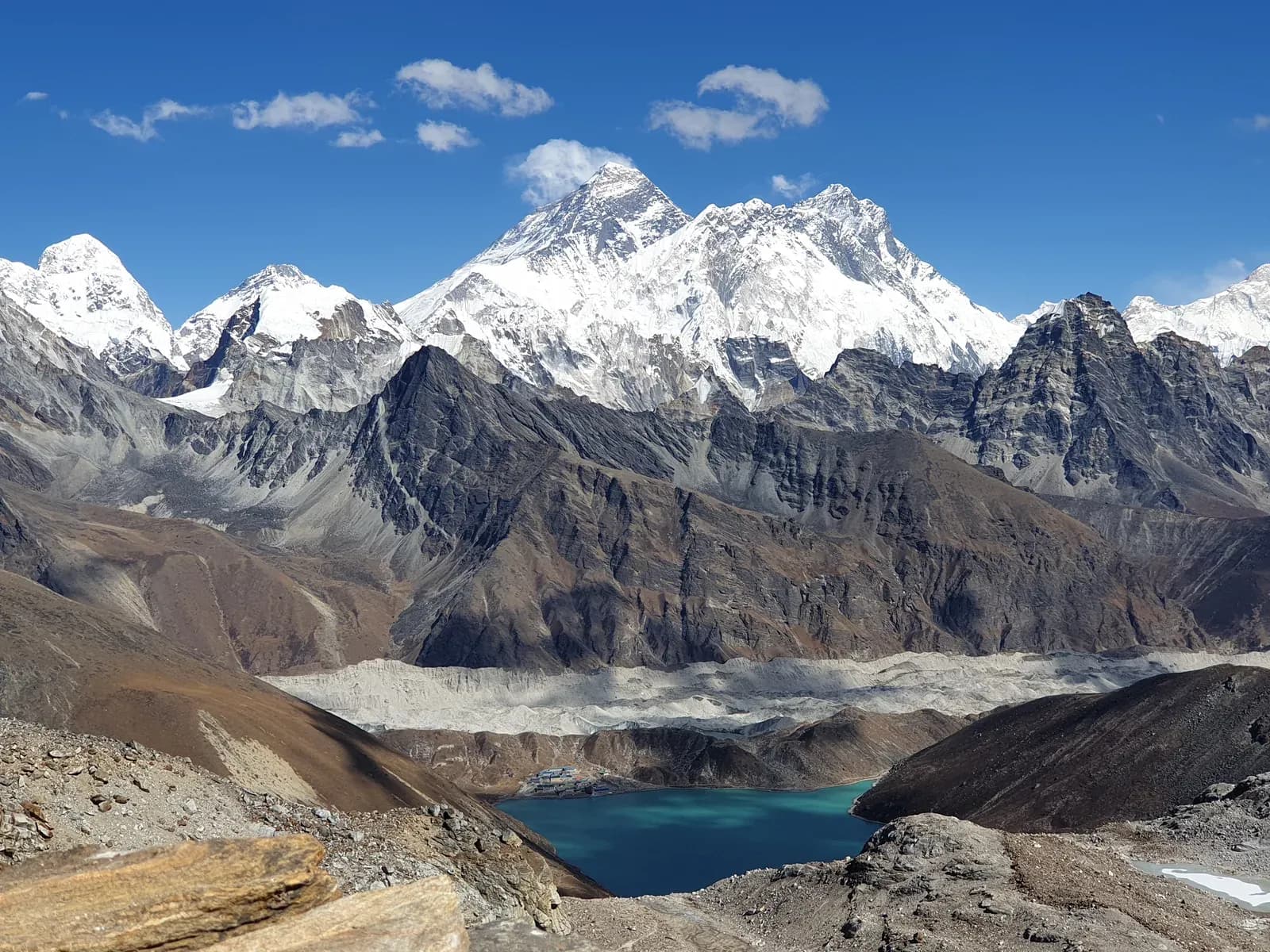
- Climb Gokyo Ri at 5357 m for a face-on view of Everest, Lhotse, Makalu and Cho Oyu
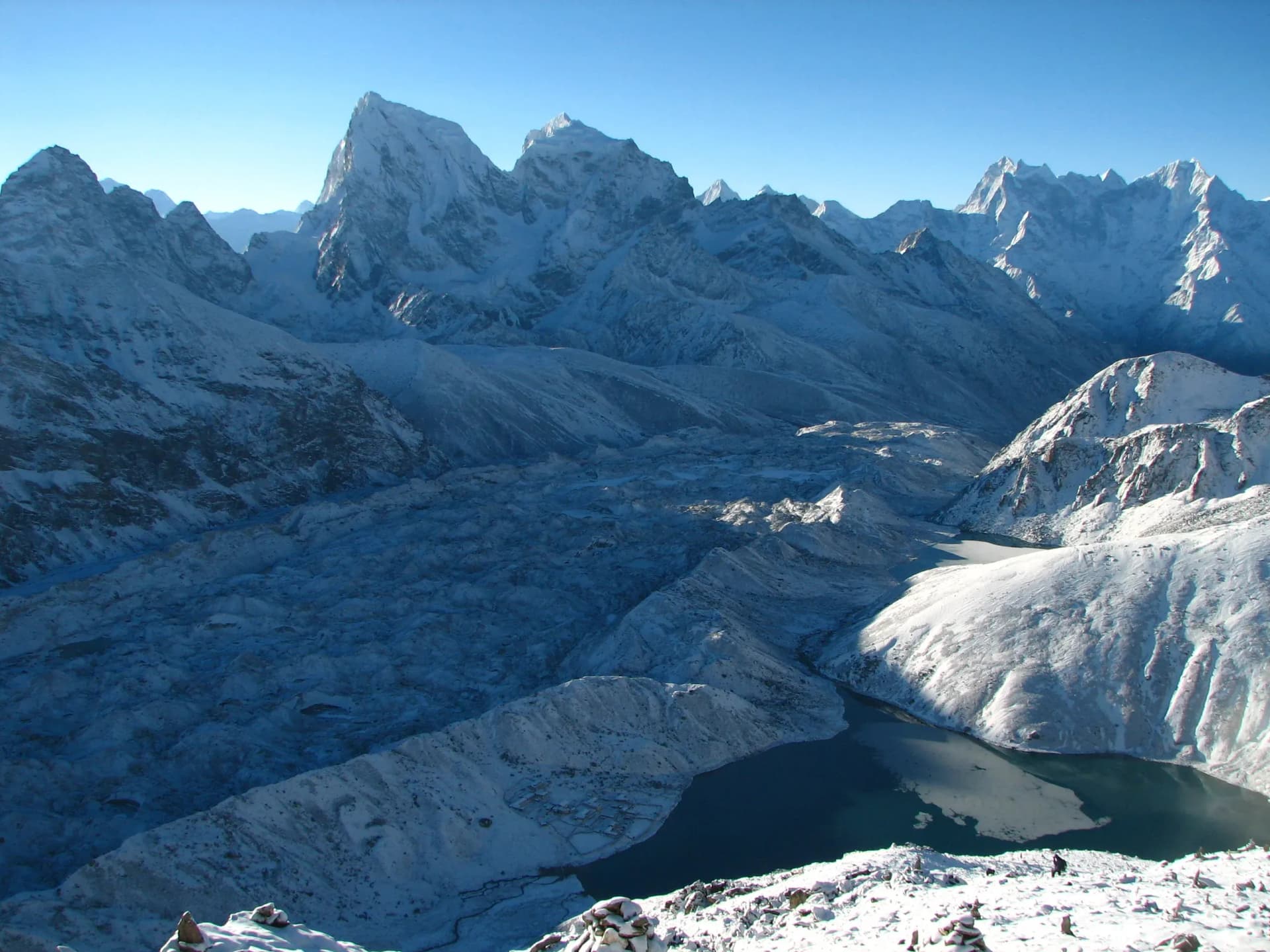
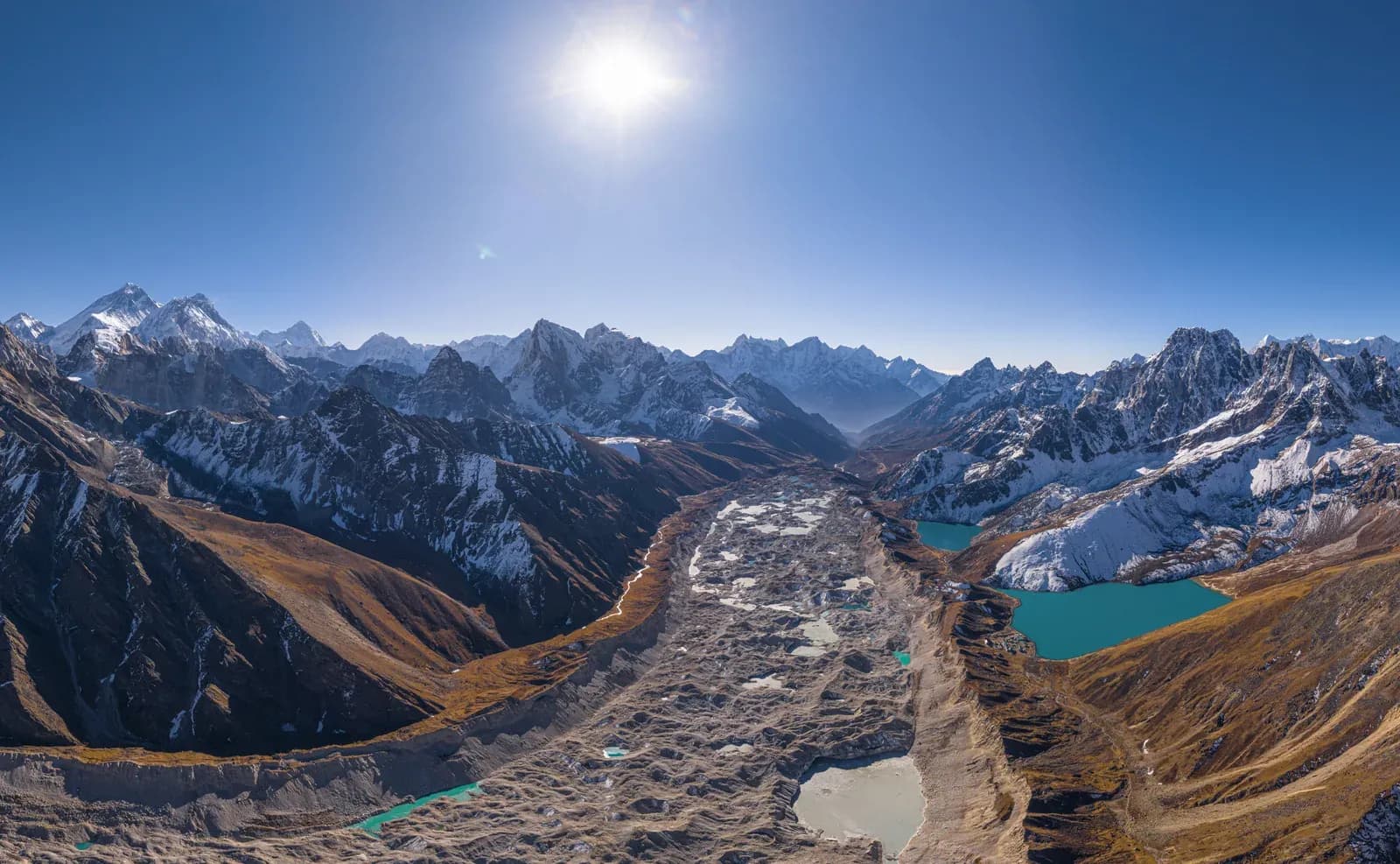
- The six Gokyo lakes, the highest freshwater lake system in the world, a Ramsar wetland site
- Scoundrel's Viewpoint above the fifth lake, the finest panorama on the route
- Walk the edge of the Ngozumpa Glacier, the longest in the Himalaya at about 36 km
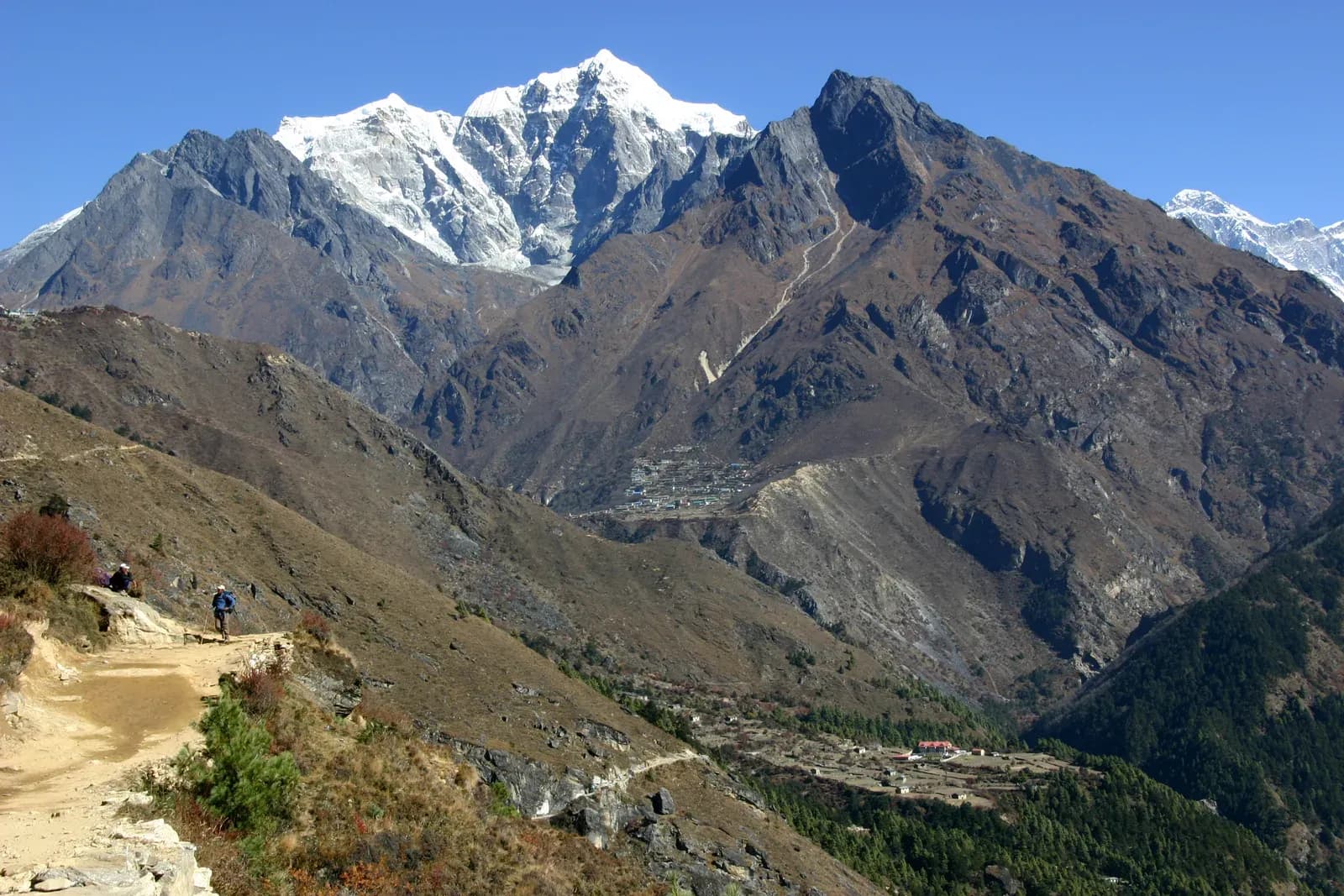
- A far quieter trail than Base Camp once the route turns west above Namche
- A dedicated Gokyo day on The Journey that doubles as acclimatisation and the best day of walking
- Meals included from The Journey upward, so the price you see is closer to the price you pay
- Honest pacing: we will not sell the rushed eleven-day version as a safe shortcut
The dawn climb up Gokyo Ri — about 600 m of steep ascent at altitude, two to three hours up in the cold for sunrise on Everest. Add the long descent days at the end, which the standard short itineraries compress harder than they should.
There is only one natural acclimatisation stop on the way up, at Namche, before a steady climb to a 4790 m sleeping altitude at Gokyo. That is why we do not sell the eleven-day version that summits on arrival day, and why The Journey builds in a dedicated Gokyo day before the climb.
Lower high point, far fewer people. But the body has less time to adjust than on the Base Camp route, which has two acclimatisation stages. Easier on paper, not on acclimatisation. We pace for that.
Rooms improve lower down, around Lukla and Namche, on the upgraded tiers. From Dole up to Gokyo there is no upgraded lodging for anyone — it is basic teahouses at altitude, and we do not pretend otherwise.
Fit walkers comfortable with several long days, a steep summit morning and sustained time above 4000 m. No technical climbing on the standard route, but altitude affects everyone regardless of fitness.
What's Included & Excluded
Price Includes
- Sagarmatha National Park entry permit
- Khumbu Pasang Lhamu Rural Municipality Trek Card
- Licensed trekking guide
- Round-trip Lukla flights and required ground transfers
- Teahouse accommodation on the trek
- Kathmandu hotel nights
- Trek meals according to your tier
- Porter support according to your tier
- Daily altitude monitoring and first-aid kit
Price Excludes
- International flights
- Nepal entry visa
- Travel insurance
- Lunch on trekking days (The Trail only)
- Porter support (The Trail only)
- Tips for guide and porter
- Beverages and personal extras
- Hot showers, Wi-Fi and device charging at altitude
- Helicopter evacuation
Add-on - Gokyo, Cho La and Everest Base Camp
Want both valleys in one trek? Combine the Gokyo lakes with Everest Base Camp over the Cho La pass.
- Everest Base Camp and Kala Patthar as well as the Gokyo lakes and Gokyo Ri
- The Cho La pass at 5420 m linking the two valleys
- A longer itinerary run anticlockwise Base Camp first, then Cho La, then Gokyo for better acclimatisation and a safer pass crossing
For fit trekkers with prior multi-day trekking experience. The Cho La is a glaciated, rocky pass that needs an early start and adds exposed high-altitude days. We run it Base Camp first because that direction acclimatises you before the pass and is the safer way to cross.
See the Gokyo, Cho La and Everest Base Camp trekBuild your trek
Pick a tier, set your group size, and choose a preferred departure. The number you see here is the number we receive.
What's in The Trail
3 included · 3 not included
- Breakfast and dinner includedTwo meals a day on the trek; lunch on your own for flexibility on the trail
- Namche acclimatisation dayA full day to adjust at 3440 m, identical to every tier
- Lukla flights via RamechhapYou drive to Ramechhap in the early hours and fly from there, which is cheaper than the direct Kathmandu flight — a transparent trade, not a safety cut
- PorterOptional add-on, around 22 USD per day or about 220 USD for the trek; at altitude a porter is a safety aid, not only comfort
- Lunch on the trekAvailable from The Journey upward, where full board is included
- Dedicated second Gokyo dayAvailable from The Journey upward — the fourth and fifth lakes and Scoundrel's Viewpoint
Frequently Asked Questions
Partly. The high point, Gokyo Ri at 5357 m, is lower than the Base Camp route's Kala Patthar at 5545 m, and the Gokyo valley is far quieter once the trail turns west above Namche. On those two counts, yes, it is the gentler option. But it is not easier on acclimatisation, and that is the part the marketing usually skips. The Base Camp route has two acclimatisation stages, at Namche and Dingboche. The Gokyo valley has only one, at Namche, before climbing steadily to a 4790 m sleeping altitude. Your body gets less time to adjust, which is why pacing matters more here, not less, and why we will not sell the rushed eleven-day version as a safe shortcut.
Gokyo Ri stands at 5357 m. It is a steep climb of roughly 600 m straight up from Gokyo village, done before dawn so you reach the top for sunrise, and it takes most people two to three hours up. From the summit you look across at Everest, Lhotse, Makalu and Cho Oyu four of the six highest mountains on earth with the turquoise Gokyo lakes and the long grey sweep of the Ngozumpa Glacier directly below. Many trekkers rate it the equal of, or better than, the Everest view from the Base Camp side.
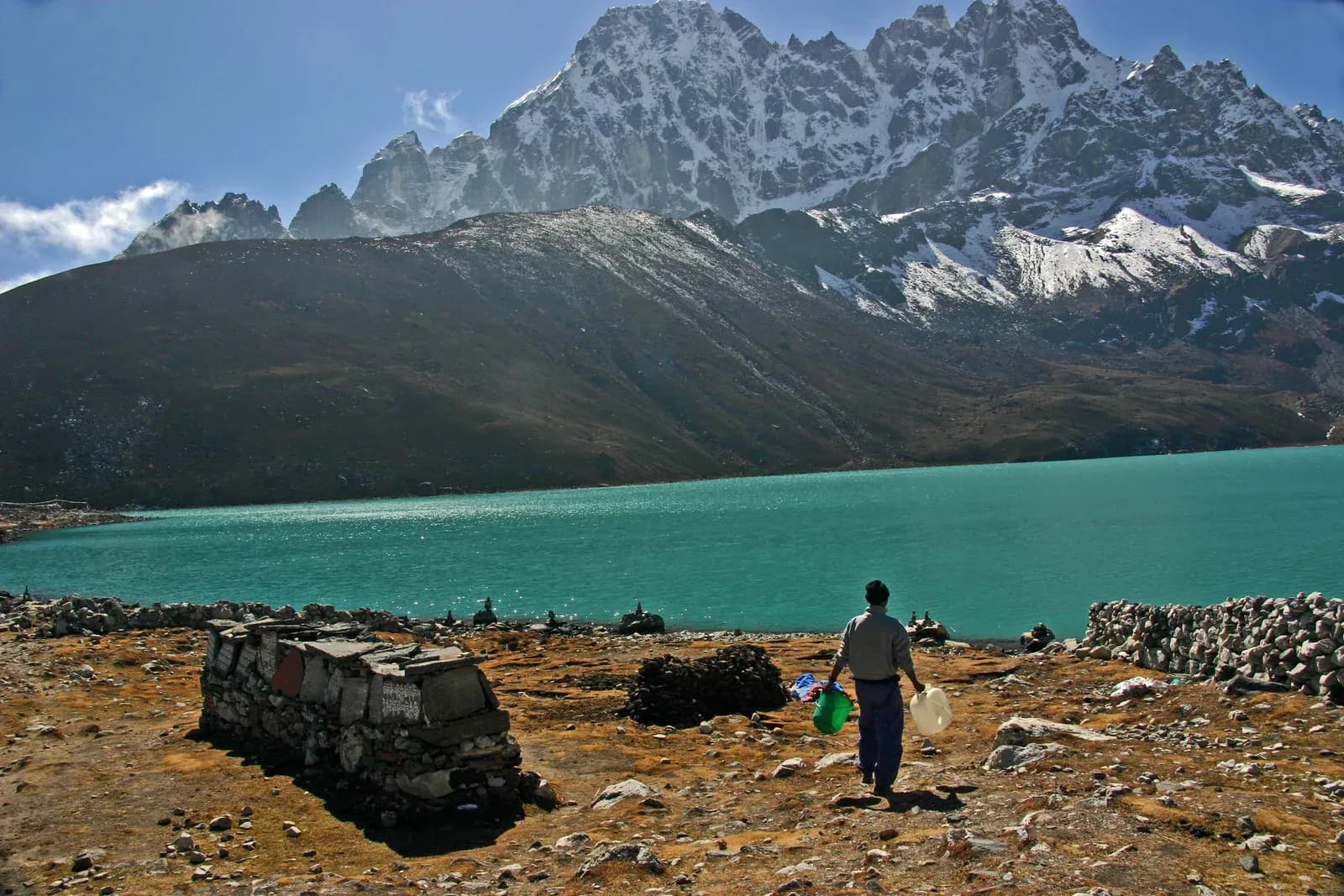
The standard route passes the first three lakes Longponga, Taboche, and Dudh Pokhari, the third, where Gokyo village sits at 4790 m. The fourth and fifth lakes lie further north along the Ngozumpa Glacier and need a dedicated day to reach. The sixth is rarely visited. On The Journey that dedicated day is built in. You walk out to the fourth and fifth lakes and up to Scoundrel's Viewpoint at around 5000 m, which is both the finest scenery on the trek and a textbook acclimatisation hike. The Trail, which is a day shorter, keeps to the first three lakes and Gokyo Ri.
Yes, and there are two good ways to do it. To add Everest Base Camp, the two valleys link over the Cho La pass at 5420 m. We run that as a separate, longer combined trek, and we run it anticlockwise Base Camp first, then Cho La, then Gokyo because that direction acclimatises you on the village-rich Base Camp side before the pass, and because the Cho La is safer crossed from the east than scrambled up from the Gokyo side. To make Gokyo itself into a circuit without adding Base Camp, our Transformation tier crosses the Renjo La pass at 5360 m on the way out and descends the quiet Thame valley, so you never retrace your steps. If you want the full Base Camp combination, see our combined Gokyo, Cho La and Everest Base Camp trek.
The Trail is the classic out-and-back, flown in via Ramechhap to keep the price honest, with standard teahouses and breakfast and dinner. The Journey, our recommended version, flies direct from Kathmandu, adds a dedicated Gokyo day for the fourth and fifth lakes, full board, an included porter, and a descent loop through Phortse. The Transformation crosses the Renjo La pass to make the trek a true circuit, with a gentler descent through the Thame valley, private support and the best available rooms lower on the route. What does not change is the safety. The licensed guide, the acclimatisation pacing, the Namche day, the oximeter checks and the turn-around authority are identical on all three. The tiers change where you fly from, what you eat, who carries your pack, where you sleep, and whether you loop or cross a pass not how safely you are looked after.
The flight to Lukla from Ramechhap (Manthali) is cheaper than the direct flight from Kathmandu, by roughly 80 to 120 US dollars on the round trip. The catch is a drive of five to six hours from Kathmandu that starts in the small hours of the morning. The Trail takes that trade deliberately the early drive in exchange for a lower price and we are upfront that it is a comfort trade, not a safety one. One honest caveat: in the busiest spring and autumn weeks the authorities sometimes route every Lukla flight through Ramechhap, including the Journey and Transformation, because of congestion at Kathmandu's airport. If that affects your dates, we tell you in advance rather than at midnight.
Two, the same as for Everest Base Camp, since Gokyo is inside the same national park. The Sagarmatha National Park entry permit is NPR 3,000 for foreigners, plus 13 percent VAT, and the Khumbu Pasang Lhamu Rural Municipality permit the local "trek card" is a further NPR 3,000, bought at Lukla rather than in Kathmandu. Together that is roughly 40 to 45 US dollars per person at current rates. Both permits are included in your trek price; we arrange them for you. The TIMS card is not enforced in the Khumbu. Permit fees are set by the authorities and can change, so we confirm the current figures at the start of each season.
Every LHJ trek runs with a licensed guide, so on our trips a guide is always provided. The rules on independent trekking in the Everest region have been contested since 2023, with a national guide requirement and a local exemption notice both in play and enforcement that has been described as unclear; we keep an eye on it, but for our trekkers it makes no practical difference, because you are guided either way. A porter is included on the Journey and the Transformation, at one porter per two trekkers, fairly paid and insured with a load cap. On the Trail a porter is an optional add-on at around 22 US dollars a day. At altitude a porter is as much a safety measure as a comfort carrying less helps your body cope with thinner air.
On the out-and-back tiers the descent is real work. Coming back down the same valley, the standard route compresses the return into a couple of long days the kind of seven-to-eight-hour stretches that the short eleven-day itineraries sold elsewhere make even harder. On The Journey we ease this by looping out through Phortse rather than retracing every step, but it is still a demanding way home and we say so. The Transformation is built partly to solve this. By crossing the Renjo La and descending the Thame valley over an extra day, it spreads the height loss across more, shorter days a gentler descent as well as a finer and quieter one. If the back end of a trek is where you tend to struggle, that is the tier to look at.
Spring, from March to May, and autumn, from late September to November, are the two reliable windows. Autumn tends to give the clearest skies and the most vivid lake colour after the monsoon; spring brings rhododendron lower down and can leave a little ice on the high lakes early on. Winter is intensely cold at Gokyo's altitude and some teahouses close; the monsoon, from June to August, brings cloud, leeches lower down and a high chance of flight delays. We run the trek in spring and autumn for good reason, and even then we plan around the fact that Lukla flights can be held up by weather in any season.
Your Journey
Follow the trail from start to finish every day is a new adventure.
The Trail flies via Ramechhap, walks the out-and-back and skips the dedicated Gokyo day; The Journey flies from Kathmandu and adds that Gokyo day, full board and a porter; The Transformation crosses the Renjo La as a circuit with a gentler descent and private support. Safety, guide and acclimatisation pacing are identical across all three.

Arrive in Kathmandu
- Sleep
- 1,300 m
Airport pickup and transfer

Fly to Lukla, trek to Phakding
- Distance
- 8 km
- Walking
- 3 hrs
- Sleep
- 2,610 m
- High
- 2,840 m
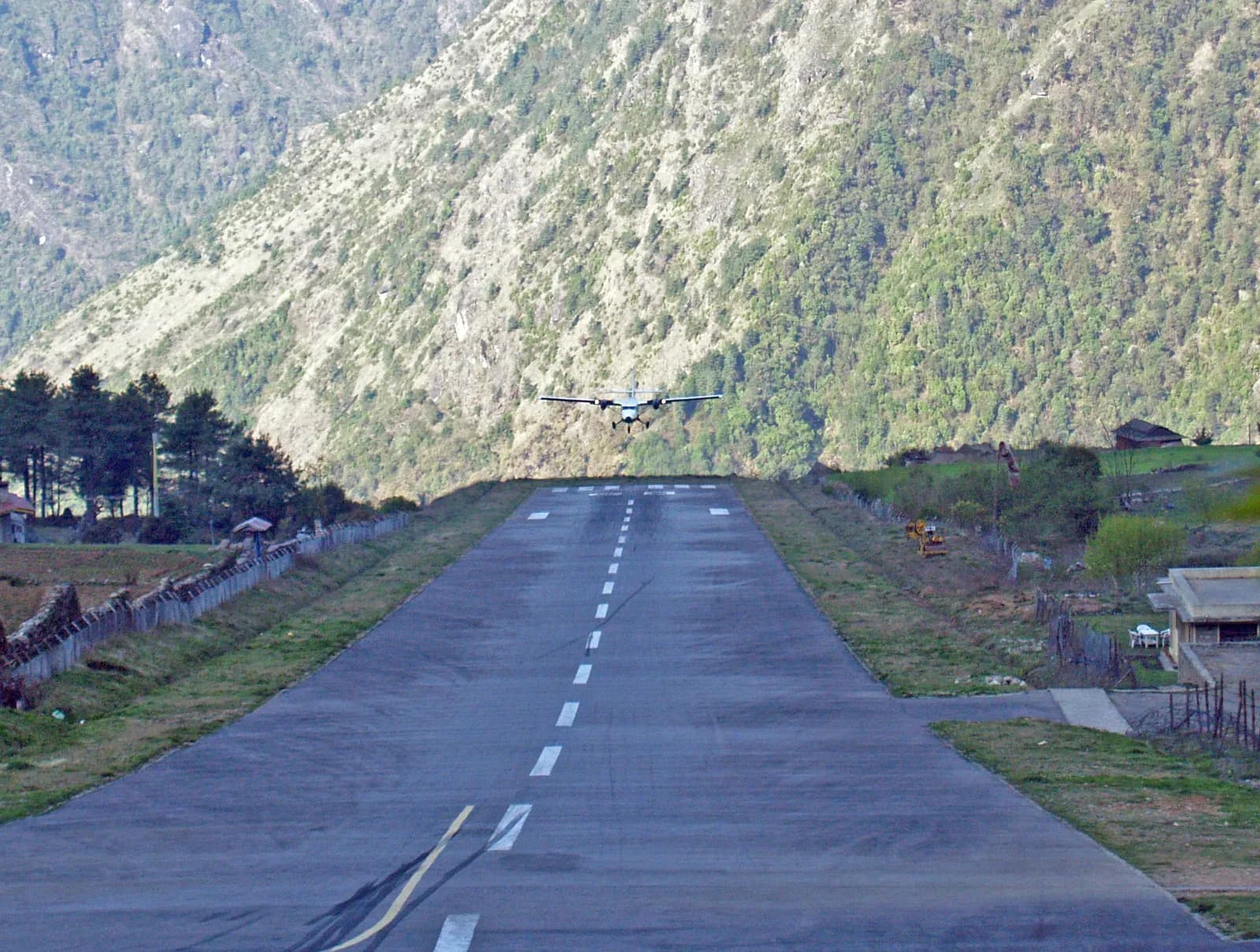
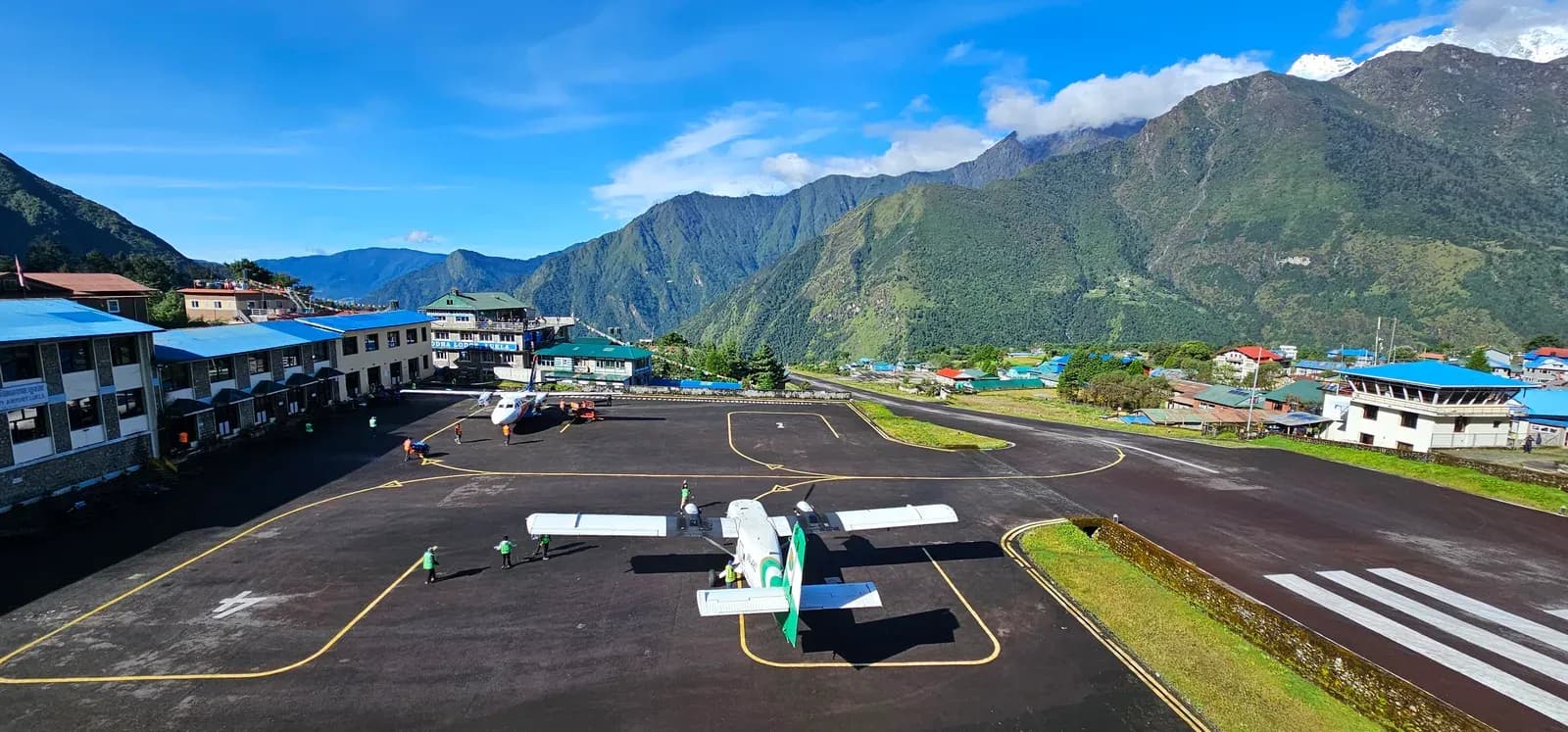
The mountain flight onto Lukla's hillside runway

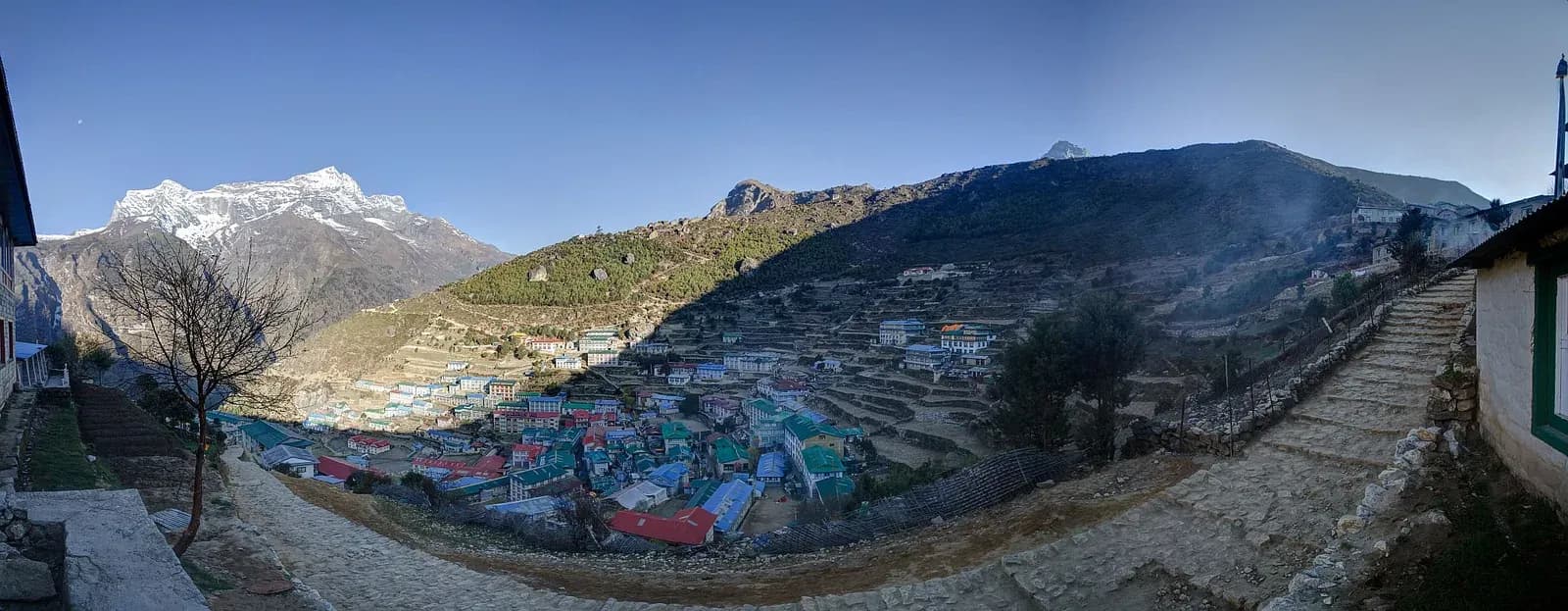
Phakding to Namche Bazaar
- Distance
- 11 km
- Walking
- 6 hrs
- Sleep
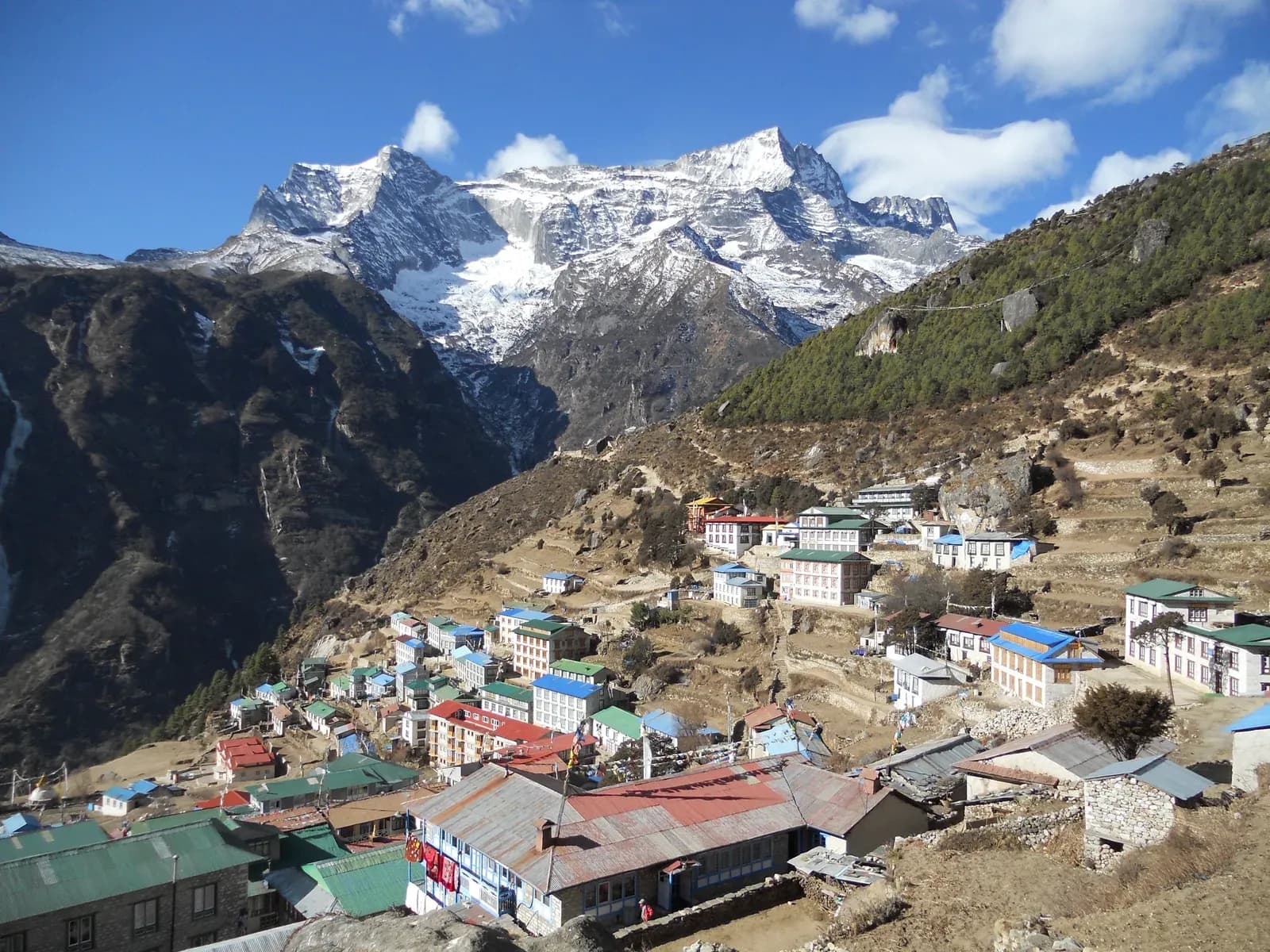
- 3,440 m
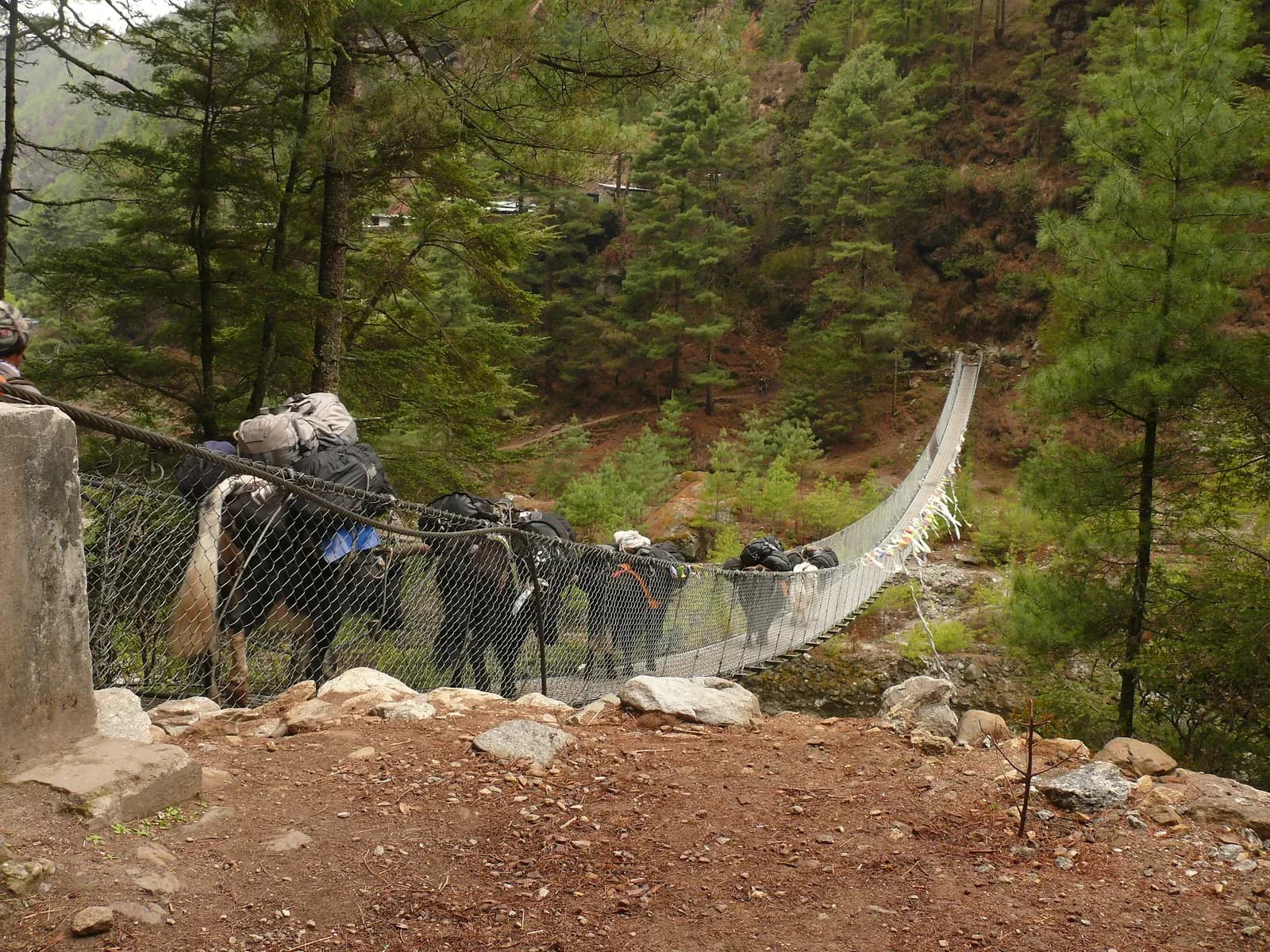
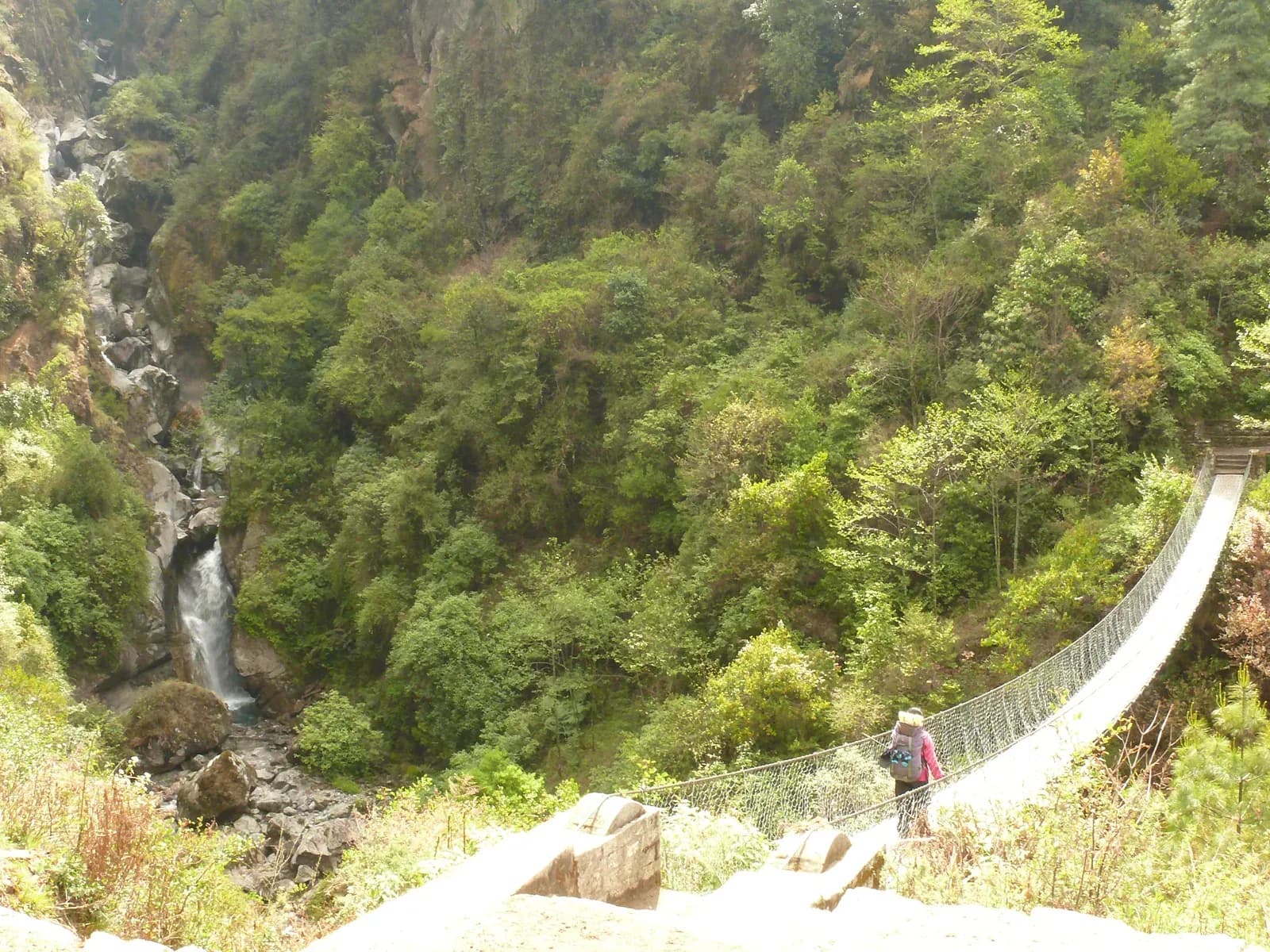
High suspension bridges over the Dudh Koshi

Acclimatisation day at Namche
- Distance
- 6 km
- Walking
- 3 hrs
- Sleep
- 3,440 m
- High
- 3,880 m
Everest View Hotel panorama at 3880 m

Namche to Dole
- Distance
- 12 km
- Walking
- 6 hrs
- Sleep
- 4,200 m
The ridge at Mong La where the route turns west

Dole to Machhermo
- Distance
- 7 km
- Walking
- 5 hrs
- Sleep
- 4,470 m
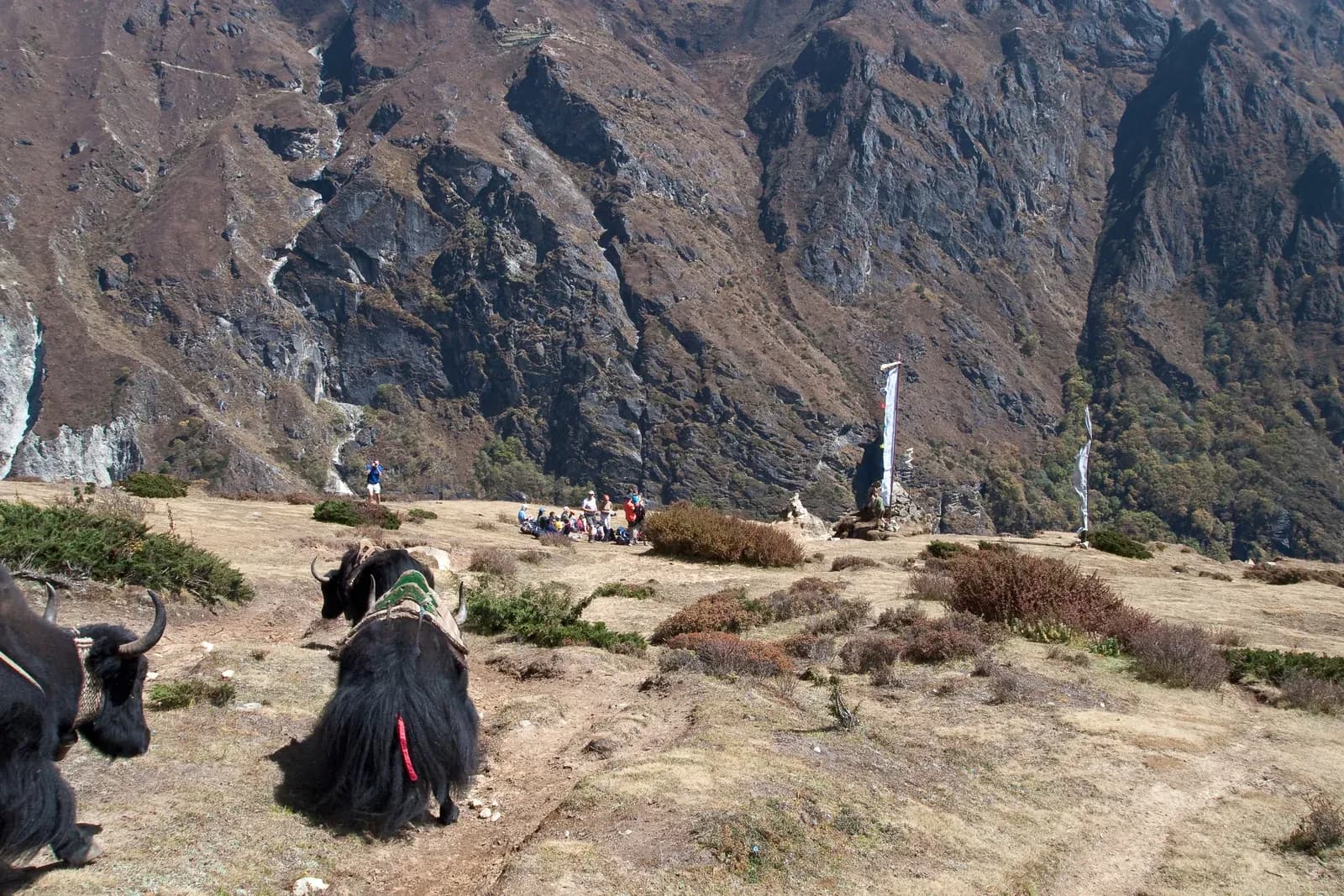
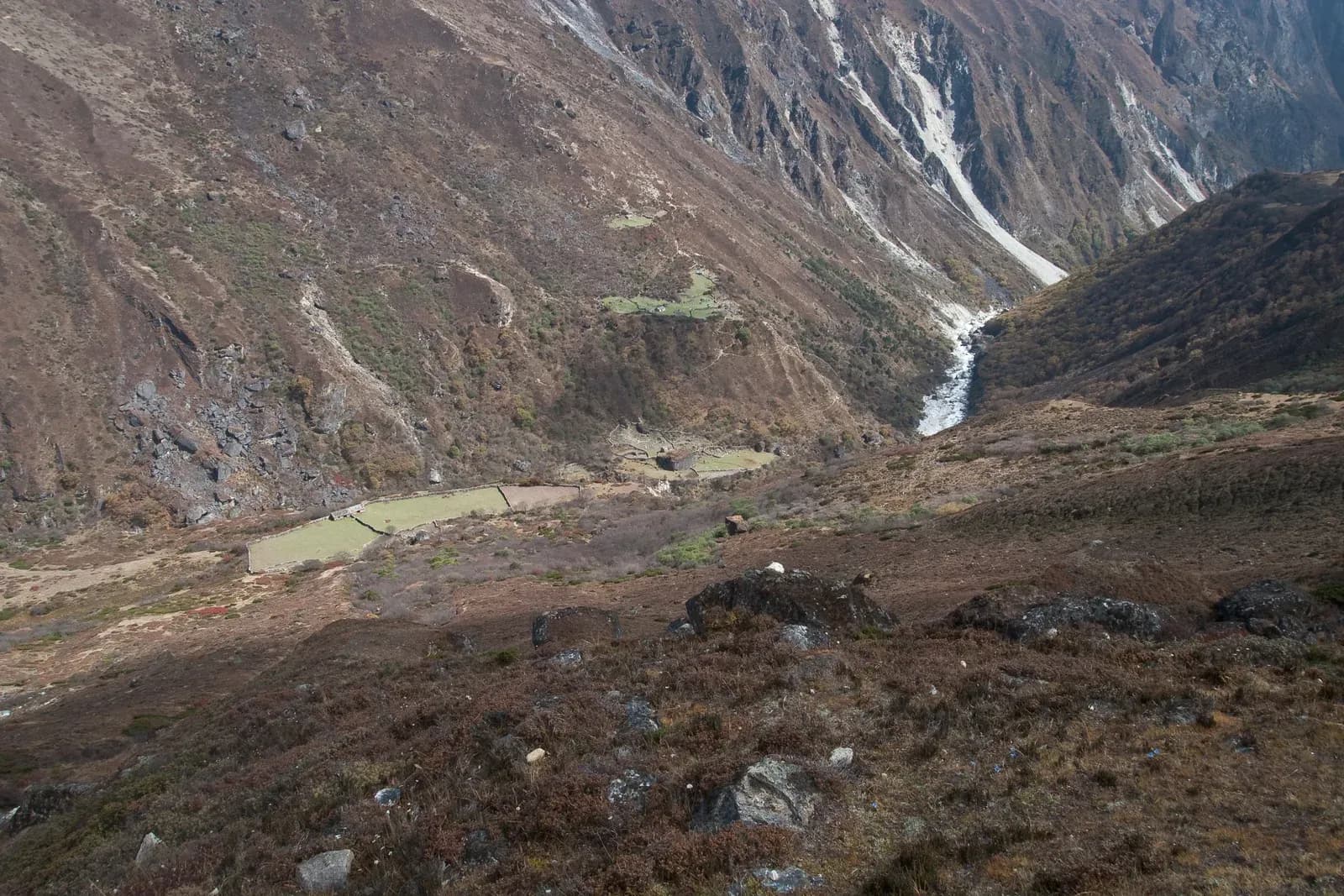
High yak pasture and narrowing valley

Machhermo to Gokyo
- Distance
- 7 km
- Walking
- 4 hrs
- Sleep
- 4,790 m
The terminal moraine of the Ngozumpa Glacier

Gokyo Ri summit and the third lake
- Distance
- 5 km
- Walking
- 4 hrs
- Sleep
- 4,790 m
- High
- 5,357 m
Sunrise from Gokyo Ri at 5357 m

Gokyo day - fourth and fifth lakes and Scoundrel's Viewpoint
- Distance
- 9 km
- Walking
- 5 hrs
- Sleep
- 4,790 m
- High
- 5,000 m
The fourth and fifth Gokyo lakes along the Ngozumpa moraine

Gokyo to Namche via Phortse
- Distance
- 18 km
- Walking
- 7 hrs
- Sleep
- 3,440 m
- High
- 4,790 m
A descent loop through Phortse rather than a straight retrace

Gokyo over the Renjo La to Lungden
- Distance
- 12 km
- Walking
- 8 hrs
- Sleep
- 4,380 m
- High
- 5,360 m
The Renjo La pass at 5360 m, the second high point of the trek

Lungden to Thame
- Distance
- 13 km
- Walking
- 5 hrs
- Sleep
- 3,800 m
- High
- 4,380 m
The quiet descent down the Bhote Koshi past Marlung

Thame to Namche Bazaar
- Distance
- 10 km
- Walking
- 4 hrs
- Sleep
- 3,440 m
- High
- 3,800 m
The forest descent from Thame

Namche to Lukla
- Distance
- 14 km
- Walking
- 7 hrs
- Sleep
- 2,840 m
- High
- 3,440 m
The final walk down the Dudh Koshi

Fly Lukla to Kathmandu
- Sleep
- 1,300 m
- High
- 2,840 m
The mountain flight back to Kathmandu

Departure from Kathmandu
- Sleep
- 1,300 m
A free morning in Kathmandu