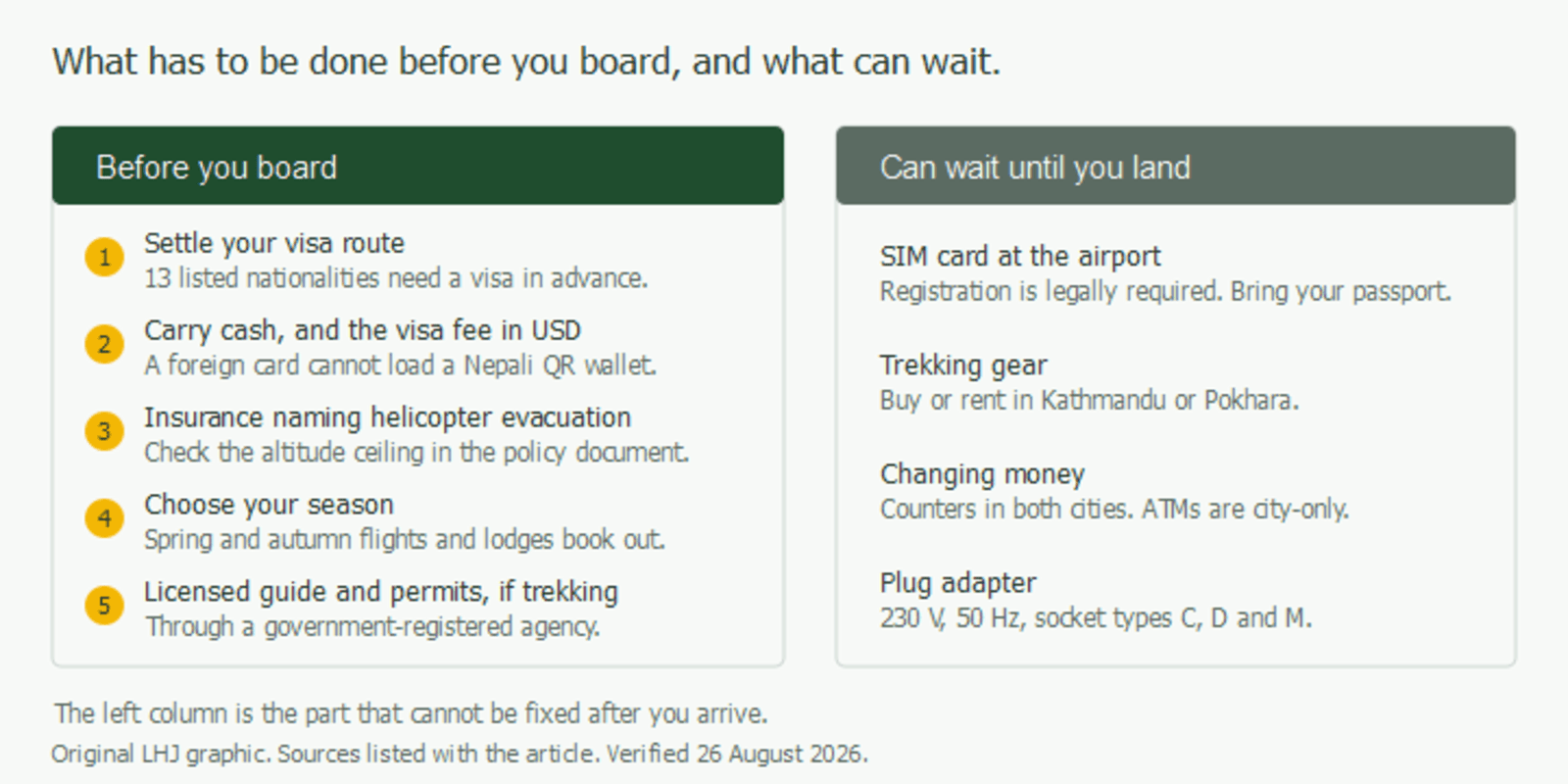
Five things have to be settled before you board: your visa, enough cash in the right form, travel insurance that names helicopter evacuation, the season you are arriving in, and a licensed guide if you intend to trek. Everything else on this list can be sorted out after you land. This article covers all twelve, in the order you need them, with the source beside each fact so you can check it yourself.
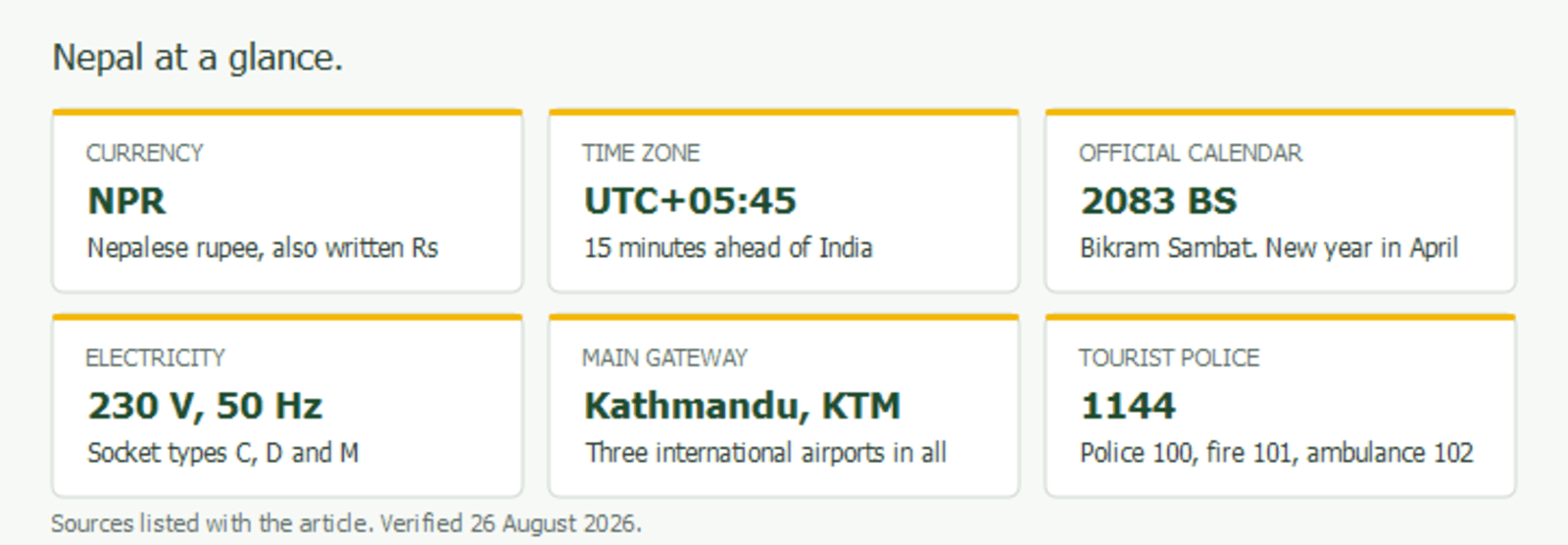
Nepal at a glance
| Currency | Nepalese rupee, NPR or Rs |
|---|---|
| Time zone | UTC+05:45, 15 minutes ahead of India |
| Official calendar | Bikram Sambat. 2026 falls in 2083 BS |
| Electricity | 230 V, 50 Hz, socket types C, D and M |
| Main gateway | Tribhuvan International Airport, Kathmandu |
| Tourist Police | 1144, toll free |
| Main trekking seasons | Spring, March to May. Autumn, late September to November |
1. Your visa is the first thing to settle, and for most people it is straightforward
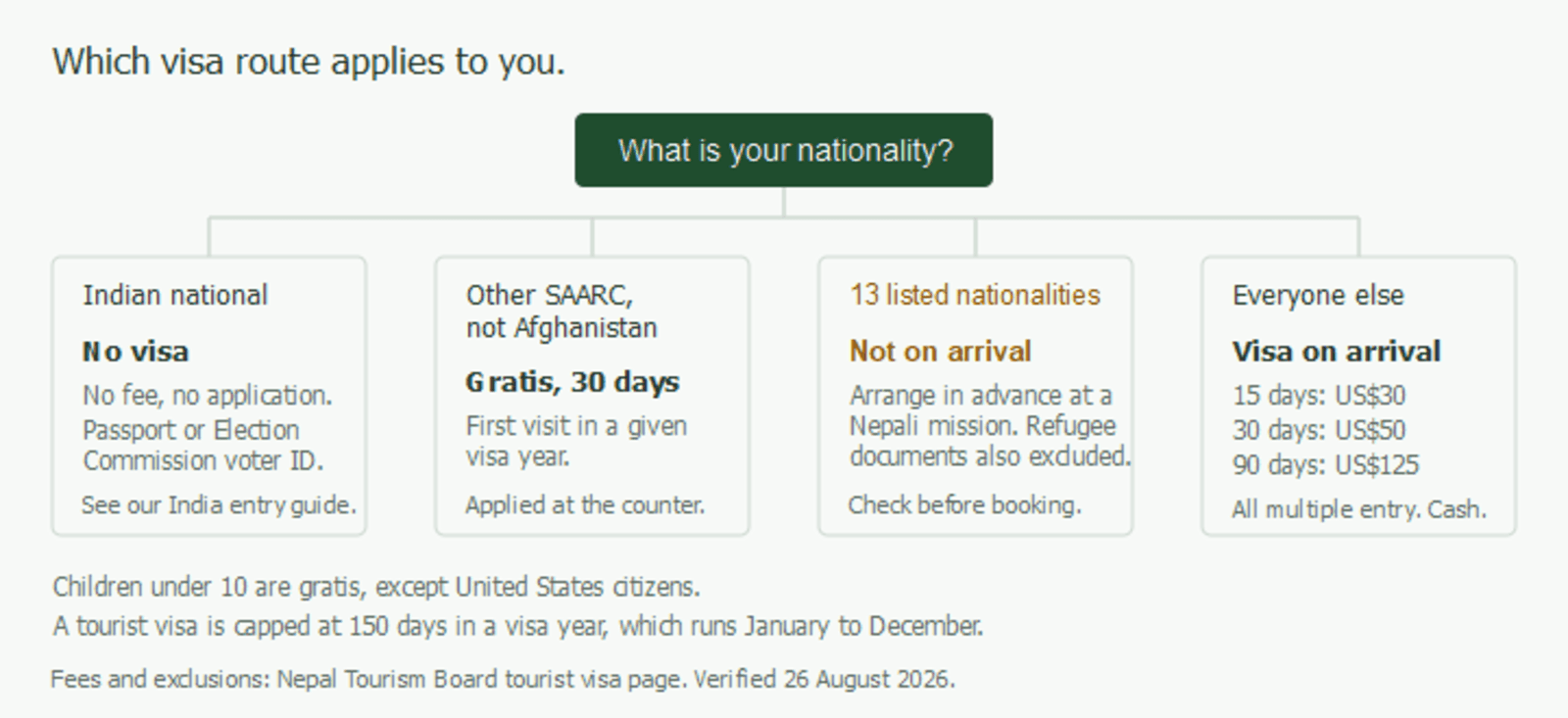
Most travellers get a Nepali tourist visa on arrival. The Nepal Tourism Board publishes the fee schedule.
| Visa length | Fee | Entries |
|---|---|---|
| 15 days | US$30 | Multiple |
| 30 days | US$50 | Multiple |
| 90 days | US$125 | Multiple |
| Extension | US$45 for a minimum 15 days, then US$3 per day | Applied to the existing visa |
All three lengths are multiple entry, so you can cross into India or Bhutan and come back on the same visa.
Three details catch people out.
Bring cash for the visa fee. The fee is payable in US dollars or another convertible currency. Do not plan on the card machine working.
Thirteen nationalities cannot use visa on arrival. The Nepal Tourism Board lists them as Nigeria, Ghana, Zimbabwe, Swaziland, Cameroon, Somalia, Liberia, Ethiopia, Iraq, Palestine, Afghanistan, Iran and Syria. Holders of refugee travel documents are a separate excluded category. If either applies to you, arrange the visa in advance through a Nepali diplomatic mission. Check this before you book a flight, not after.
Some travellers pay nothing. Children under 10 get a gratis visa, except US citizens. Citizens of SAARC countries other than Afghanistan get up to 30 days free on their first visit in a given visa year. And Indian nationals do not need a visa at all, which we cover in detail in Nepal visa for Indian citizens, including the specific identity documents immigration will and will not accept.
One limit worth knowing in advance: a tourist visa is capped at 150 days in a single visa year, which runs January to December. A late fee of US$5 per day applies past that mark.
Do this: check your passport has at least six months of validity left, confirm your nationality is not on the exclusion list, and put the visa fee aside in clean US dollar notes.
2. Nepal runs on cash, and your card will not do what you expect
This is the item that surprises the most people, and it is worth more than one line.
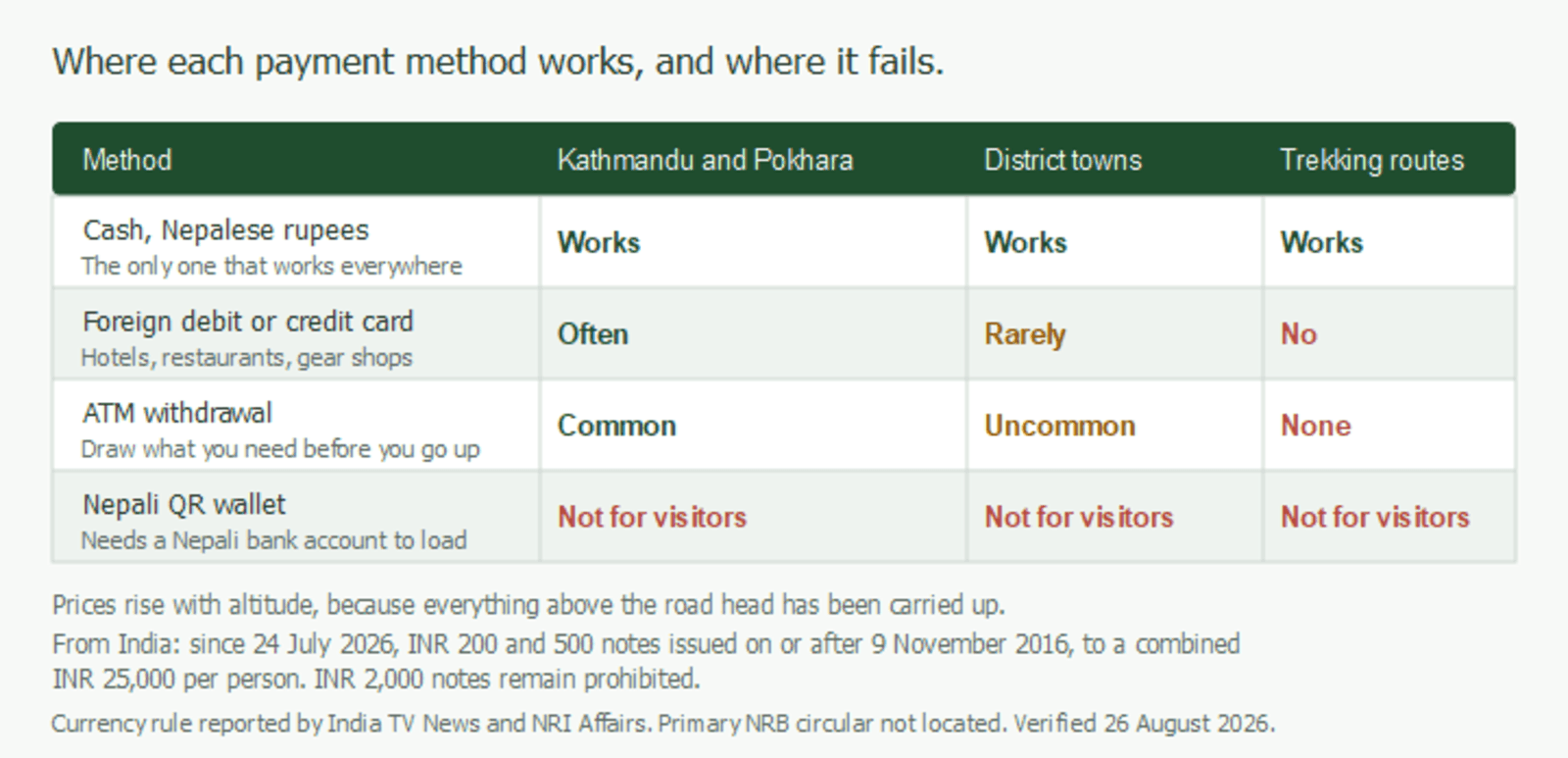
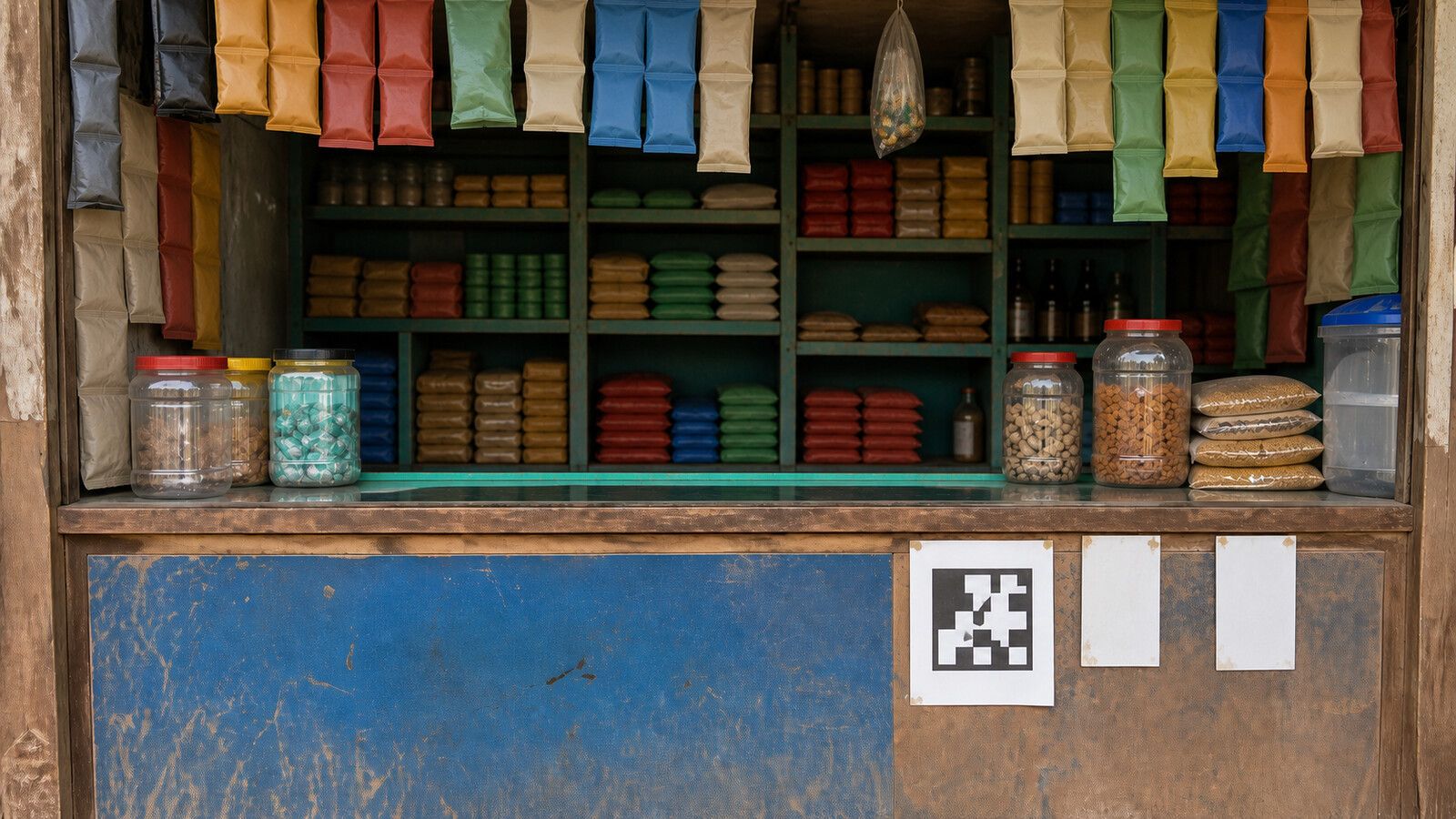
Nepal has a genuinely modern digital payment economy. QR codes are everywhere, from restaurant tables to vegetable stalls. What almost nobody tells visitors is that this economy is effectively closed to them. The wallets behind those QR codes are tied to Nepali bank accounts. A foreign debit or credit card cannot load one. You will stand in front of a QR code you cannot use, next to a local paying in two seconds.
So the practical position is: cards work in mid-range and upper hotels, established restaurants, supermarkets and trekking gear shops in Kathmandu and Pokhara. Cash covers everything else, and cash is the only thing that works once you leave the road network. ATMs are common in the two cities, uncommon in district towns, and absent on the trail. Draw what you need before you go up.
For what a trek itself costs, our pricing page sets out how we price trips, and our costs FAQ answers the questions people ask most often about what is and is not included.
The Indian currency rule changed in 2026
If you are travelling from India, this is new and it matters. For nearly a decade after India's 2016 demonetisation, Nepal prohibited Indian banknotes above 100 rupees, which made carrying meaningful sums awkward.
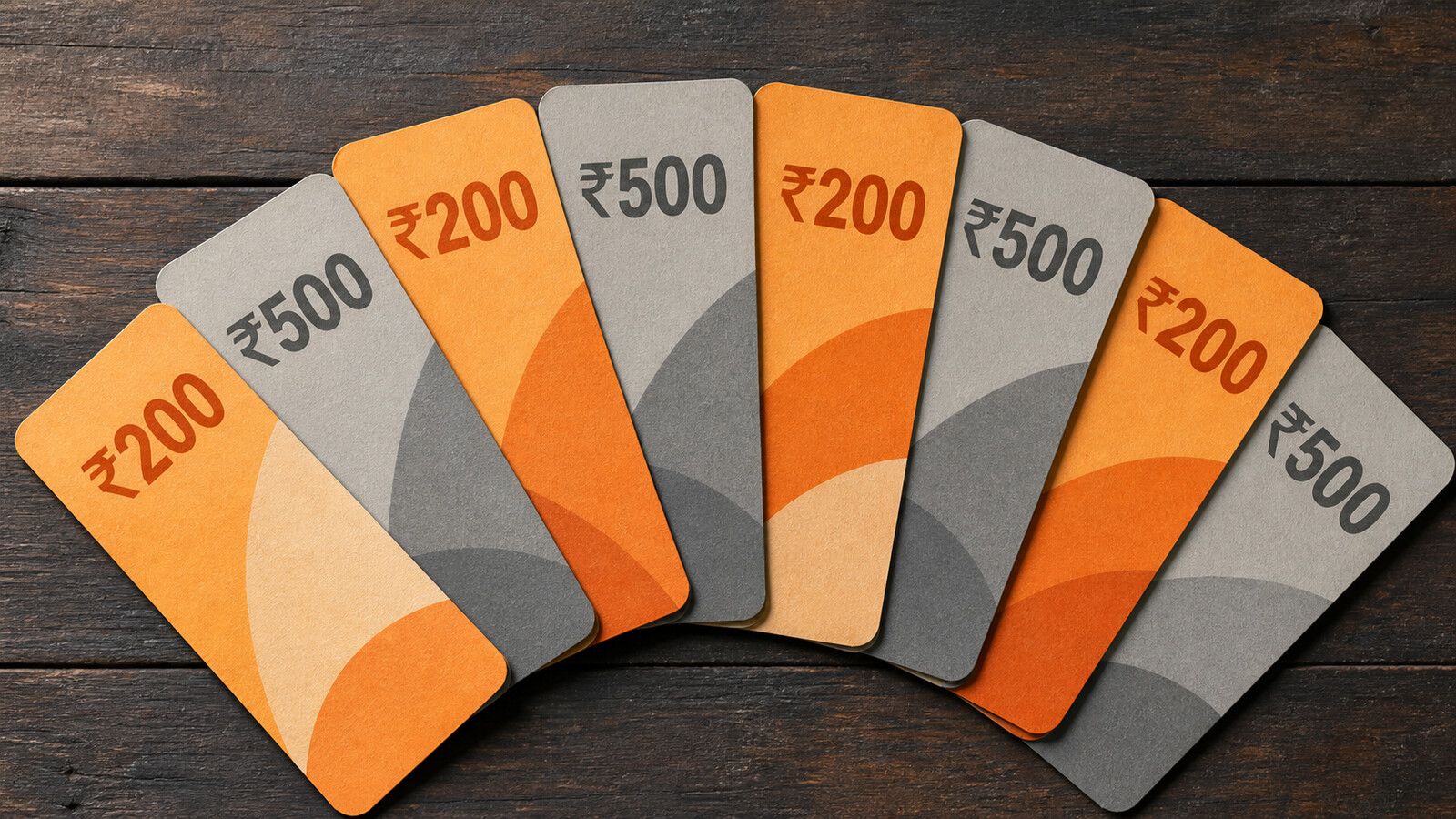
That has changed. The Nepal Rastra Bank's Foreign Exchange Management Department issued circular 1/2083-84, dated 23 July 2026, amending its 2082 integrated circular in respect of Indian currency notes. Indian and Nepali nationals may carry Indian 200 and 500 rupee notes issued on or after 9 November 2016, up to a combined maximum of 25,000 Indian rupees per person. Notes of 2,000 rupees, and pre-2016 500 and 1,000 rupee notes, remain prohibited.
This is a central bank rule made under the Foreign Exchange (Regulation) Act, not a matter that needed fresh legislation, and it is already in force. The Tribune reports that the provisions were notified in the Nepal Gazette on 11 February 2026, and quotes a Nepal Rastra Bank spokesperson describing the July notice as clarifying rules that were already gazetted. The same report notes that Nepali citizens may bring Indian currency only from India, and may not carry it on to a third country.
Limits and thresholds do move, so confirm the current figure with your own bank in the week you travel rather than relying on any article, including this one.
A note on rates: Nepal's currency is the Nepalese rupee, written NPR or Rs. The Nepal Rastra Bank publishes indicative rates daily. On 26 August 2026 the US dollar sat around 152 to 153 rupees, which is useful for judging whether a quoted price is sensible, and not a rate you should expect at a counter.
Finally, on bargaining. It is normal in markets, handicraft shops and with unmetered taxis, and it is not normal in supermarkets, branded shops or restaurants. Where it does apply, the gap between the first price and a fair one is a matter of practice rather than principle. Our article on the specific ways travellers lose money in Nepal covers the situations where the gap stops being ordinary bargaining, including airport taxi fares and exchange-counter arithmetic.
Do this: carry more cash than feels comfortable, split it between two places, and do not build a plan around tapping a card.
3. Book the season, not the month
Two windows carry most of Nepal's visitors.
| Season | Months | What you get | What it costs you |
|---|---|---|---|
| Spring | March to May | Warming temperatures, rhododendron in flower through the middle hills, long days | Haze thickens as the season goes on, obscuring distant peaks |
| Autumn | Late September to November | The most reliable mountain views of the year, air washed clean by the monsoon | The busiest trails and lodges, and flights that book out early |
| Winter | December to February | Clear air, quiet trails, sharp light | Cold nights, and high passes closed or serious |
| Monsoon | June to early September | Green hills, few other trekkers, and the rain-shadow districts at their best | Rain, leeches, and unpredictable mountain flights |
The two shoulder seasons are not off limits, they are different. The monsoon in particular is when the rain-shadow districts north of the main Himalayan range come into their own, because the mountains themselves block most of the weather. Mustang is the clearest example of that, and Manang works on the same principle.
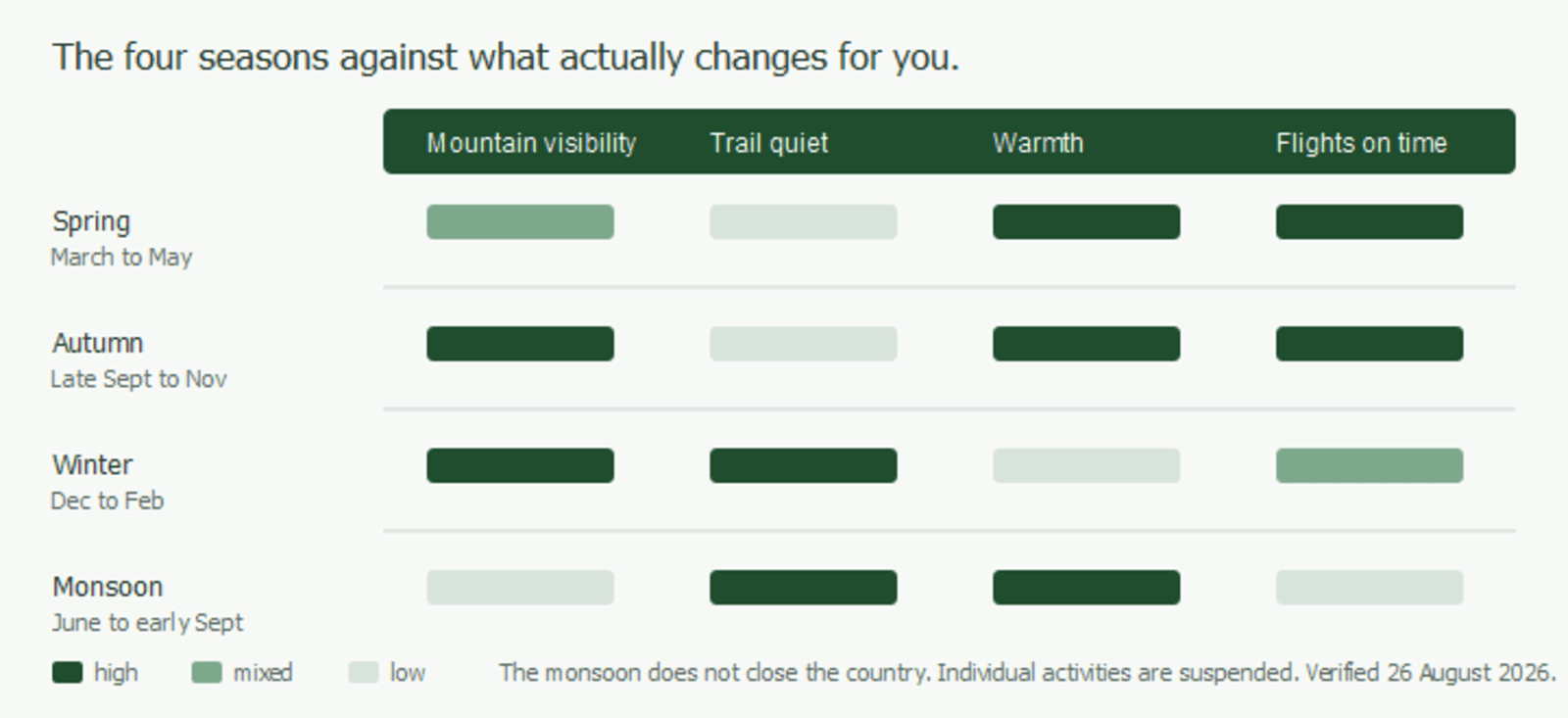
What the monsoon does not do is close the country. That claim circulates widely and it is not accurate. What actually happens is narrower and more specific: individual activities get suspended. The Kathmandu Post reported that Chitwan National Park suspended jeep safaris inside its core area from 1 July 2026, citing the wildlife breeding season, damaged forest roads, flash floods in park streams and fallen trees blocking routes. The park stayed open, and safari operations in the buffer-zone community forests continued.
Season affects different routes differently. Our trekking FAQ covers conditions questions route by route, and each destination region page sets out what its own valley is like through the year.
Do this: pick your window before you price flights. Autumn and spring flights and lodges book out, and the price difference between deciding in March and deciding in August is substantial.
4. Altitude is a scheduling problem before it is a medical one
Almost every article you will read treats altitude as a list of symptoms. That is the wrong end of it for someone still planning. By the time symptoms matter you have already made the decisions that caused them. The decisions are in the itinerary.
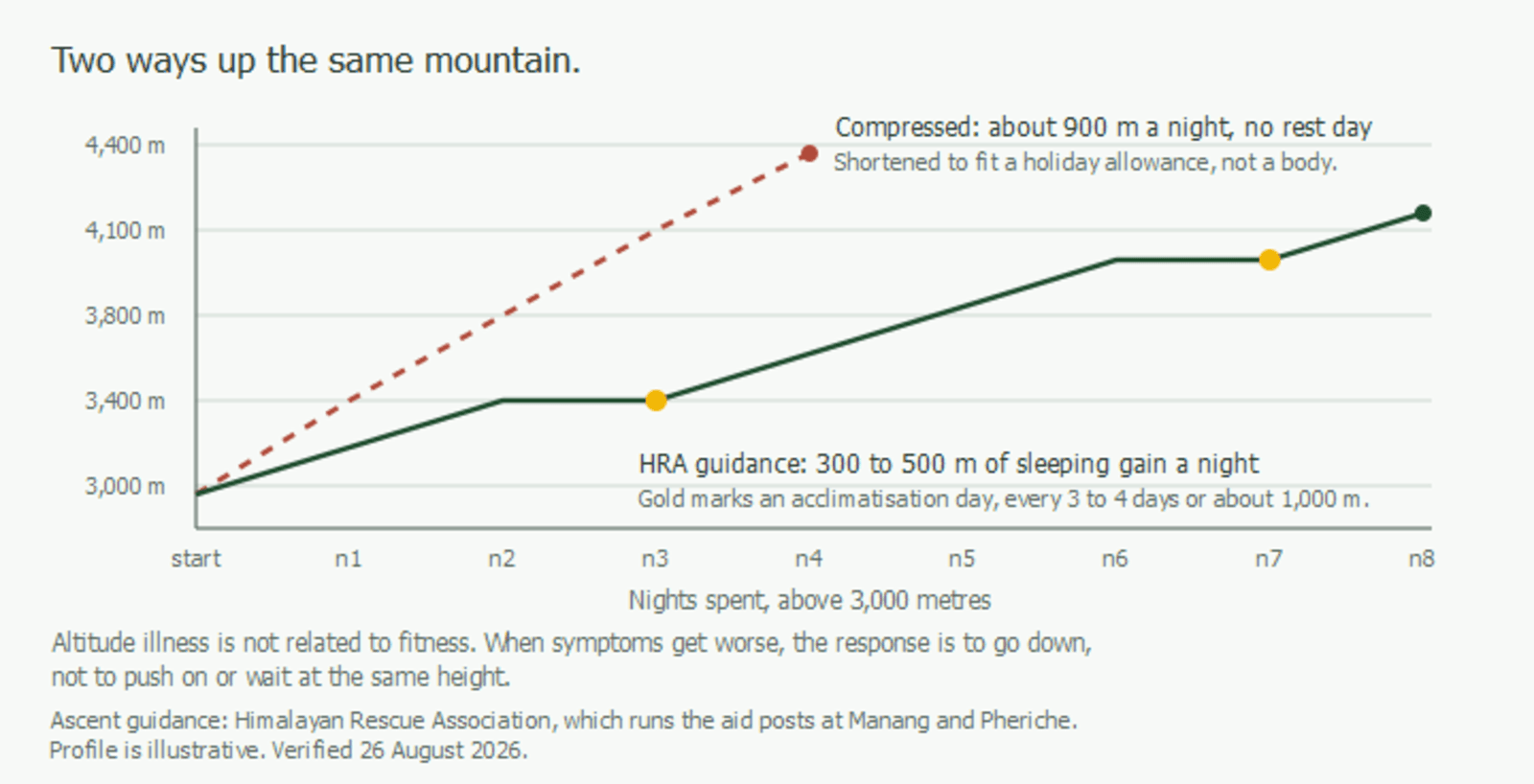
The Himalayan Rescue Association, which runs the aid posts at Manang and Pheriche and treats altitude illness in Nepal every season, gives two numbers worth building a trip around. Above roughly 3,000 metres, do not sleep more than 300 to 500 metres higher than the night before. And add an acclimatisation day every three to four days, or roughly every 1,000 metres of gain.
Read an itinerary against those two numbers and you learn more about it than any brochure will tell you. A schedule that gains 900 metres of sleeping altitude in a day above 3,000 metres is telling you something, and what it is telling you is that the trip has been compressed to fit a holiday allowance.
Two things are worth being plain about. Altitude illness is not related to fitness, and being young and strong is not protection. And the response to symptoms that are getting worse is to go down. Not to push on, not to wait it out at the same height.
That is deliberately as far as this article goes. Our safety page sets out how we handle acclimatisation, turnaround and evacuation decisions on our own itineraries, and the safety FAQ answers the recognition and response questions people ask before they book. No operator, ours included, can remove altitude risk. What an itinerary can do is stop manufacturing it.
Do this: before you accept any itinerary, read the sleeping altitudes and count the gain between consecutive nights.
5. If you are trekking, you need a licensed guide and the right permits
Foreign trekkers on Nepal's protected-area routes must be accompanied by a licensed guide, arranged through a government-registered trekking agency rather than hired privately. The requirement dates from a revised provision effective 31 March 2023, which the Nepal Tourism Board ties to the agency-issued TIMS card, the Trekkers' Information Management System record that identifies you on the route. For restricted areas, the Department of Immigration confirms permits are compulsory and issued only through a listed agency.
The rule moved in March 2026, and most of what you will read online has not caught up. The Kathmandu Post reported that an individual foreign traveller can now obtain a restricted-area permit, removing the previous requirement for a group of at least two. A licensed guide and a registered agency are still mandatory, and one guide may lead no more than seven trekkers.
So the accurate summary is narrower than the version in circulation. It is not that solo trekking is banned. It is that trekking unaccompanied on protected-area routes is, and that as of March 2026 you no longer need a second trekker to enter a restricted area.
Permits vary by route and change more often than most travel content admits. We keep which permit each route needs, and what it costs as a separate, dated article rather than repeating figures here that would age badly. If you book a trek through us, permits and guide arrangements are handled for you, and our guides page names the people who would be leading you.
Do this: if you are considering a restricted area, start the permit conversation early. These are not same-week arrangements. The Manaslu Circuit and Upper Mustang both sit in this category.
6. Buy travel insurance that names helicopter evacuation
This one cannot be fixed after you arrive, which is why it belongs on a pre-departure list rather than a packing list.
Standard travel insurance frequently excludes trekking above a stated altitude, and the stated altitude is often lower than the trek you have booked. A policy that covers you to 3,000 metres is not a policy for Everest Base Camp, which sleeps well above that for days at a time. Read for three things.
| Check | What to look for | Why it matters |
|---|---|---|
| Altitude ceiling | The maximum altitude the policy covers, in writing | Many policies stop at 3,000 or 4,000 metres, below the trek you booked |
| Evacuation wording | Helicopter evacuation named explicitly, not implied by "emergency transport" | Ambiguous wording is resolved at the moment you can least afford an argument |
| Who pays first | Whether the insurer pays the operator directly or reimburses you later | Evacuation is commonly arranged on the expectation of payment on the day |
That last row is not academic. A policy that reimburses you afterwards still requires somebody to be good for the money in the meantime.
We do not recommend individual insurers and we are not qualified to give insurance advice. Our safety FAQ sets out what we do and do not take responsibility for, and the booking FAQ covers what we ask you to have in place before a departure date is confirmed.
Do this: find the altitude ceiling in your policy document, in writing, before you pay for it.
7. Getting in, and getting around once you are there
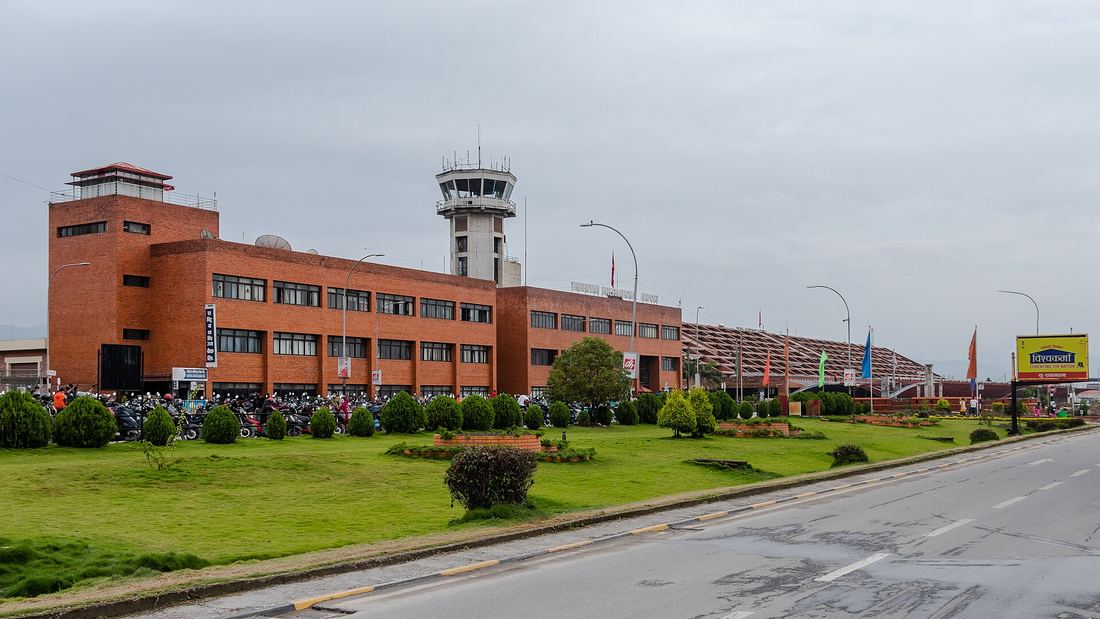
Nepal now has three international airports. Tribhuvan International Airport in Kathmandu remains the main gateway and handles the overwhelming majority of visitors. Gautam Buddha International Airport at Bhairahawa, near Lumbini, and Pokhara International Airport both operate international services, though their route networks are still limited and change season to season. Unless you have a specific reason, plan on Kathmandu.
You can also enter overland from India at several land border points, which we cover in travelling from India to Nepal by road.
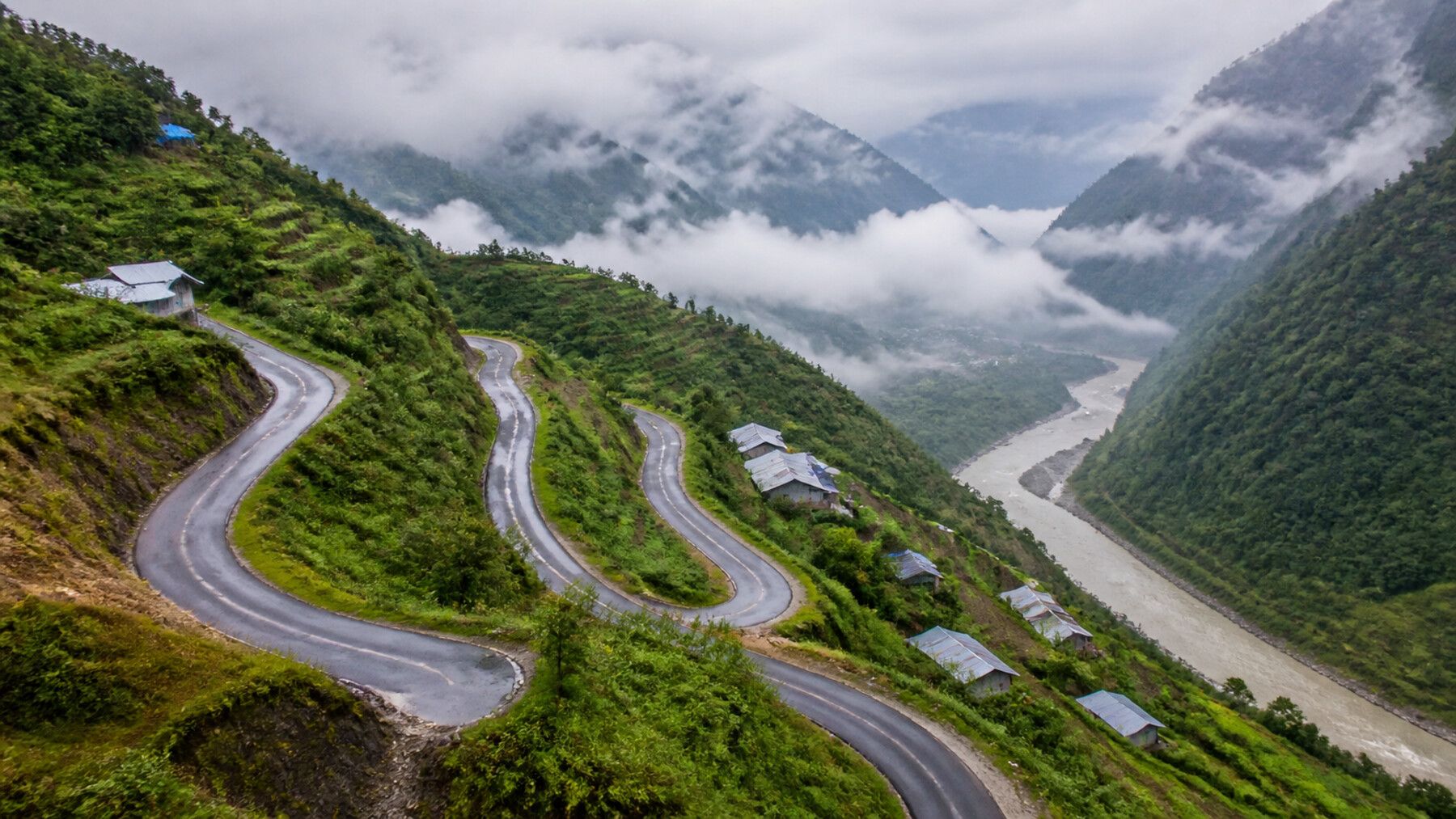
Inside Nepal, the honest version is this. Domestic flights are fast and weather-dependent. Roads are scenic and slower than any map suggests, because distance in Nepal is a poor guide to time. A journey that looks like three hours can take seven.
The practical consequence is the same in both cases: build in buffer days, particularly before an international flight home. Mountain flights to and from places like Lukla are delayed and cancelled routinely, and a schedule with no slack in it turns a normal delay into a missed connection. Note also that Lukla flights shift seasonally between Kathmandu and Ramechhap during the busy periods, which adds a pre-dawn road transfer that catches out people who booked on last year's information.
Do this: leave at least one spare day between coming off a trek and flying home. Two if the trek involved a mountain airstrip.
8. Nepal is more than one country, culturally
The National Census 2021, published by the National Statistics Office, recorded 142 caste and ethnic groups, 124 mother tongues and 10 religions. Chhetri make up 16.45 percent of the population and Hill Brahman 11.29 percent, followed by Magar at 6.9 percent, Tharu at 6.2 percent, Tamang at 5.62 percent and Bishwakarma at 5.04 percent. Nepali is the mother tongue of 44.8 percent, which means most of the country grows up speaking something else first.
Older articles, including a lot of what still ranks, cite 125 groups. That figure is from the 2011 census and it has been superseded.
This is not trivia. It is the reason a trek changes character as it gains height. Walking the Annapurna Circuit takes you from Hindu middle-hill villages through Gurung and Manangi settlements to valleys that are culturally Tibetan, in a few days on foot. The food changes, the architecture changes, the language at the next teahouse changes, and the religious buildings change from temples to gompas.
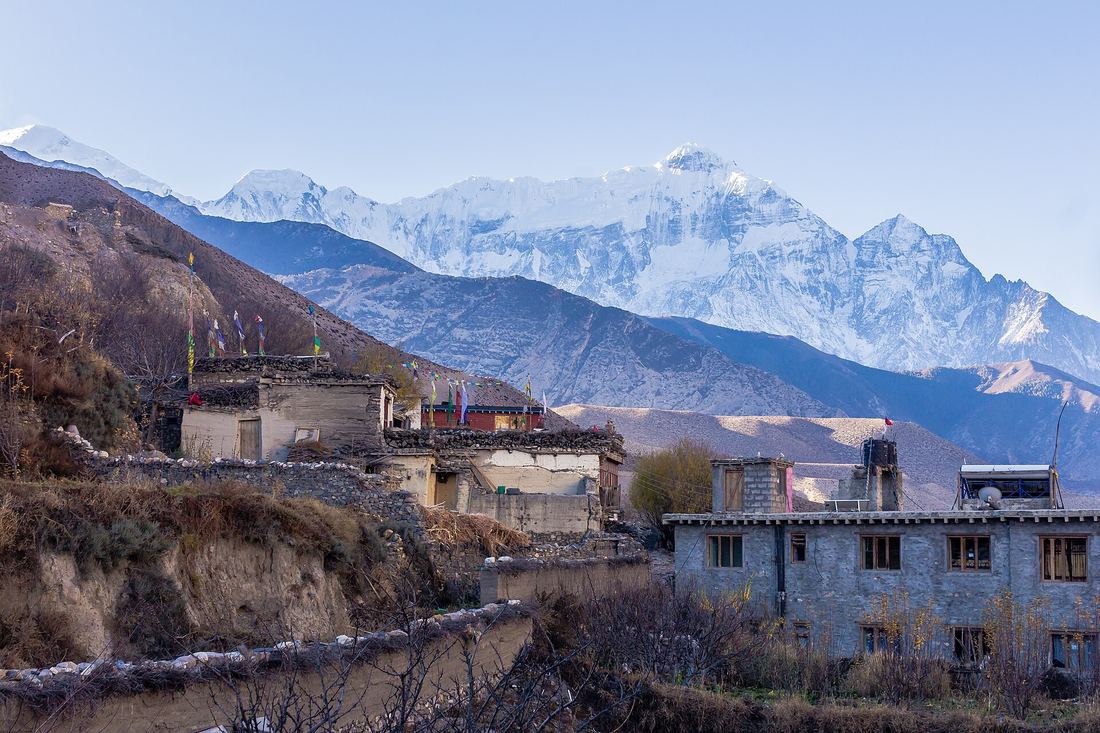
The Annapurna region page sets out how that transition works valley by valley, and the Everest and Langtang regions each have their own version of it.
Festivals follow the lunar calendar, so their Gregorian dates move every year. The practical effect on your trip is worth planning around: around Dashain and Tihar in the autumn, offices close, domestic transport fills as families travel home, and permit and immigration counters keep shorter hours.
Do this: check whether your dates fall across a major festival, and treat it as a logistics factor as well as an opportunity.
9. Respect is mostly a small number of specific habits
Abstract advice about being respectful is not much use. Concrete habits are.
- Take your shoes off before entering temples, gompas and most homes. Watch what other people do at the threshold.
- Walk clockwise around stupas, mani walls and prayer wheels, keeping them on your right.
- Ask before photographing people, particularly at prayer, at cremation ghats, and in monasteries. A refusal is a refusal.
- Dress modestly at religious sites and in villages. Shoulders and knees covered.
- Some Hindu temples do not admit non-Hindus. This is not personal.
- Eat and pass things with your right hand.
- Do not step over someone or over food.
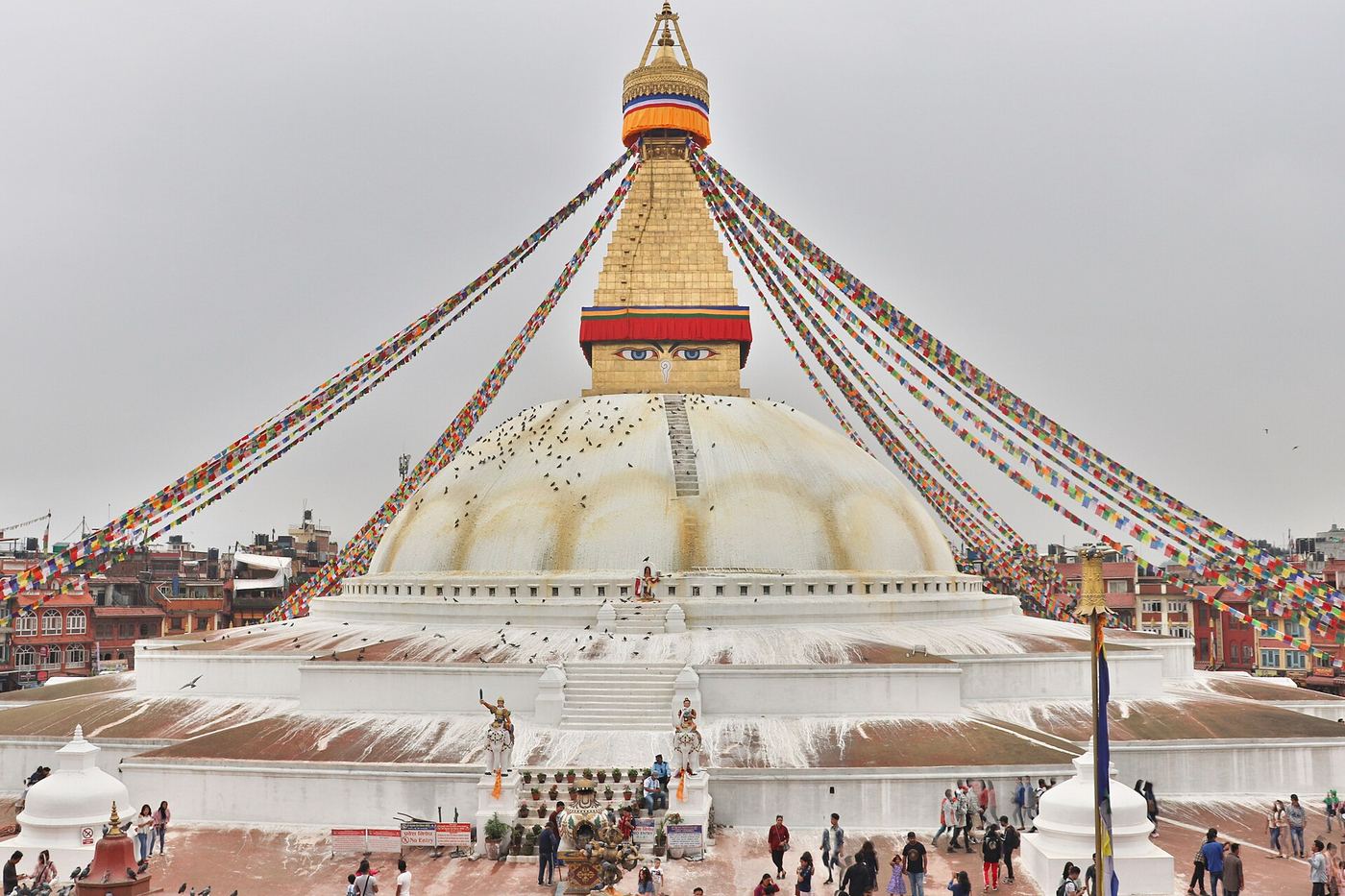
A guide is worth having for this reason as much as for navigation. Norms shift between a Newar courtyard in Kathmandu, a Gurung village in the middle hills and a Tibetan Buddhist monastery in the north, and knowing which one you are standing in is not obvious from outside. Our guides are the people who tell you which threshold you are about to cross, and the lodges FAQ covers the household side of the same question, since a teahouse is usually somebody's home.
Do this: learn the shoes and the clockwise rule before you arrive. The rest you can watch and follow.
10. Food, water, and not losing three days to your stomach
Nepali food is better than its reputation among visitors, largely because visitors mostly eat the version served on trekking routes. Dal bhat, lentil soup with rice, vegetables and often a curry, is the national dish and is normally refilled without charge. On a long walking day that matters more than variety. Momo, steamed or fried dumplings, are everywhere. Thukpa is a noodle soup that suits cold evenings. Sel roti, a ring-shaped rice bread, and dhido, a thick millet or buckwheat porridge, are worth trying where they are local rather than tourist-facing.
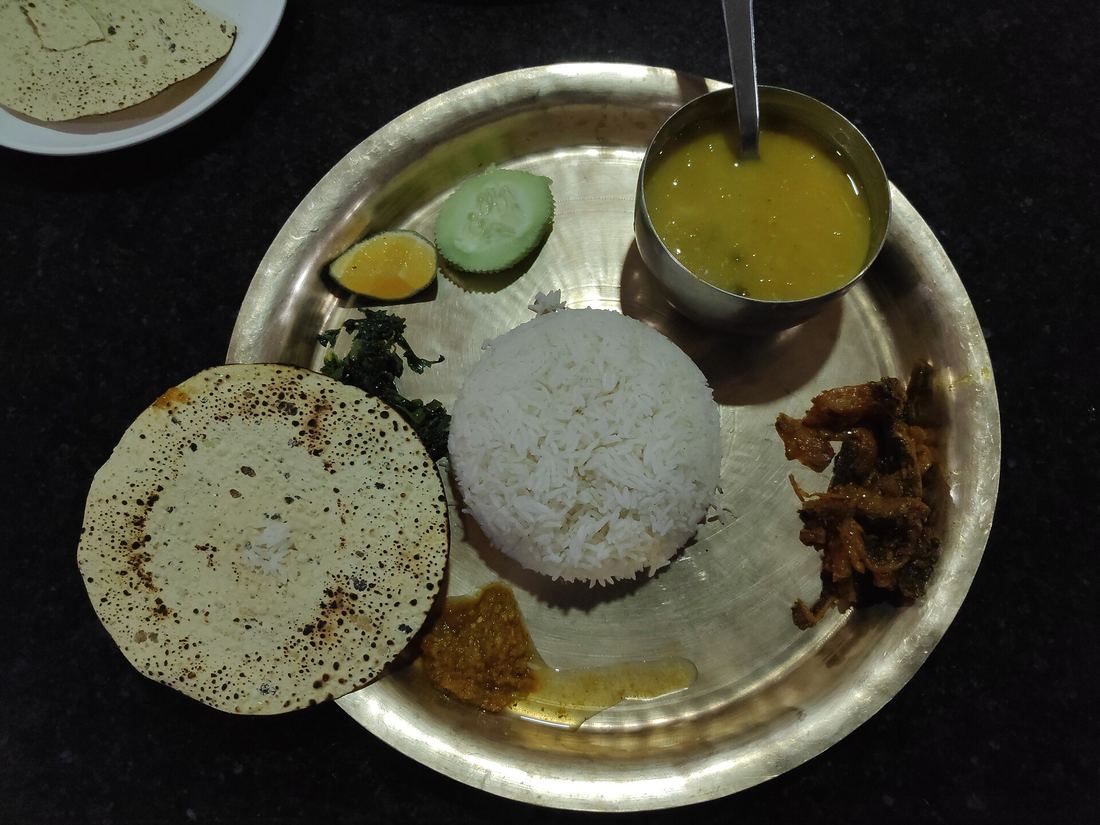
Water deserves more care than it usually gets. Do not drink untreated tap water anywhere in Nepal. The standard advice is to buy bottled water, and we would push back on that. Bottled water on a trekking route means carrying empty plastic up a valley with no waste infrastructure, and Nepal has legislated against exactly this problem in the Everest region, where rules on single-use plastic apply.
The better answer is to treat your own.
| Method | Weight | Deals with | Note |
|---|---|---|---|
| Filter bottle | Around 100 to 200 g | Bacteria and protozoa | Fastest at a teahouse tap, no waiting time |
| Chlorine dioxide drops or tablets | Under 100 g | Bacteria, protozoa and viruses | Needs a contact time, usually 30 minutes |
| UV pen | Around 100 g | Bacteria, protozoa and viruses | Needs batteries, and cold shortens their life |
| Boiled water from teahouses | Nothing to carry | Everything | Sold by the litre, and the cost rises with altitude |
Beyond water: be careful with raw salads and fruit washed in tap water, be careful with street juice, and be more careful with meat the higher you go, since it has usually been carried a long way without refrigeration. Many trekkers eat vegetarian above a certain altitude for exactly that reason. Our preparation FAQ covers what to bring and what to buy in Kathmandu.
Do this: pack a water treatment method before you fly. It is cheaper at home and it is the single most useful thing you can carry.
11. Power, connectivity, and the clock
| What to know | What to do | |
|---|---|---|
| Electricity | 230 V, 50 Hz, socket types C, D and M | Bring a plug adapter. Most modern chargers are dual voltage and need no converter |
| On the trail | Teahouses charge per device per hour for solar power, and cold flattens batteries | Bring a power bank and sleep with your batteries in your sleeping bag |
| Mobile | SIM registration is a legal requirement | Buy at the airport counters past immigration, with your passport |
| Time | UTC+05:45, 15 minutes ahead of India | Set your watch on arrival rather than assuming |
| Calendar | Bikram Sambat, about 56 years and 8 months ahead of the Gregorian calendar | Expect BS dates on permits, official documents and some tickets |
A few notes on those rows.
Electricity. Single-voltage 110 volt appliances, mostly North American hair dryers and kitchen items, need a converter rather than just an adapter. Phone, laptop and camera chargers almost never do.
Connectivity. Both national operators sell eSIM as well as physical SIM if your phone supports it. Coverage on popular trekking routes is better than most people expect and still cannot be relied on. Plan prices change often, and the upselling that happens at some counters is worth knowing about in advance: our tourist scams article covers SIM card and data plan pricing with a dated example of an official published tariff, so you can see what a real plan costs before somebody quotes you one.
The calendar. So 2026 falls in 2083 BS, and the Nepali new year starts in mid-April. Both systems are used side by side and nobody will be surprised if you ask which one a date refers to.
Do this: bring a power bank, an adapter, and your passport for the SIM counter.
12. Learn a few words of Nepali
English is widely spoken in tourism, so nobody needs Nepali to get by. That is not the point. The point is that making the attempt changes the temperature of an interaction, immediately and noticeably.
| English | Nepali | Pronunciation |
|---|---|---|
| Hello, and goodbye in greeting | नमस्ते | Namaste |
| Thank you | धन्यवाद | Dhanyabaad |
| Yes | हो | Ho |
| No | होइन | Hoina |
| How are you? | तपाईंलाई कस्तो छ? | Tapaailaai kasto cha? |
| I am fine | म ठीक छु | Ma thik chu |
| How much is this? | यसको मूल्य कति हो? | Yesko mulya kati ho? |
| Excuse me, or sorry | माफ गर्नुहोस् | Maaf garnuhos |
| Delicious | मीठो छ | Mitho cha |
| I need water | मलाई पानी चाहियो | Malaai paani chaahiyo |
| See you again | फेरि भेटौंला | Pheri bhetaunla |
Namaste covers hello and goodbye and is offered with palms together. It works in every setting in the country.
Do this: learn namaste, dhanyabaad and mitho cha. Three words will do more than you expect.
Emergency numbers
Save these before you fly rather than looking for them when you need them.
| Service | Number |
|---|---|
| Tourist Police, toll free | 1144 |
| Police | 100 |
| Fire | 101 |
| Ambulance | 102 |
The Nepal Tourism Board states that the Tourist Police operate 31 units nationwide, 10 within the Kathmandu Valley and 21 across 14 districts, with round-the-clock coverage in the Kathmandu Valley and Pokhara City. Their remit includes registering complaints, helping recover lost documents and goods, and coordinating with embassies in an emergency. The head office is at Bhrikutimandap in Kathmandu, inside the Nepal Tourism Board premises.
If you are trekking with an operator, your guide is the faster route to help on the trail than any number is. Agree before you set out how the group communicates a problem, and read our safety page for how we handle it.
Frequently asked questions
Do I need a visa to visit Nepal?
Most nationalities can get a tourist visa on arrival, which the Nepal Tourism Board prices at US$30 for 15 days, US$50 for 30 days and US$125 for 90 days, all multiple entry. Indian nationals do not need a visa. Thirteen nationalities, plus holders of refugee travel documents, must arrange a visa in advance.
Can I trek in Nepal without a guide?
Not on protected-area routes. A revised provision effective 31 March 2023 requires foreign trekkers on listed routes to be accompanied by a licensed guide arranged through a government-registered trekking agency. In March 2026 the rules for restricted areas were eased so that a single foreign traveller can hold a restricted-area permit, but the licensed guide and registered agency requirements remain, and one guide may lead at most seven trekkers.
How much cash should I bring to Nepal?
Enough to cover everything outside hotels and established restaurants in Kathmandu and Pokhara, because Nepali QR wallets require a Nepali bank account and cannot be loaded with a foreign card. ATMs are common in the two main cities, uncommon in district towns, and absent on trekking routes. Travellers from India may carry Indian 200 and 500 rupee notes issued on or after 9 November 2016, up to a combined 25,000 Indian rupees per person, under Nepal Rastra Bank circular 1/2083-84. Notes of 2,000 rupees remain prohibited.
When is the best time to visit Nepal?
Spring, roughly March to May, and autumn, roughly late September to November, carry most visitors and give the most reliable conditions. Winter is clear and cold with high passes closed or serious. The monsoon, June to early September, is wet and unpredictable for flights, and it does not close the country. Individual activities are suspended seasonally, such as core-area jeep safaris at Chitwan National Park from 1 July 2026.
Is the tap water safe to drink in Nepal?
No. Treat your own water with a filter, chlorine dioxide drops or a UV pen, or buy boiled water from teahouses. Bottled water creates a disposal problem on trekking routes, and rules on single-use plastic apply in the Everest region.
What plug and voltage does Nepal use?
Nepal runs at 230 volts, 50 hertz, with socket types C, D and M. Most modern phone, laptop and camera chargers are dual voltage and need only a plug adapter. Single-voltage 110 volt appliances need a converter.
What is the emergency number for tourists in Nepal?
The Tourist Police toll-free hotline is 1144. Police is 100, fire is 101 and ambulance is 102.
Where to go next
If you have not settled on a route yet, which Himalayan trek is right for you works through the choice by time, effort and altitude, and our trek list shows what we actually run. If Everest is the draw, our account of the walk to Base Camp sets out what the days are like. If you have your dates and are choosing a route, which permit each route needs will tell you what the route commits you to before you commit to it.
Love Himalaya Journey is a Nepali trekking operator. We arrange licensed guides and permits for the treks we run. If you want a specific itinerary read against the acclimatisation numbers in item 4 before you book it, with us or with anyone else, get in touch and we will do that with you.
Sources
All sources accessed 26 August 2026. External links open in a new tab.
Official and primary
- Nepal Tourism Board, tourist visa. Visa on arrival fees and durations, multiple-entry status, the nationalities excluded from visa on arrival, gratis categories, the 150-day visa-year limit, and extension fees.
- Nepal Tourism Board, tourist police. The 1144 hotline, unit coverage, remit, and head office location.
- Nepal Tourism Board, TIMS. The revised provision effective 31 March 2023 linking listed protected-area routes to a licensed guide and an agency-issued TIMS card.
- Department of Immigration, trekking permit process. Restricted-area permits are compulsory and issued only through a listed trekking agency.
- Tribhuvan International Airport immigration, FAQ. Arrival procedure at Nepal's main international gateway.
- Nepal Rastra Bank, Foreign Exchange Management Department circulars. Circular 1/2083-84, dated 2083/04/07, which is 23 July 2026, amending the 2082 integrated circular in respect of Indian currency notes.
- Himalayan Rescue Association, health problems. Sleeping-altitude gain of 300 to 500 metres per night above roughly 3,000 metres, and an acclimatisation day every three to four days or roughly 1,000 metres.
- Nepal Rastra Bank. Published indicative exchange rates, used here as an order-of-magnitude illustration only.
Reputable secondary, attributed in text
- The Tribune, Nepal eases Indian currency rules. The 11 February 2026 Nepal Gazette notification, the Nepal Rastra Bank spokesperson's confirmation that the July notice clarified rules already in force, the 25,000 rupee per-person limit, and the restriction on carrying Indian currency to a third country.
- Kathmandu Post, number of castes and ethnicities in Nepal increases to 142. National Census 2021 figures published by the National Statistics Office.
- Kathmandu Post, immigration eases rules for solo trekkers in restricted areas. The March 2026 restricted-area permit change and the seven-trekker guide ratio.
- Kathmandu Post, jeep safari inside Chitwan National Park suspended for monsoon season. The 1 July 2026 core-area suspension and its stated reasons.
Something here out of date or wrong? Tell us and we will check it.