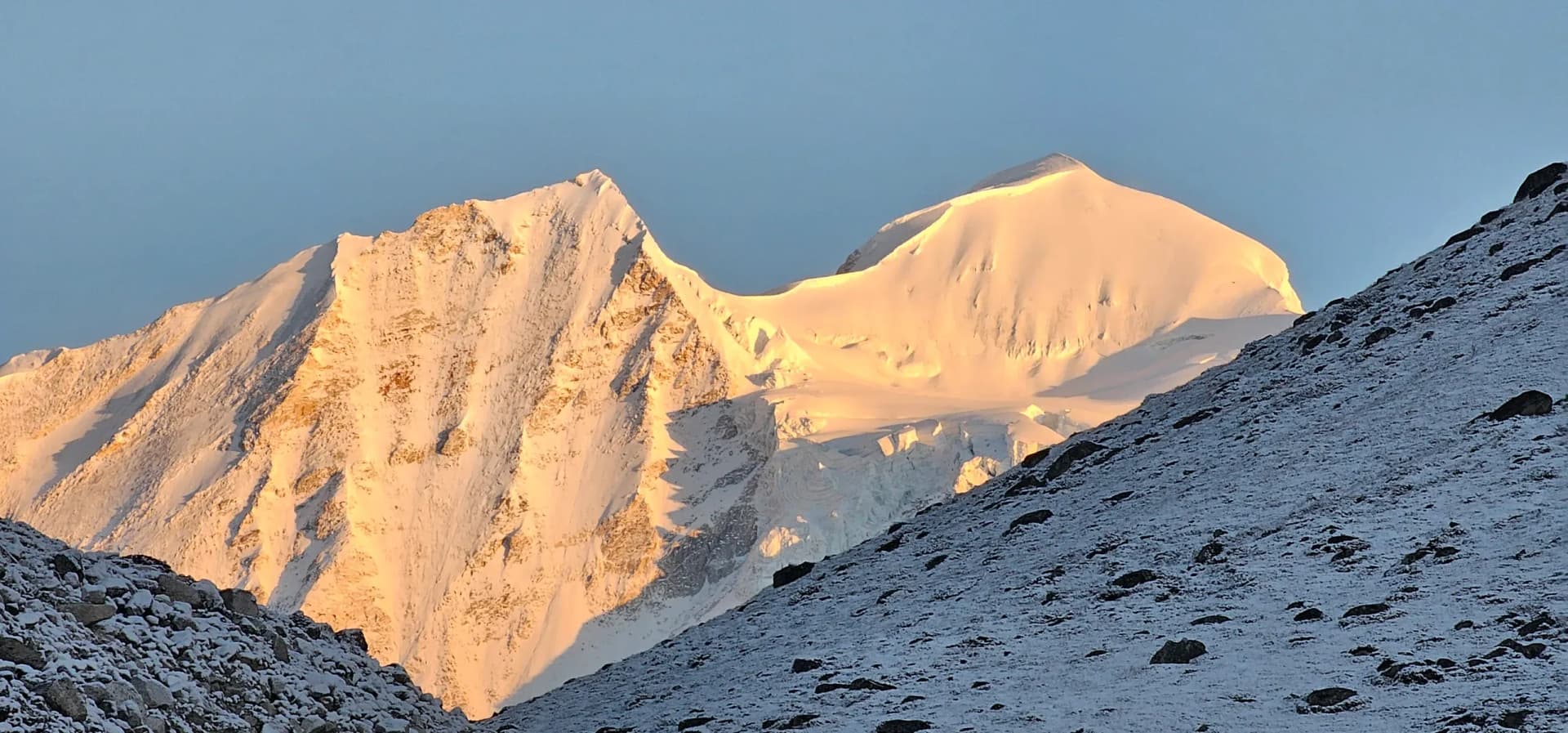
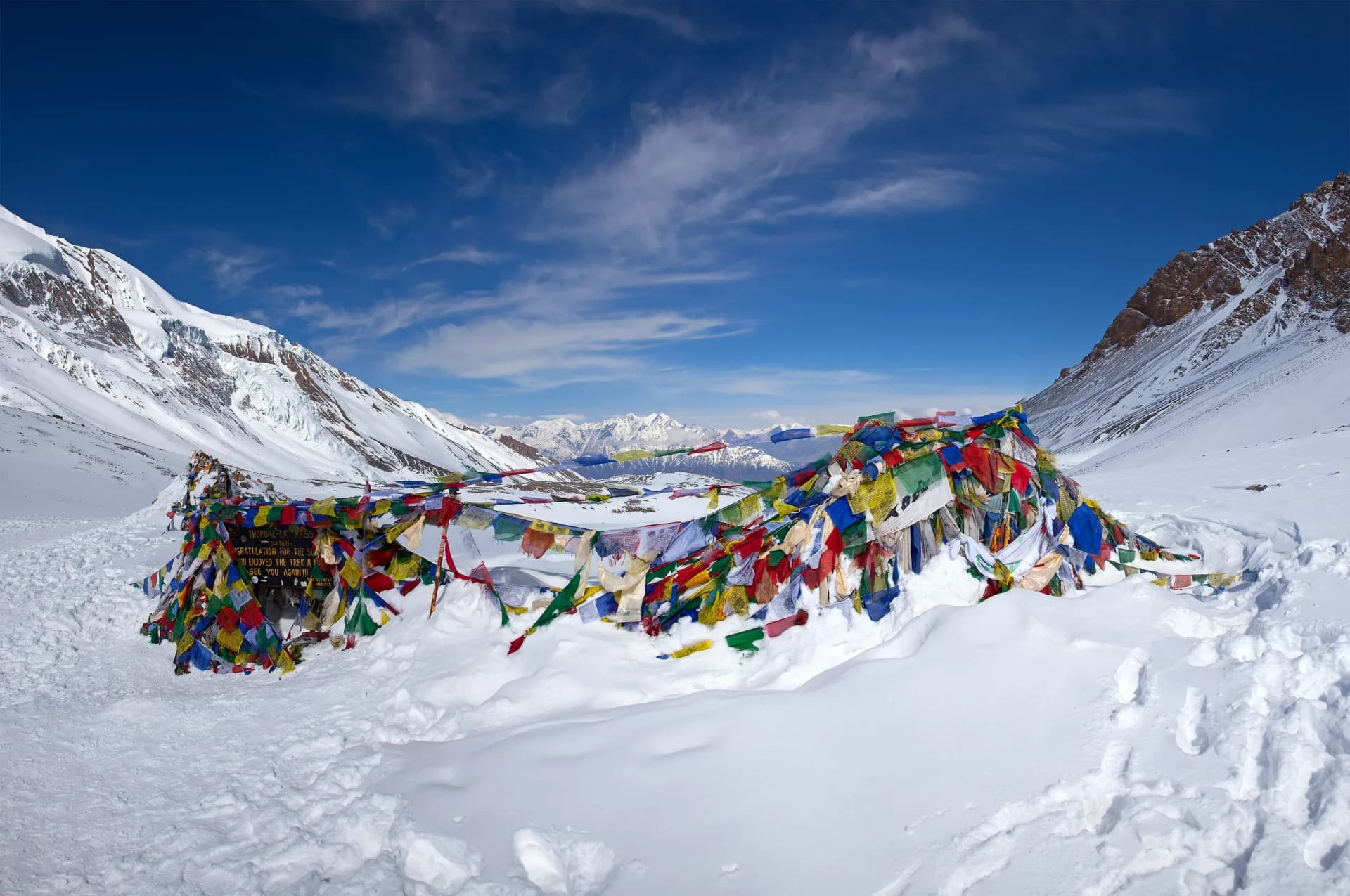
Choose Manaslu for a steady walking journey through the Budhi Gandaki valley, upper mountain villages and a remote-feeling approach to the pass. Choose Annapurna for a wider change of landscapes and more choice about where to start, finish and spend extra days. Both circuits cross a pass above 5,000 metres. Your choice depends on the route, how comfortable you are with basic lodges, and the time you have for acclimatisation: letting your body adjust to altitude.
The Nepal Tourism Board's Manaslu overview and Annapurna region guide describe two distinct journeys. Which feels harder or more rewarding will vary from person to person.
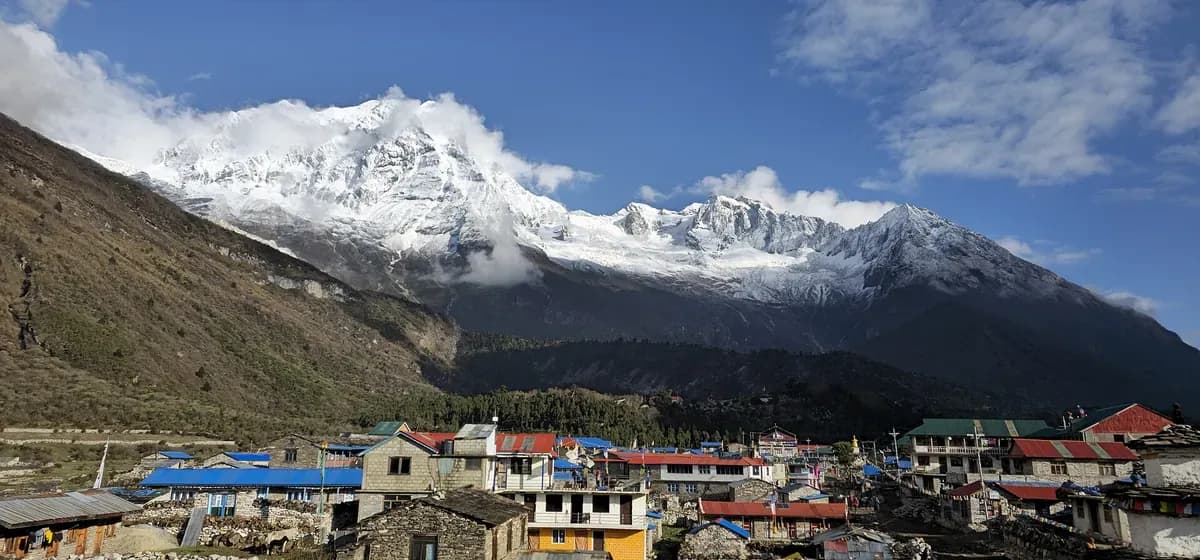
Photograph: Nabin K. Sapkota / Wikimedia Commons, CC BY-SA 4.0. Uncropped, resized WebP delivery copy; original retained. The photograph illustrates the place, not present trail conditions.
Manaslu vs Annapurna Circuit at a glance
| Your decision | Manaslu Circuit | Annapurna Circuit |
|---|---|---|
| Main route character | Budhi Gandaki valley, upper Nubri villages, Larkya La and the descent towards Bhimthang | Marsyangdi valley, Manang, Thorong La, then Muktinath and the Kali Gandaki side |
| Strongest reason to choose it | You enjoy a continuous sequence of walking days and accept fewer choices in the upper valley | You want landscape variety and scope to shape the start, finish and extensions |
| High pass | Larkya La, above 5,000 metres | Thorong La, 5,416 metres |
| Accommodation expectation | Teahouses; plan for basic facilities, particularly near the pass | Lodge options in established settlements; basic facilities near the pass remain part of the trek |
| Road question | Check the approach and exit transfers, and the walking start | Check every day's trail choice, road walking and planned vehicle sections |
| Planning constraint | Restricted-area permit arrangements and a less flexible upper section | Route design and a sensible altitude progression, especially after a high starting-point drive |
| Best comparison method | Count walking days, acclimatisation days and reserve time | Count the same things, then separate optional extensions from the core crossing |
Crowds, rooms and access can vary from these broad route patterns. Use the Manaslu Circuit itinerary and Annapurna Circuit itinerary to see how each trip is planned.
What does each journey feel like?
Manaslu: a valley journey with a gradual change of setting
On Manaslu, the setting changes as you follow the river valley towards Samagaun and Samdo. The landscape opens on the approach to Larkya La. Beyond the pass, the descent towards Bhimthang brings a different mountain setting.
The National Trust for Nature Conservation's annual report identifies Nubri and Tsum as distinct areas within the conservation region. The standard Manaslu Circuit passes through Nubri. Tsum Valley is a separate extension, so a regional description that names both does not mean your trip includes both.
Tibetan Buddhist traditions are part of village life in upper Manaslu. Leave time to stop in the villages as well as to eat lunch. Ask before taking photographs of people. Follow local guidance around monasteries and mani walls, the stone walls carved with Buddhist prayers.
This route suits people who enjoy a rhythm of walking, settling into a lodge and setting off again the next morning. The remote upper section needs enough time and a clear plan for what to do if the route has to change.
Annapurna: variety within one circuit
Annapurna takes you from the Marsyangdi valley to the open country around Manang, then into the drier landscape on the Muktinath side. The Nepal Tourism Board describes the circuit's different environments and cultural settings.
The trail you choose shapes the trip. Walking through Upper Pisang, Ghyaru and Ngawal gives you a different experience from taking the more direct valley route. You can finish soon after the pass or keep going beyond Muktinath. Tilicho Lake and Poon Hill each need extra time; neither is part of every Annapurna Circuit booking.
Annapurna is a strong fit if you want successive valleys to look and feel different. If you want to avoid vehicle corridors, check where the daily route runs before choosing your itinerary.
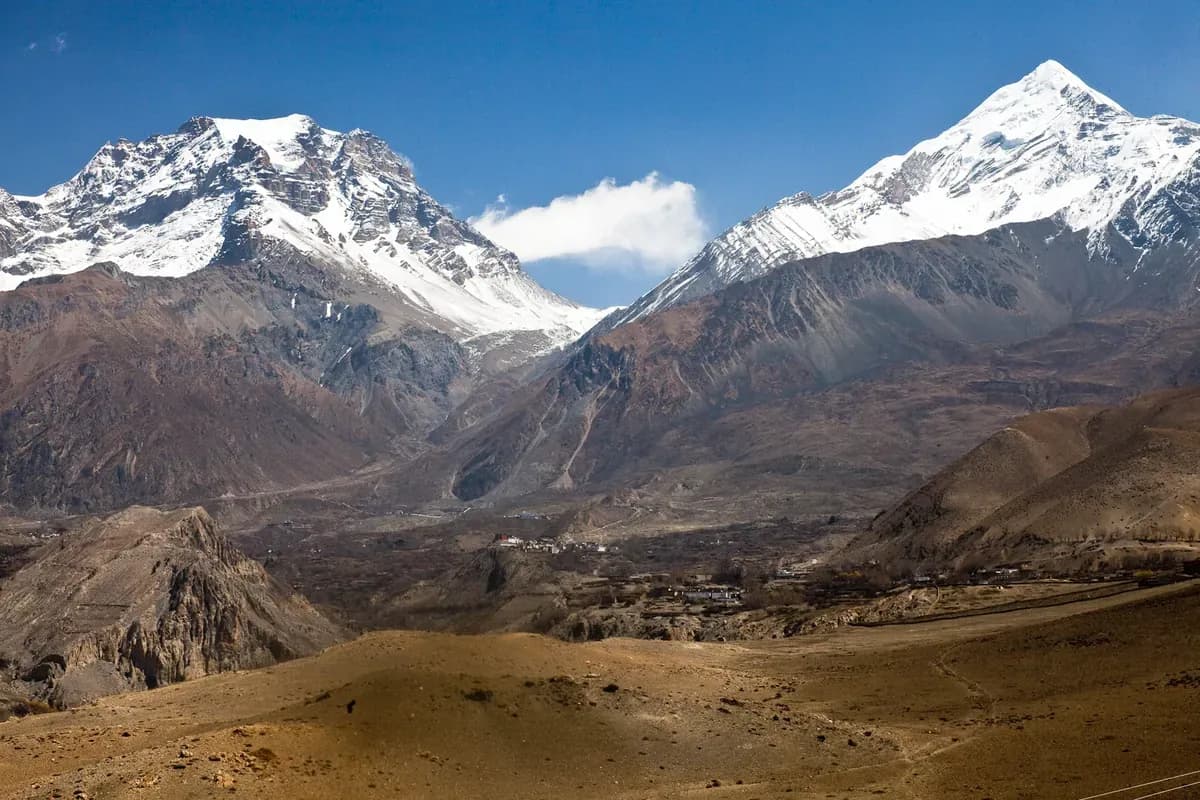
Photograph: Greg Willis / Wikimedia Commons, CC BY-SA 2.0. Uncropped WebP delivery copy; original retained.
Roads and route design matter more than the label
Roads have changed the Annapurna Circuit. Reporting by The Kathmandu Post describes their effect and the efforts to preserve other walking trails. A drive can shorten the approach. A well-chosen footpath can give you a day focused on walking. The mix of both across the trip shapes the experience.
Ask for each day's footpaths, road sections and vehicle transfers. Driving farther up the valley may save days, but it also changes how fast you reach higher places to sleep. That matters when you compare shorter trips.
Manaslu's approach and exit transfers also need checking. It should not be sold as an entirely road-free journey. Compare its upper walking section with Annapurna's trail options to see which suits you.
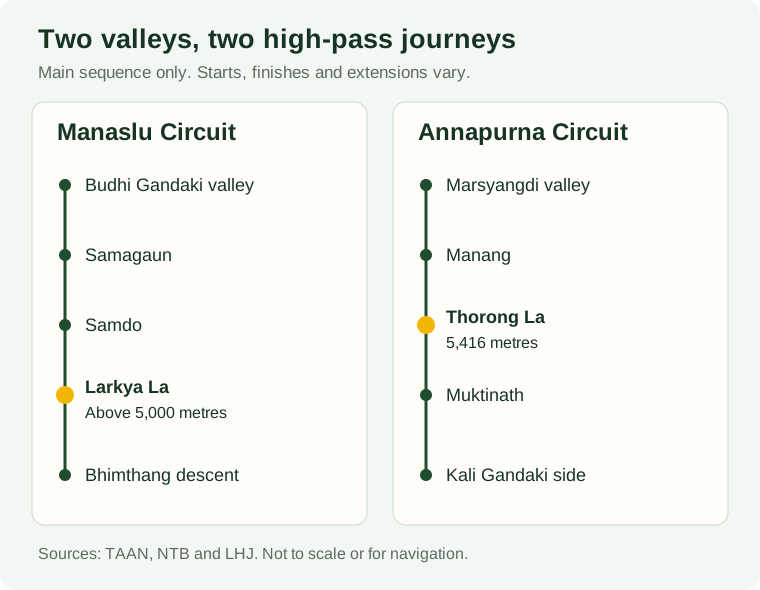
Source: Trekking Agencies' Association of Nepal
Source: LHJ Manaslu itinerary
Source: Manaslu
Source: Annapurna
Which circuit is harder?
The route name alone cannot tell you which will feel harder. Manaslu can feel more demanding when the plan combines long stretches of walking, basic upper lodges and fewer easy ways to change the route. Annapurna has a serious high-pass day too. A rushed schedule or a demanding extension can make it a hard trip.
Thorong La reaches 5,416 metres. Sources give different heights for Larkya La, but it is above 5,000 metres. A lower pass height does not make Manaslu safer or easier. The nights before the pass, longest walking days, descent and spare time all matter.
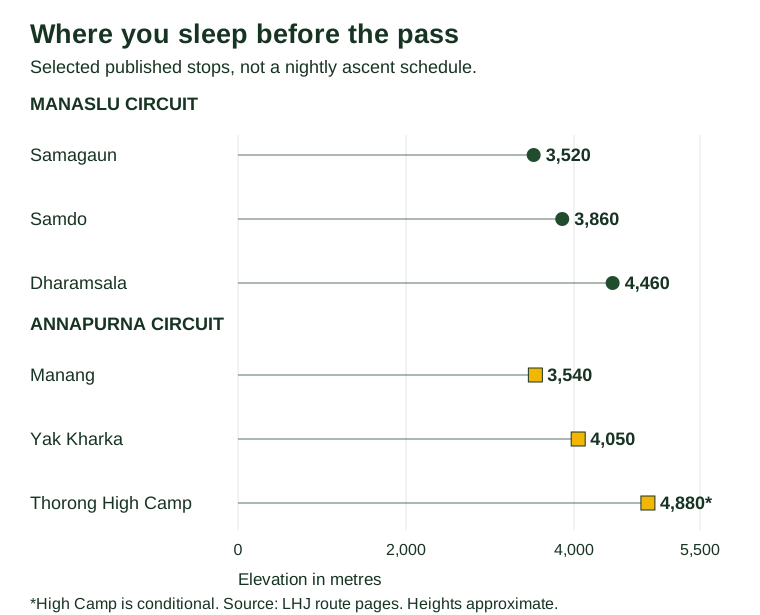
Source: Manaslu
Source: Annapurna
Ask for the full list of sleeping stops, including repeated nights in the same place. The graph shows why the pass height alone leaves out much of the altitude planning.
The CDC's high-altitude travel guidance stresses a gradual ascent and the altitude where you sleep. Fitness does not protect you from altitude illness. Both circuits need time to acclimatise and a plan that can change if needed.
Do not ascend with symptoms of altitude illness. Symptoms that worsen at the same altitude call for descent; confusion, difficulty walking steadily or breathlessness at rest need urgent assisted descent and medical help. Discuss your own health considerations with a qualified clinician before the trip.
Ask your guide what happens if you need another night before the pass. The answer is more useful than a difficulty rating alone.
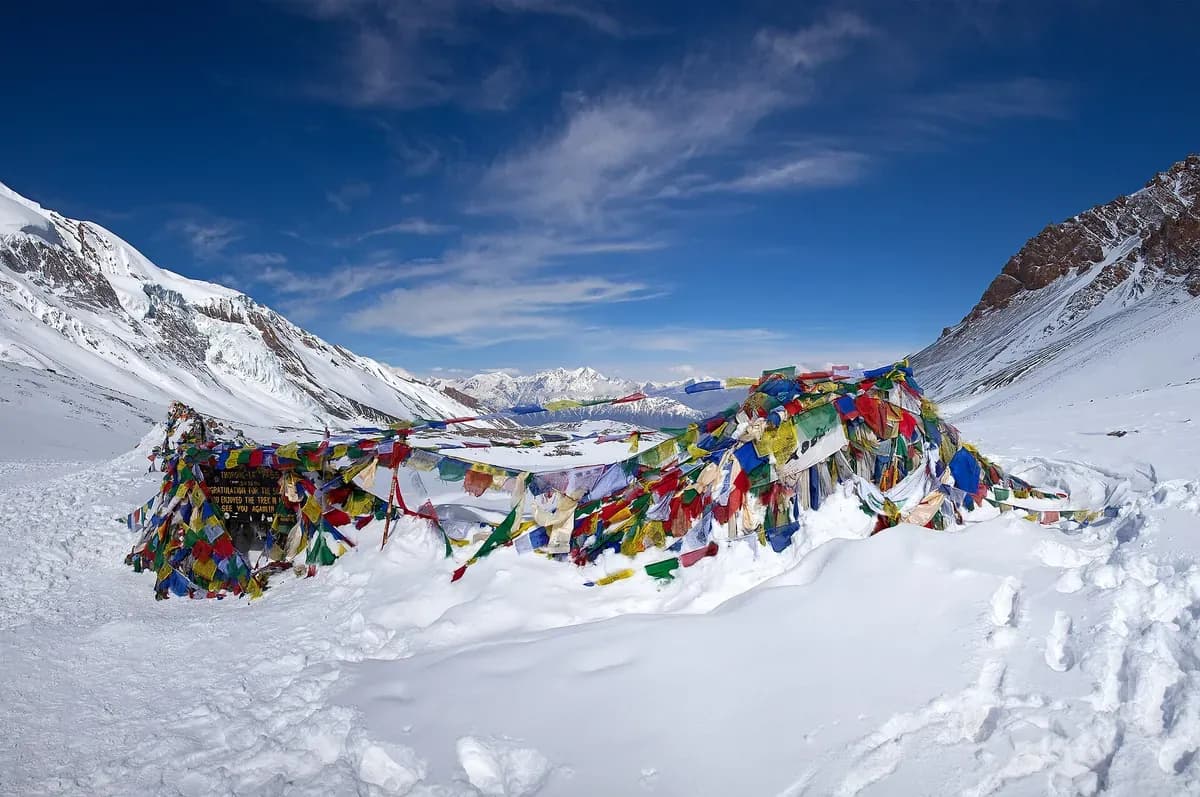
Photograph: Solundir / Wikimedia Commons, CC BY-SA 3.0. Uncropped WebP delivery copy; original retained.
Teahouses, comfort and the nights near the pass
Both circuits use teahouses, with a wide range of rooms and facilities. A private room in one village tells you little about the next night's lodge. A private bathroom, reliable charging and a hot shower may be separate questions.
LHJ's Manaslu route description describes basic facilities in the upper section, including around Dharamsala. Its Annapurna description also makes clear that lodges near the pass are basic.
If comfort matters, go through each overnight stop with your guide. Ask which rooms and facilities are confirmed and which depend on availability. An upgrade elsewhere may still leave you with a simple, cold night near the pass.
Manaslu suits travellers who can accept changing comfort from night to night. On Annapurna, the lodge choices in larger villages may give you ways to add comfort around the high section.
| What matters to you | Ask about each overnight stop | What the answer needs to cover |
|---|---|---|
| Sleeping privately | Is a private room confirmed or subject to availability? | Which nights the arrangement covers |
| Bathroom access | Is the bathroom attached or shared? | The upper lodges as well as the larger villages |
| Warmth | What heating is available? | A warm dining room and a heated bedroom are different arrangements |
| Charging and internet | What is available, and what costs extra? | A plan that works when power or a connection is unavailable |
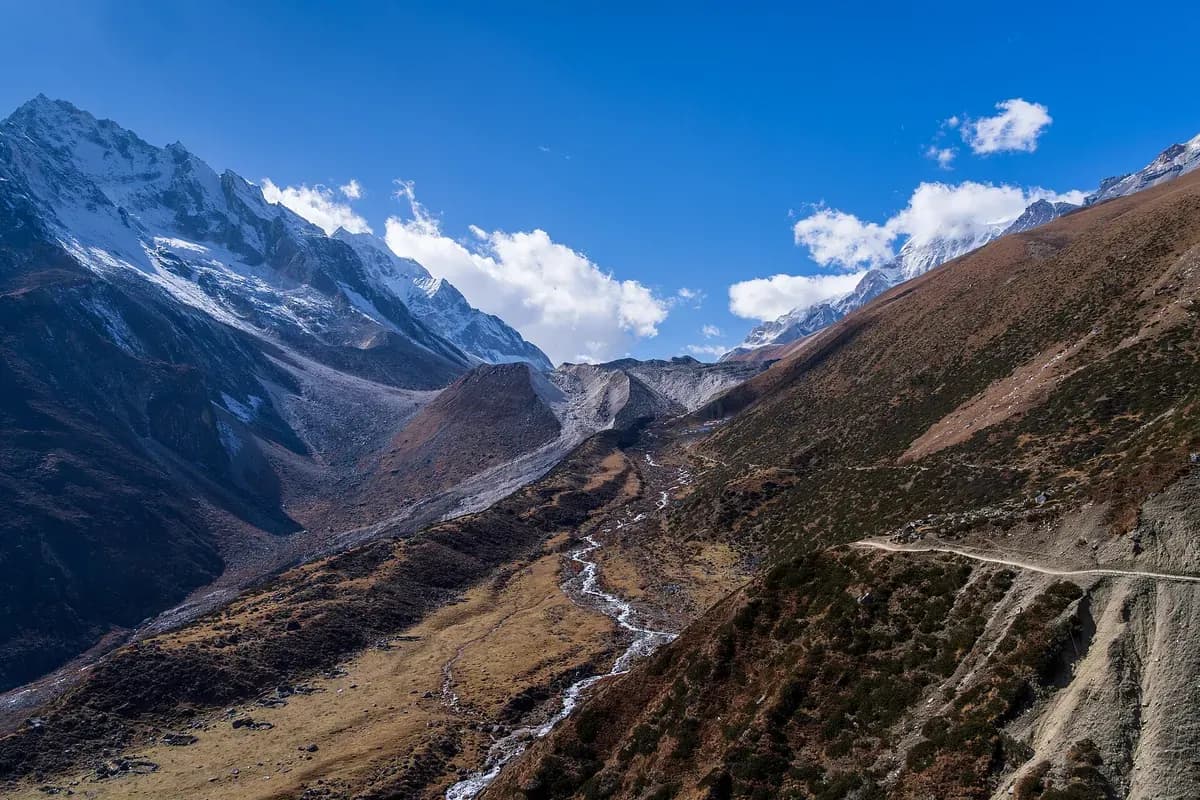
Photograph: Sunuwargr / Wikimedia Commons, CC BY-SA 4.0. Uncropped, resized WebP delivery copy; original retained.
How much time should you allow?
Two trips with the same number of days can give you very different amounts of walking. One may count arrival, Kathmandu stays and transfers; another may count only days on the route. A longer Annapurna trip may include an extension. A shorter one may use more driving.
Break down each proposal into:
- Arrival, departure and city days.
- Road transfers and any flights.
- Walking days on the core circuit.
- Acclimatisation days and optional side trips.
- Time held for weather, health or transport changes.
A hypothetical 14-day trip might have nine walking days, two acclimatisation days and three days for cities and transfers. Another 14-day trip could divide the time differently. This is a counting example, not a recommended schedule. The overnight stops show how the days fit together and what a shorter walking section leaves out.
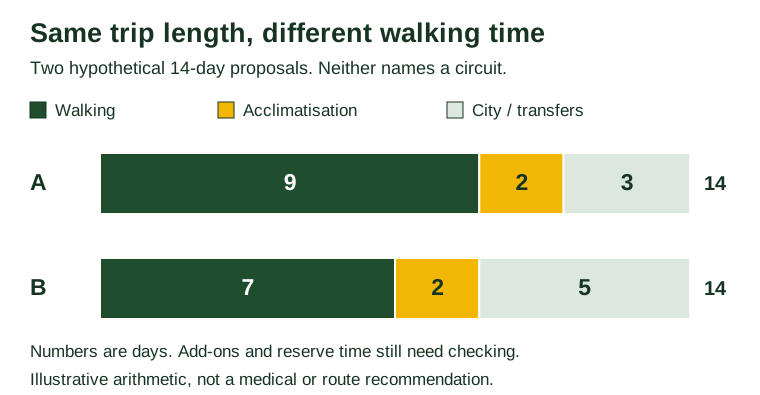
Pay close attention to where you sleep before the pass. Cutting a city day and cutting an acclimatisation day have very different effects. If neither circuit fits your leave without rushing, choose a different trek.
Permits and travelling on your own
Manaslu passes through a restricted area, so start discussing permits early. Annapurna also needs conservation-area and trekking documents. The Nepal Tourism Board's TIMS guidance lists both circuits under its guide and TIMS provisions.
You may be able to book as a solo traveller through an agency. That does not give you permission to enter a restricted area independently. Rules can differ by nationality and route, and permit arrangements can change.
A registered agency should confirm the requirements for your passport, route and departure using the Department of Immigration's permit information. Get a written list of the permits, who arranges them and which are included. LHJ's Nepal trekking permits guide covers the details.
Seasons and crowds: what can you expect?
Spring and autumn are common choices for both circuits. High-pass conditions, lodge arrangements and the daily route still matter. A clear day in a lower village tells you little about conditions at the pass.
Use the Nepal trekking season guide to narrow your travel window, then discuss the high section with your guide. Winter snow and monsoon access vary along a circuit, so a single yes-or-no answer for the whole route is too broad.
Annapurna has an established trekking network, with route and lodge choices that vary along the circuit. Consider Manaslu if you want a quieter-feeling journey, though neither circuit promises solitude. A lodge with few rooms can feel busy even when there are fewer walkers in the valley. Choose Manaslu for the journey, while allowing for busy stops.
Which circuit gives better value?
The value of a quote depends on what it includes. Permits, transport, guides, porters, meals, city nights and extensions all affect the total. A cheaper quote may cover less or use a different start and finish.
Check Manaslu's restricted-area arrangements in the inclusions. On Annapurna, check the amount of walking and driving: two trips with the same name can be quite different.
Request both proposals in the same format. Compare total days, walking days, overnight stops, inclusions, exclusions and what happens if the plan changes. Keep personal spending and funds for unexpected costs separate. This lets you compare value without relying on a price that may go out of date.
| Part of the quote | Put the same question to both operators |
|---|---|
| Permits | Which permits are included, and who arranges them? |
| Meals and drinks | Which meals are covered? What will water, tea and other drinks cost separately? |
| Guide and porter | What support is included, and what baggage arrangement applies? |
| Transport | Which transfers are covered, using which type of vehicle? |
| Rooms and extras | Which nights and room types are included? Are showers, charging and internet extra? |
| A change of plan | How are an extra night, an altered route or a missed transfer handled and charged? |
Choose the circuit that matches your priorities
| If this describes you | Start by considering | Check before deciding |
|---|---|---|
| "I want a sustained valley journey and can accept basic upper lodges." | Manaslu | Walking progression, upper-night facilities and reserve time |
| "I want different landscapes and choices about extensions." | Annapurna | Exact trail line, road sections and time for each extra |
| "I am worried about altitude." | Either, with careful itinerary review | Sleeping elevations, acclimatisation and the plan if symptoms develop |
| "I have limited leave." | The proposal that fits without rushing | Door-to-door days, transport time and the nights before the pass |
| "I need reliable comfort every night." | Reconsider either high-pass circuit | Actual lodge facilities; consider a different route if these are essential |
Before booking, ask five questions:
- Where do we start and finish walking?
- Which days use a road or vehicle, and which use a footpath?
- Where do we sleep before the pass, and where is acclimatisation built in?
- What changes if we need another night or cannot cross?
- What is included in the price, and what will I pay separately?
Start with the Manaslu Circuit if its steady upper-valley journey and basic lodges suit you. Start with the Annapurna Circuit if you want more landscape variety and choices about the trip. Read the route plans side by side, then ask LHJ to compare them with your dates, experience and priorities.
Frequently asked questions
Is Manaslu harder than Annapurna Circuit?
Manaslu can feel harder because it combines sustained walking, basic upper lodges and fewer easy ways to change the route. Annapurna also crosses a high pass. Compare each day's walking, sleeping altitudes, acclimatisation and spare time before deciding.
Which circuit is better for a first trek in Nepal?
Annapurna may be easier to shape around your preferences. Neither circuit is automatically an easy first trek. Consider how used you are to walking on consecutive days, how you feel about basic lodges and your altitude plan. A shorter trek at lower elevations may be a better place to start if either route feels too demanding.
Can I book either circuit as a solo traveller?
Booking alone and trekking without a guide are different arrangements. Ask a registered agency to confirm the current guide and permit requirements for your nationality and route. This is especially important for Manaslu's restricted area. Avoid relying on old advice about minimum group sizes.
Does the Annapurna Circuit include Tilicho Lake or Poon Hill?
Neither is included automatically. Both change the itinerary and need extra time. The overnight stops and walking days in your proposal should show which extensions are included. Photographs and regional descriptions alone cannot confirm that.
Sources and further reading
The route descriptions draw on the Nepal Tourism Board, the National Trust for Nature Conservation and the Trekking Agencies' Association of Nepal. The CDC guidance supports the altitude advice. Linked LHJ route pages describe specific itineraries; each circuit has other possible versions.
Confirm permit requirements, roads and lodge arrangements for your departure. If you spot an error, please contact LHJ with the section and supporting source.
Editorial responsibility sits with Love Himalaya Journey. The linked team page identifies who manages the website and travel articles. This comparison uses public route and institutional sources; it makes no claim to be a personal trek diary. Sources were checked on 26 October 2026.
Something here out of date or wrong? Tell us and we will check it.