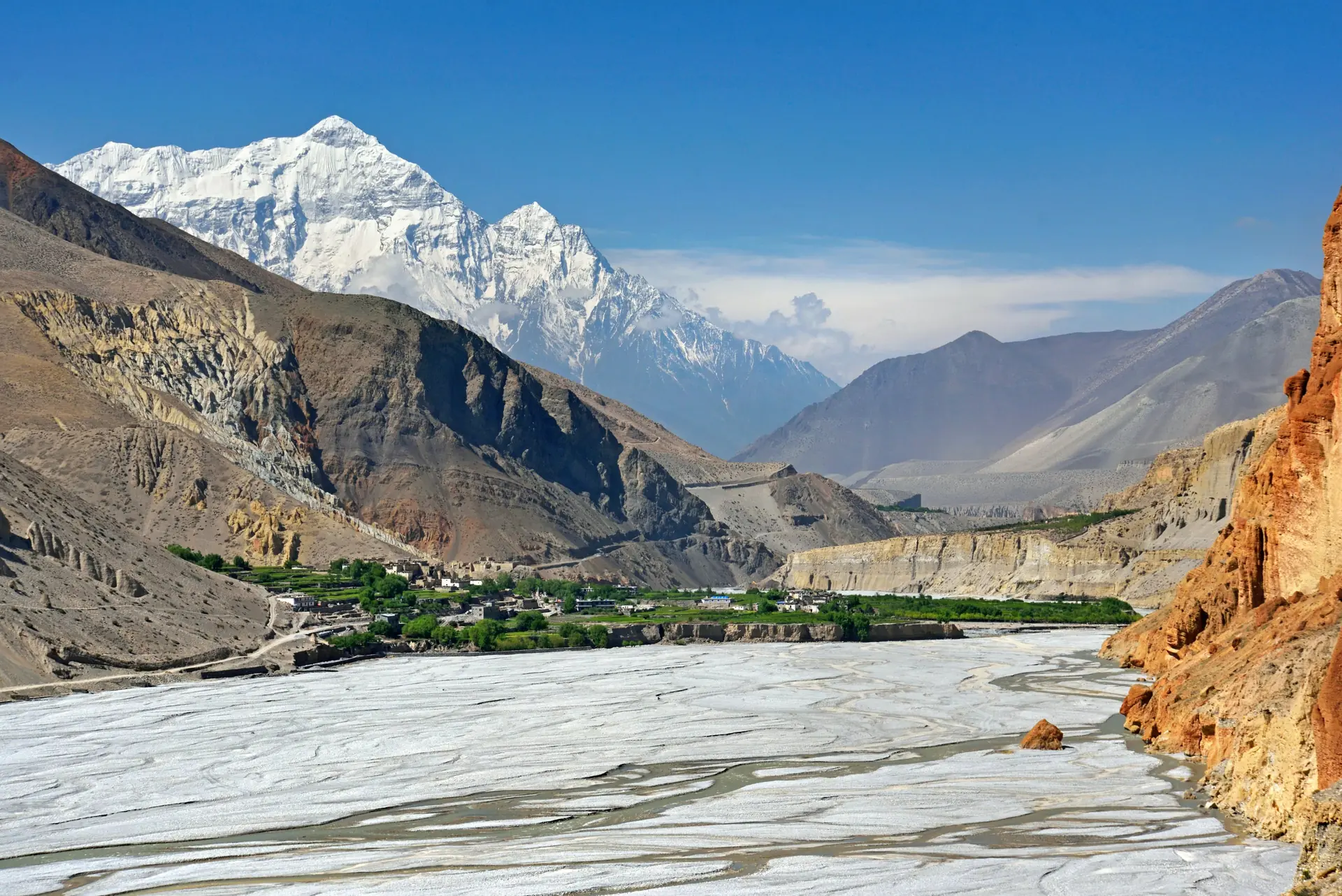

Journey into the forbidden kingdom with ancient Tibetan monasteries and desert landscapes.
While the Everest and Annapurna regions get all the attention, Upper Mustang quietly remains one of the most extraordinary places on Earth. Known as the "Last Forbidden Kingdom," this remote region was closed to foreigners until 1992 and still requires a special restricted area permit.
A Landscape Unlike Anywhere in Nepal
Forget lush green valleys and rhododendron forests. Upper Mustang is a high-altitude desert — think red and ochre cliffs, wind-carved caves, and vast open plains that feel more like Tibet or the American Southwest than Nepal. The rain shadow of the Annapurna and Dhaulagiri ranges keeps this region arid even during monsoon season, making it one of the few year-round trekking destinations in Nepal.
Living Tibetan Culture
The people of Upper Mustang are ethnically Tibetan and practice a form of Buddhism that has been preserved here for centuries. You'll visit ancient monasteries with 600-year-old murals, sky burial sites, and the walled city of Lo Manthang — the former capital of the Kingdom of Lo. The king (or Raja) still lives there and is deeply respected by the community.
Why It's Still a Secret
The restricted area permit costs $500 for the first 10 days — a deliberate measure to limit tourist numbers and protect the fragile culture. As a result, you'll share the trail with perhaps a dozen other trekkers, compared to hundreds on the Everest trail. It's expensive, but the experience is priceless.
Best Time to Visit
Unlike most Nepal treks, Upper Mustang is best during June–August (monsoon season elsewhere). The rain shadow keeps it dry while the rest of the country is soaked. Spring (March–May) is also excellent for clear views and wildflowers.